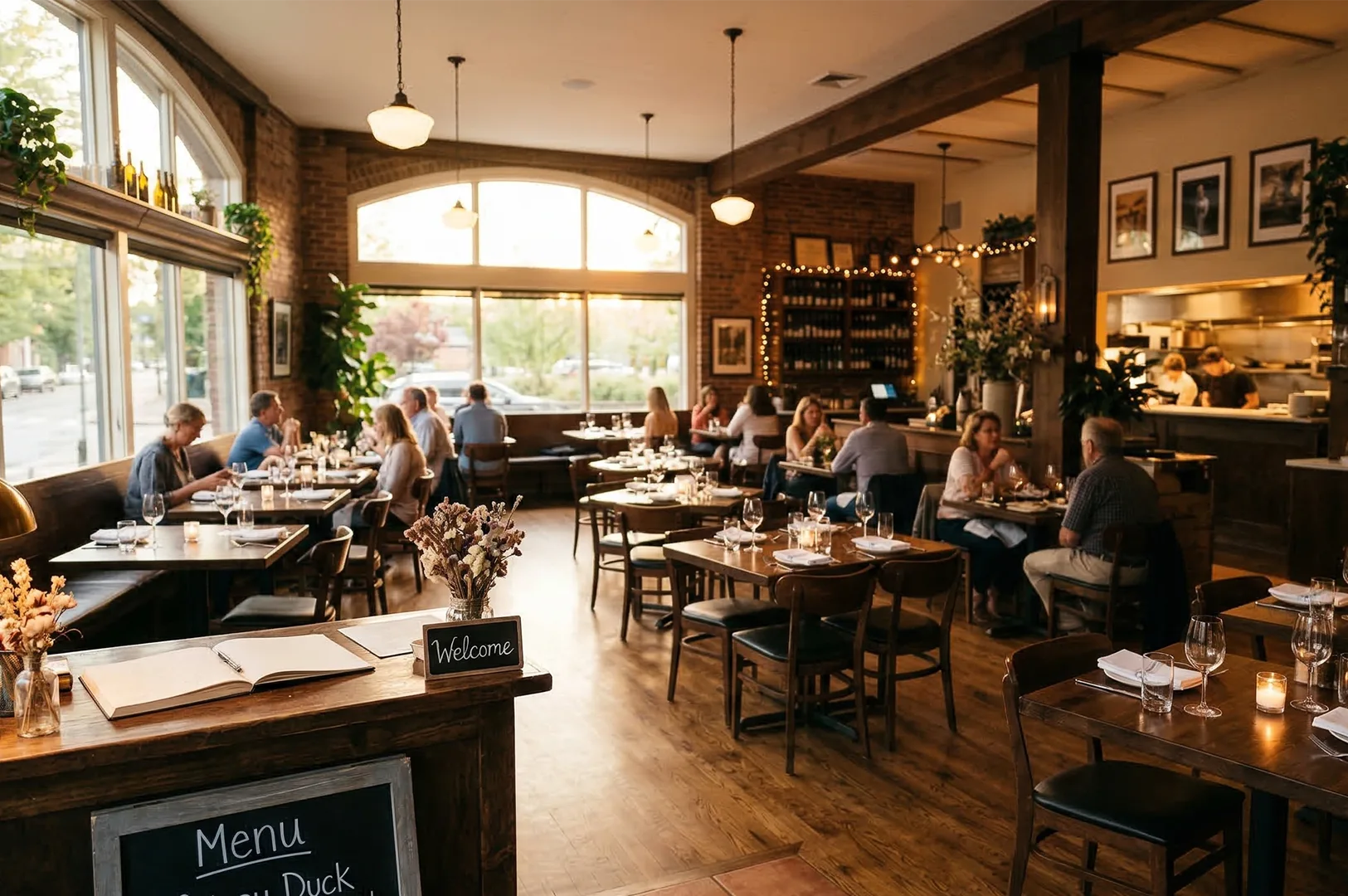

The Design Choices Guests Feel Without Noticing
The First Step Inside
Sometimes a restaurant simply feels right the moment you enter.
You cannot immediately explain why. The room feels comfortable. The lighting softens the space. Conversations flow easily around you. Even when the dining room is full, it never feels chaotic.
Guests often credit the food or the atmosphere, but much of that comfort comes from decisions that are almost invisible.
Good restaurant design is rarely loud.
It lives in the quiet details.
The Direction of Light
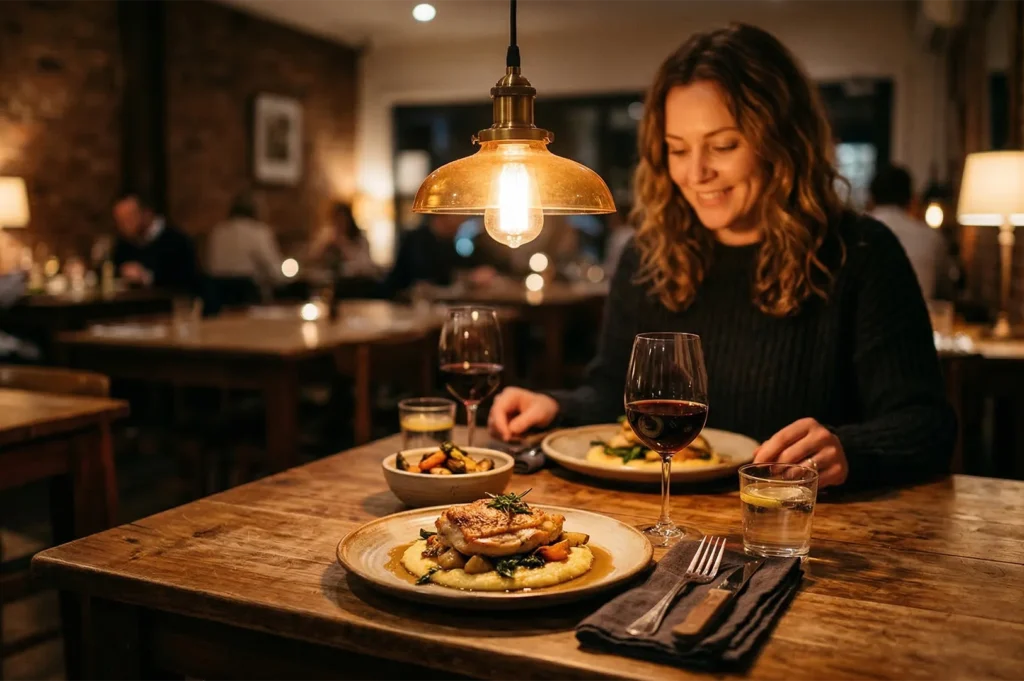
Lighting is one of the most powerful tools in restaurant design, yet its effect is often subtle.
It is not only about brightness. It is about direction.
Lights that shine directly downward onto tables can create harsh shadows. Lighting that sits slightly above eye level softens faces and allows the food to become the visual focus. Warm tones invite guests to linger, while cooler light can make a space feel energetic and fast paced.
Even the distance between light fixtures matters.
Too close together and the room feels intense. Too far apart and the dining area begins to feel uneven. Designers often spend surprising amounts of time adjusting the angles of a few lamps.
When it works well, no one notices the lights.
They simply feel comfortable staying for another drink or dessert.
The Space Between Tables
Another detail that shapes a restaurant experience is something most guests never measure.
Table spacing.
If tables sit too close together, every conversation becomes public. Servers struggle to move between chairs. Guests begin to feel rushed without knowing why.
If tables sit too far apart, the dining room can feel empty even when it is busy.
Designers look for a balance that allows movement while maintaining energy in the room. Guests should feel part of the atmosphere without feeling crowded.
The right spacing allows service to flow smoothly. Staff can approach tables naturally. Plates arrive without interruption.
From the guest’s perspective, the evening simply feels relaxed.
The Sound of the Room
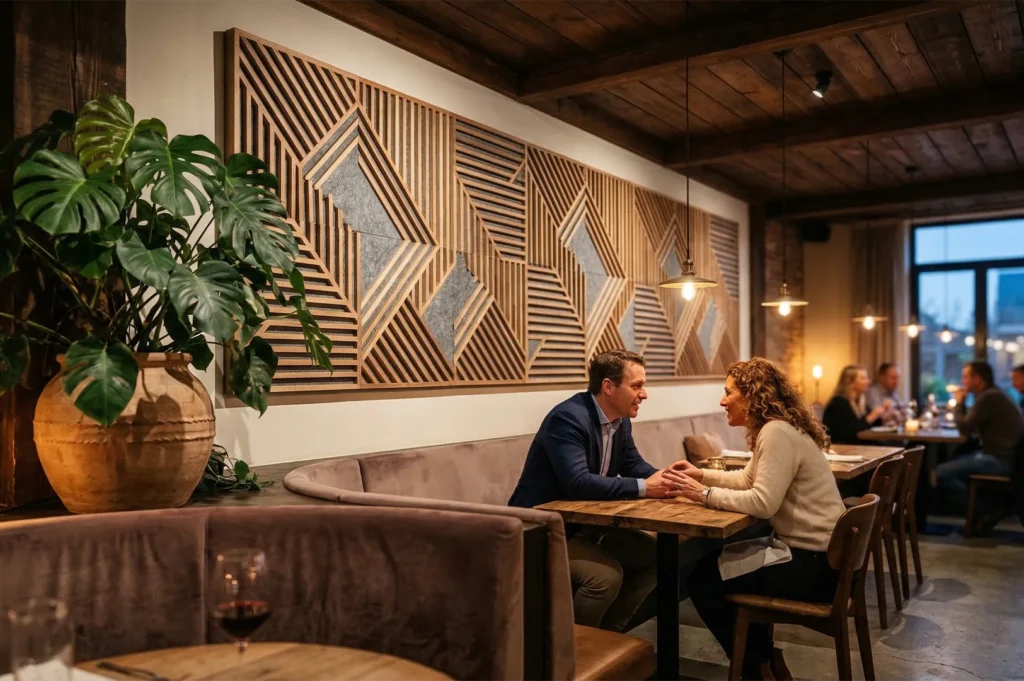
Noise is another invisible element that shapes the character of a restaurant.
Some dining rooms echo more than others. Hard surfaces such as glass, metal, and concrete reflect sound. When too many of these materials appear in a space, voices bounce across the room and the atmosphere quickly becomes loud.
Acoustics often receive careful attention during renovation.
Soft furnishings, wooden surfaces, wall panels, and even plants can absorb sound. Ceiling height also influences how noise travels across the room.
When designers manage acoustics well, guests notice something unusual.
They can hear their conversation clearly even in a busy dining room.
That quiet comfort often keeps people returning.
The Flow of Arrival
Even the entrance of a restaurant plays a role in how the entire space feels.
A narrow doorway that leads directly into the dining area can create confusion during busy periods. Guests pause at the entrance while staff try to guide them to their tables.
Thoughtful restaurants create a small transition space.
Sometimes it is a host stand, sometimes a subtle waiting area, sometimes simply a wider doorway that slows the pace of arrival. This moment gives guests time to settle into the environment before moving deeper into the dining room.
The experience of the restaurant begins before the first dish reaches the table.
It begins with how the space welcomes people inside.
The Design You Feel Instead of See
The most successful restaurant spaces rarely rely on dramatic features alone.
Instead, they build comfort through a series of small, thoughtful decisions. Lighting that flatters both the room and the food. Tables positioned with intention. Sound that remains gentle even during busy service. Entrances that guide guests naturally into the space.
None of these elements demand attention.
Yet together they shape how the entire restaurant feels.
Guests may leave remembering the meal, the conversation, and the atmosphere of the evening.
What they rarely realize is that the experience was quietly supported by details working perfectly in the background.