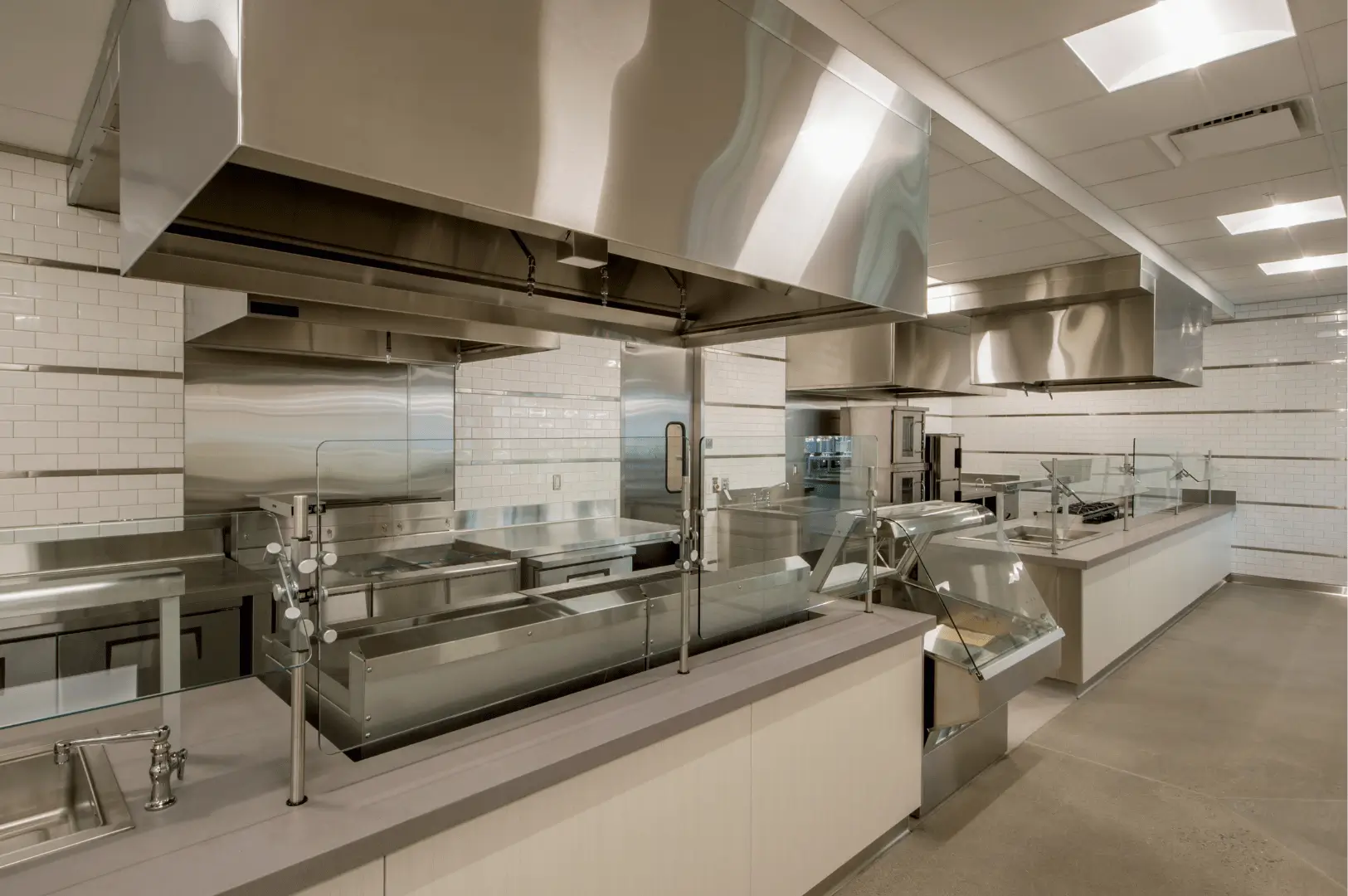

Ask any seasoned chef about their “battle scars,” and they’ll likely point to a bad back, aching knees, or the faint hum of tinnitus. For decades, the prevailing attitude was that kitchen work is inherently grueling—a trial by fire where only the toughest survive. But here’s a startling statistic: the restaurant industry has one of the highest turnover rates of any sector, often exceeding 75% annually. While many factors contribute to this, one of the most overlooked is the kitchen design and staff comfort approach itself.
Dining rooms are meticulously designed to maximize the dining experience, but kitchens often end up treated as purely utilitarian. The result? Cramped kitchen layouts that force unnecessary bending, repetitive movements, and constant pressure on the body. Poor commercial kitchen design doesn’t just frustrate employees—it directly contributes to burnout, safety issues, and operational inefficiencies.
Ergonomic design can help prevent injuries among kitchen staff by reducing physical strain and creating safer workspaces. Tailored ergonomic solutions are created to address these problems, improving comfort, efficiency, and safety for everyone in the kitchen. By designing with ergonomic principles in mind, you create a comfortable environment that boosts morale, maximizes productivity, and protects long-term profitability.
The Hidden Cost of Ignoring Ergonomic Kitchen Design
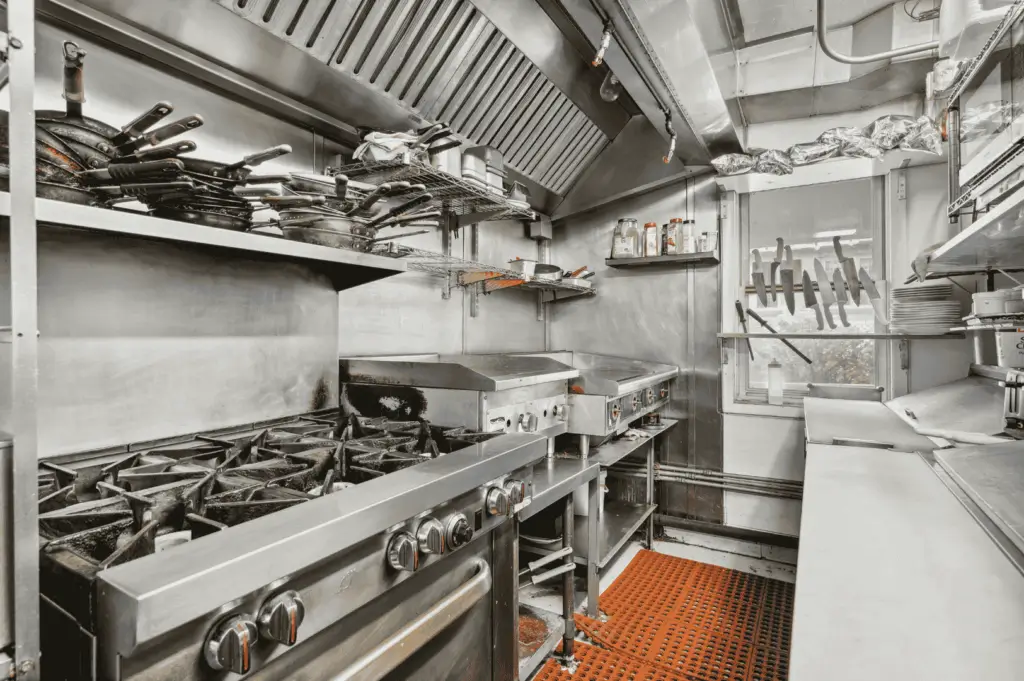
A revolving door of staff is incredibly expensive. Replacing a single line cook can cost thousands when you account for recruitment, training, and lost productivity. But turnover isn’t the only drain.
- Productivity loss: Fatigued staff working in uncomfortable work zones are slower, make more mistakes, and waste food.
- Safety risks: Repetitive motion injuries and poorly designed equipment placement increase accidents.
- Reputation damage: Low morale eventually affects food quality and consistency, driving away existing customers and hurting brand identity.
An ergonomic kitchen design reduces these risks while creating a workspace that supports both physical health and efficient workflow. By maximizing productivity and helping to streamline operations, ergonomic design ensures your kitchen runs smoothly and efficiently.
Ergonomic Principles: The Foundation of Comfort
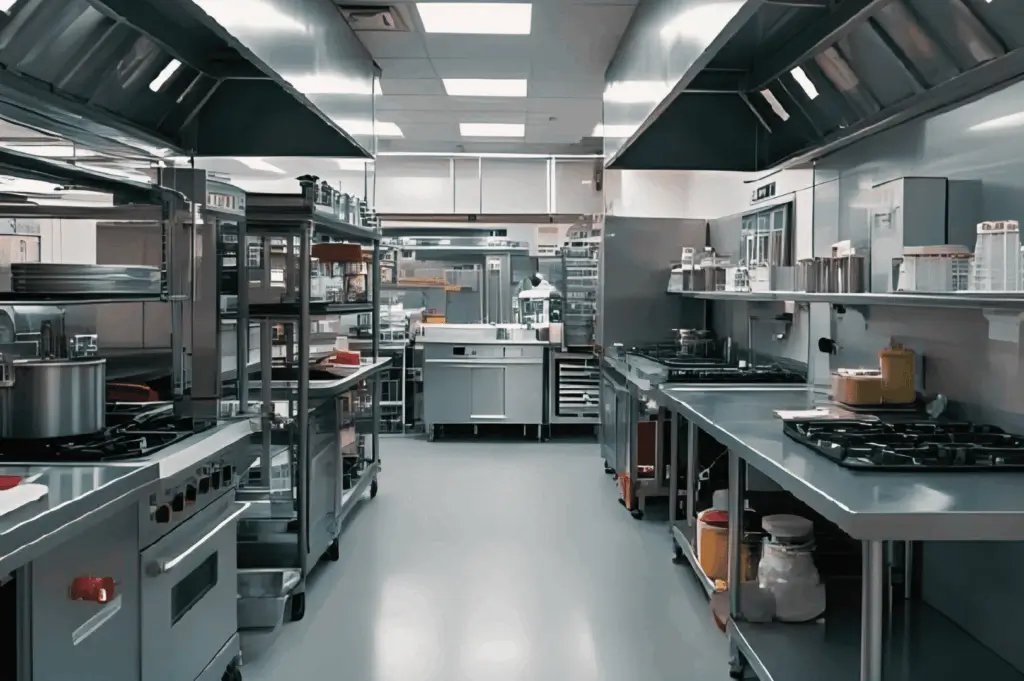
At its core, ergonomics is about designing the workplace to fit the worker. Applying ergonomic principles to commercial kitchens addresses one of the biggest drivers of staff fatigue—physical strain from repetitive bending, unnecessary movement, and working at the wrong height. Considering the ergonomic point in the layout and placement of kitchen fixtures ensures that workstations are optimally positioned, further reducing strain and improving comfort for staff.
Counter Heights and Work Surfaces
The correct working height is critical. Counters that are too low cause back strain, while those too high increase shoulder tension.
- Practical tips: For food preparation areas, surfaces should be at or slightly below elbow height. A raised height counter may work better for a cooking station where forceful chopping isn’t required.
- Implementation: Mix different counter heights (34-inch prep tables, 38-inch landing areas) to suit different tasks.
- Benefits: Reduces repetitive bending and improves posture, directly enhancing employee well-being. These adjustments also maximize efficiency in the kitchen by streamlining workflow and optimizing task performance.
Flooring and Anti-Fatigue Mats
Standing on hard flooring all day leads to sore legs and back strain. Simple upgrades can reduce fatigue significantly.
- Anti-fatigue mats: Inexpensive and effective, placed in prep areas, by sinks, and at cooking lines.
- Resilient flooring: Rubber or resin materials soften impact and provide slip resistance for long-term commercial kitchen design improvements.
Temperature Management in a Commercial Kitchen
Extreme heat drains energy and elevates stress levels. Addressing it requires careful equipment placement and the right systems.
- Range hood and ventilation: Properly sized and maintained hoods remove smoke and heat while protecting fire safety compliance.
- Cooling systems: Spot cooling or make-up air systems deliver fresh, cool airflow directly to cooking stations.
- Equipment placement: Group heat-intensive appliances like fryers under the most powerful hood, while relocating compressors outside to avoid unnecessary heat.
These adjustments create a more comfortable working environment while maintaining food safety.
Ventilation and Air Quality in Commercial Kitchens
Ventilation and air quality play a crucial role in creating a comfortable working environment for kitchen staff. In the fast-paced world of commercial kitchens, a well-designed ventilation system does more than just clear the air—it safeguards both physical and mental health. Proper ventilation removes excess heat, moisture, and cooking fumes, reducing the risk of respiratory issues and helping to prevent repetitive motion injuries that can be aggravated by poor air quality.
A high-quality range hood, installed at the right height, is essential for efficient airflow and easy cleaning. Regular maintenance of ventilation systems ensures they continue to operate at peak performance, keeping the kitchen safe and comfortable. Smart storage solutions and thoughtful equipment placement also contribute to better air circulation by minimizing clutter and unnecessary movement, which can otherwise lead to accidents or blocked airflow.
Beyond physical health, good air quality supports mental well-being by reducing stress and fatigue—two major contributors to burnout in commercial kitchens. When staff can breathe easily and work in a space free from lingering smoke and odors, they’re more focused, energized, and less likely to experience the constant pressure that leads to mistakes or injuries.
By prioritizing ventilation and air quality, commercial kitchens create a safe, healthy, and efficient environment where staff can thrive and customers can enjoy the benefits of a well-run operation.
Lighting That Supports Staff Wellbeing
Lighting isn’t just about visibility—it influences stress levels, accuracy, and mood.
- Task lighting: Bright, direct LED lights over food preparation surfaces.
- Color temperature: 4000–5000K cool white keeps staff alert.
- Cost effective upgrade: Swapping bulbs is quick and affordable, while new fixtures require higher initial investment but boost long-term efficiency.
Lighting choices such as pendant lights or chandeliers placed above the dining table can help define the dining zone within the kitchen. This not only enhances the kitchen’s aesthetic appeal but also improves its overall functionality.
Noise Reduction: Protecting Physical Health
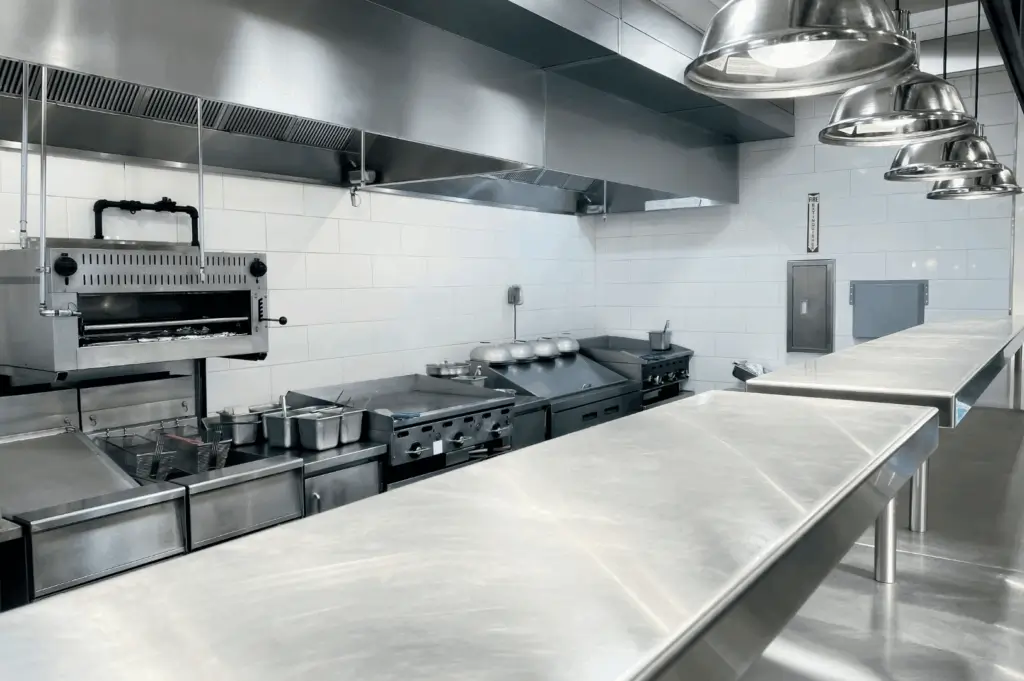
Not every renovation requires significant investments. Smaller, cost-effective updates can still deliver strong return on The roar of dishwashers, vents, and shouting adds to staff exhaustion. Solutions range from small to structural.
- Acoustic ceiling tiles and panels reduce constant pressure from noise.
- Quieter appliances (dishwashers, blenders) minimize background stress.
- Strategic kitchen layout planning helps isolate loud zones like dish pits.
Smart Storage Solutions for Reduced Strain
Cluttered kitchens force unnecessary steps and awkward movements. Strategic storage solutions create an efficient workflow.
- Frequently used items should always be at waist level or shoulder height—never requiring bending or stretching.
- Use drawers instead of overhead shelving to minimize repetitive bending.
- Sliding doors on cabinets and smart storage solutions like labeled bins eliminate unnecessary movement during daily tasks.
The goal is simple: streamline kitchen tasks and free staff from avoidable strain.
Space Optimization in Commercial Kitchens
Space optimization is the backbone of an efficient workflow in commercial kitchens, directly impacting staff well-being and the overall dining experience. Applying ergonomic principles to kitchen design means every inch of space is used with purpose, reducing unnecessary movement and physical strain during food preparation and service.
A well-planned kitchen work triangle—connecting the sink, cooking station, and food preparation areas—ensures that staff can move smoothly between tasks without wasted steps. Smart storage solutions, such as sliding doors and adjustable shelving, keep essential tools and ingredients within easy reach, eliminating the need for repetitive bending or stretching. This not only streamlines kitchen tasks but also helps reduce fatigue and the risk of injury.
Optimizing counter heights and equipment placement is another key principle. Raised height counters and anti-fatigue mats at workstations help minimize physical strain, allowing kitchen staff to focus on cooking rather than coping with discomfort. By fostering open communication and involving staff in layout decisions, commercial kitchens can better address the physical needs of their team, creating a more comfortable and supportive work environment.
By embracing ergonomic principles, smart storage solutions, and thoughtful equipment placement, commercial kitchens can maximize productivity, reduce strain, and create a workspace where both staff and guests feel the difference.
Ergonomic Kitchen Design and the Kitchen Work Triangle
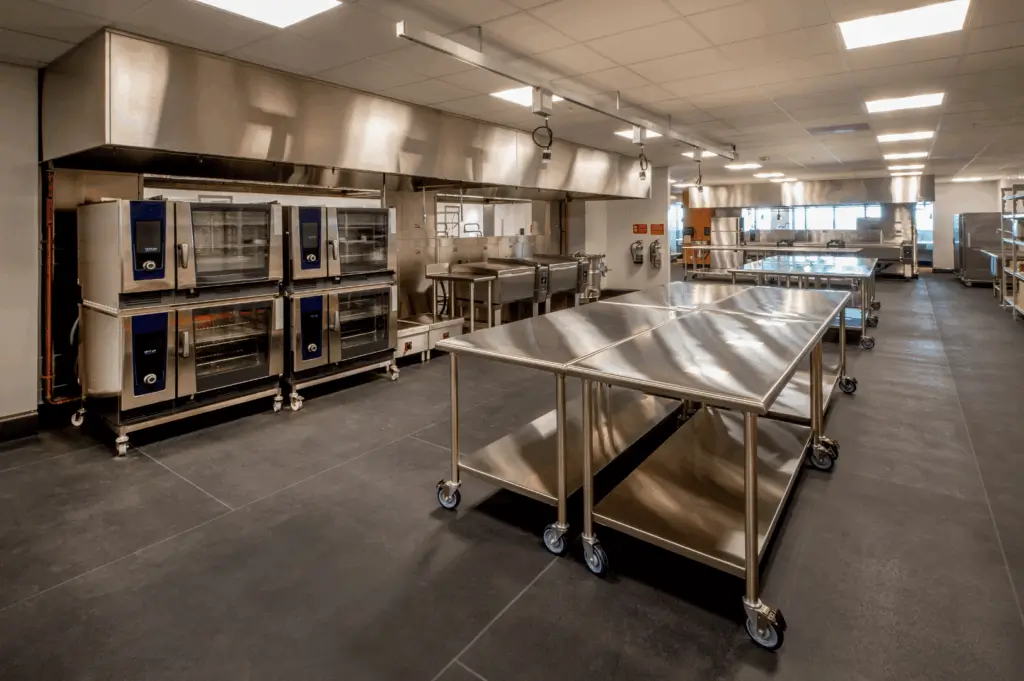
The kitchen work triangle—sink, stove, refrigerator—remains a timeless design principle. But in commercial kitchen design, it must scale to handle many kitchen tasks at once.
- Unobstructed lines between work zones keep staff from colliding.
- Prep areas should flow naturally into cooking stations and plating areas.
- Equipment placement should support the sequence of food preparation rather than forcing awkward detours.
A thoughtful kitchen layout reduces unnecessary physical activity and maximizes efficiency.
Break Areas That Restore Energy
Burnout doesn’t vanish with five minutes leaning on a dumpster. Even small comfortable environments help.
- Implementation: A quiet nook with seating, water, and soft lighting.
- Impact: Creates a sense of care and reduces stress levels, ultimately leading to higher staff retention.
Technology Integration for Efficiency
Modern tools cut down on unnecessary steps and repetitive movements.
- Kitchen Display Systems (KDS): Reduce shouting, streamline communication, and track key performance indicators like ticket times.
- Automated appliances: Programmable ovens and fryers reduce repetitive cooking tasks, minimizing repetitive motion injuries.
- Workflow software: Simplifies ordering and inventory, lightening the cognitive load on managers and kitchen staff alike.
Involving Employees in Kitchen Design
No one understands physical needs better than the team doing the work.
- Implementation: Ask staff for feedback on daily tasks and pain points before any renovation.
- Benefit: Builds ownership, improves morale, and leads to a kitchen design that actually makes sense in practice.
Phased Improvements for Every Budget
Not every business can afford a major renovation, but small steps still improve the work environment.
- Phase 1 (Low-cost): Anti-fatigue mats, LED lighting, and a small staff break zone.
- Phase 2 (Moderate): Acoustic ceiling tiles, lockers, and updated appliances at the right working height.
- Phase 3 (High-cost): Full kitchen layout redesign, ventilation overhaul, and resilient flooring.
This phased approach allows you to budget effectively without compromising on key principles of ergonomics.
A Healthier Kitchen Is a More Profitable Kitchen
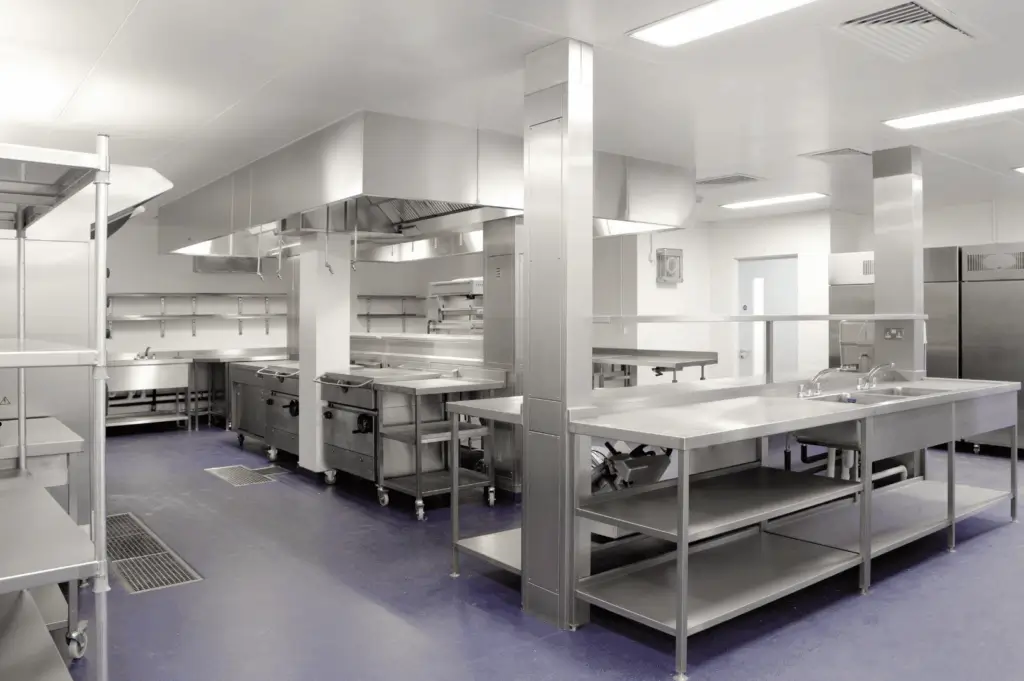
Designing for kitchen design staff comfort isn’t about pampering employees—it’s about building a comfortable working environment that maximizes productivity and reduces turnover. By applying ergonomic kitchen design strategies, incorporating smart storage solutions, and focusing on the correct working height for different tasks, you create a safer, more efficient, and more profitable operation.
Happy staff mean better food, smoother business operations, and an improved dining area experience for guests. In other words, a well-designed kitchen doesn’t just reduce strain—it fuels long-term success. . For a comprehensive look at interior design strategies visit Restaurant Renovations.