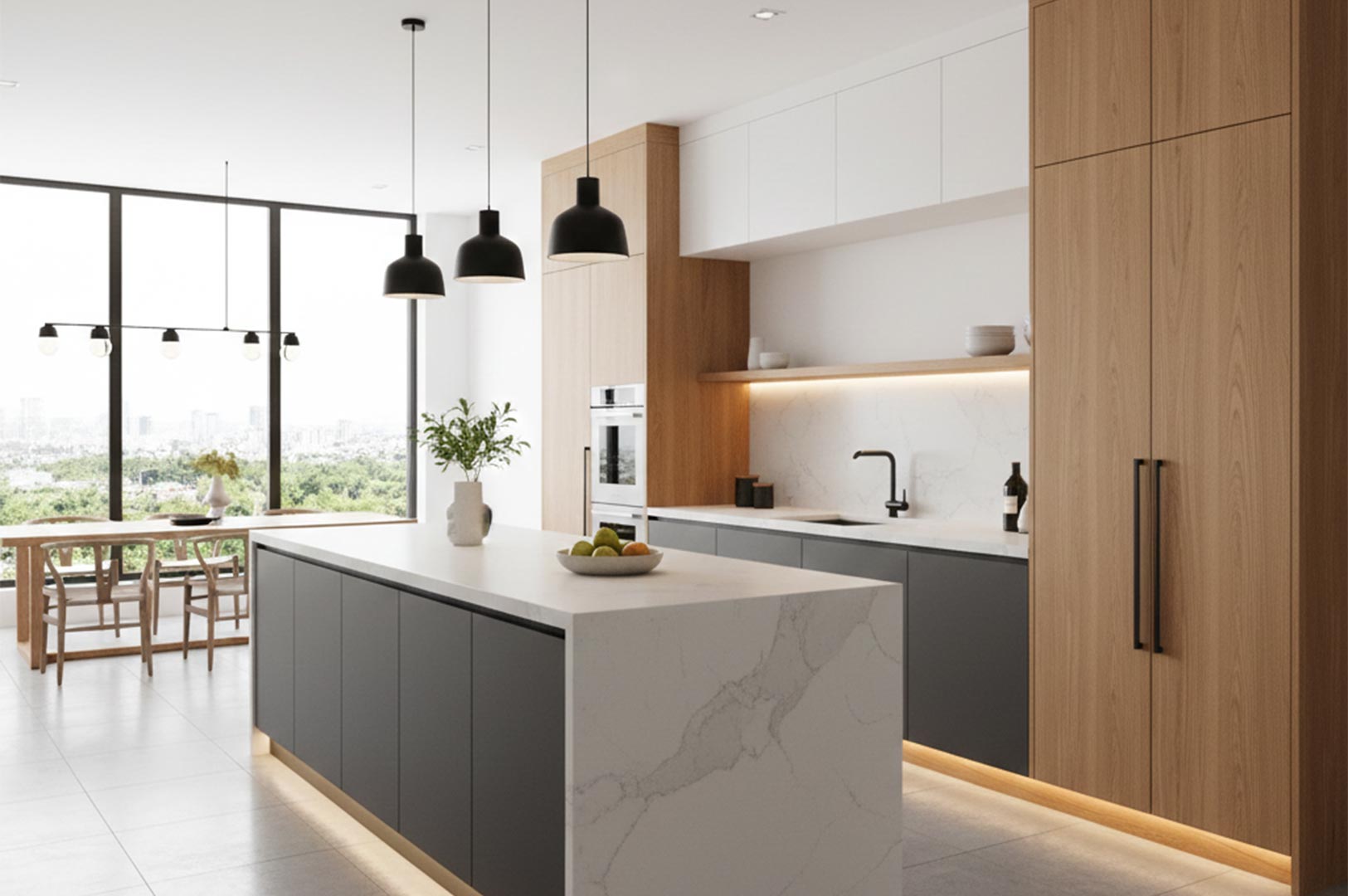

In Singapore’s dynamic and competitive restaurant scene, every design choice tells a story about your brand and how smoothly your kitchen runs. Think of the dining room as the stage, but the kitchen? That’s where the real magic happens, and the kitchen cabinets? They’re the unsung heroes. A well-thought-out contemporary kitchen cabinet design isn’t just about storing ingredients; it shapes the kitchen’s vibe, keeps things running efficiently, and adds a modern, professional touch that can really lift your whole operation.
If you’re looking for some fresh inspiration and kitchen ideas to create a contemporary restaurant kitchen, you’re in the right place. Let’s chat about the styles, materials, and clever storage solutions that are making commercial kitchens not only look great but work smarter too.
This guide is all about moving beyond basic storage and diving into actionable contemporary kitchen design ideas that fit your restaurant’s needs. Ready to explore?
Defining Contemporary Kitchen Cabinet Design and Modern Kitchen Concepts
What makes a cabinet design “contemporary”? Unlike “modern,” which refers to a specific design period, “contemporary” is fluid. It reflects the design trends of the here and now, blending clean lines with innovative materials and smart functionality. This approach helps create a dream kitchen that balances uncluttered aesthetics with subtle elegance, incorporating timeless materials and natural wood tones to complement the entire space. Contemporary design blends current trends with natural or rustic influences, resulting in interiors that feel both fresh and inviting.
You can picture a kitchen where sleek cabinetry with flat fronts meets warm wood accents, creating a space that’s both efficient and welcoming. The smooth surfaces invite easy cleaning during busy service hours, while the natural textures soften the overall look, making the kitchen a more pleasant environment for staff.
| Comparison Aspect | Description |
|---|---|
| Contemporary vs. Modern Kitchens | Modern kitchens emphasize minimalist flat fronts, clean lines, and sleek cabinetry often in high gloss finish, focusing on function and simplicity. Contemporary kitchens borrow these elements but are more flexible, incorporating natural materials, wood accents, and metallic accents like gold accents to add warmth and visual interest. Modern style kitchens often highlight the use of natural materials and wood accents, blending contemporary design with organic textures to create a warm, timeless appeal. |
| Contemporary vs. Traditional | Traditional cabinets feature ornate details and raised panels, whereas contemporary kitchens favor simplicity, sleek cabinetry, and clean line profiles. |
| Contemporary vs. Transitional | Transitional style blends traditional and modern, while contemporary kitchen design opts for a more streamlined, modern aesthetic. |
For commercial kitchens in Singaporean homes and restaurants, a contemporary kitchen cabinet design means creating open layouts that maximize counter space and vertical storage, integrating appliances seamlessly, and using sustainable materials to withstand high traffic areas. Here’s what many restaurant owners don’t realise: the choice of cabinetry materials and layout can significantly impact not just aesthetics but daily operational efficiency and maintenance costs.
Material Choices: Natural and Sustainable Materials for Contemporary Kitchen Cabinet Design
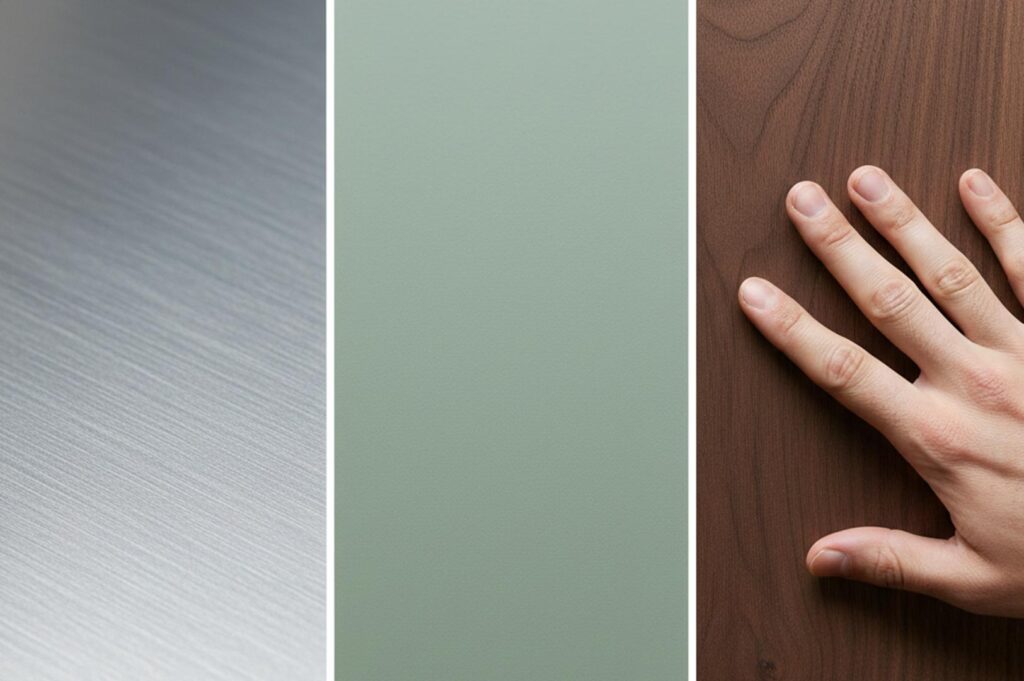
Choosing the right materials is essential to achieving a dream kitchen that is durable and stylish. Combining natural wood with sustainable materials and timeless materials ensures longevity and elegance.
- Commercial-Grade Stainless Steel and Integrated Appliances: Offer durability and seamless integration, essential for modern kitchens in Singapore homes and restaurants. Stainless steel surfaces resist stains and heat, which is crucial in a busy kitchen where spills and hot pots are constant.
- High-Pressure Laminates (HPL): Provide versatility with a range of colors and textures, including sage green, navy blue, and neutral warm tones. These laminates are scratch-resistant and easy to clean, making them a practical choice for high-traffic commercial kitchens.
- Wood Veneers and Solid Wood: Bring warmth and sophistication, perfectly complementing natural wood tones and wood accents. You can picture the tactile contrast between smooth laminate and the organic grain of wood veneers, adding depth without sacrificing durability.
- Custom Cabinetry: Enables tailored storage solutions and unique architectural features, enhancing both style and functionality for a truly personalized kitchen design. This is where things can quietly escalate in cost, so careful planning and consultation are important to avoid surprises.
- Thermofoil and Acrylic: Deliver a sleek cabinetry look with high gloss finish, adding striking contrast to lower cabinets or kitchen island features. These materials reflect light, brightening the space and making it feel larger, especially in kitchens with limited natural light.
Color Palettes and Finishes: Creating Subtle Elegance with Contemporary Kitchen Cabinets
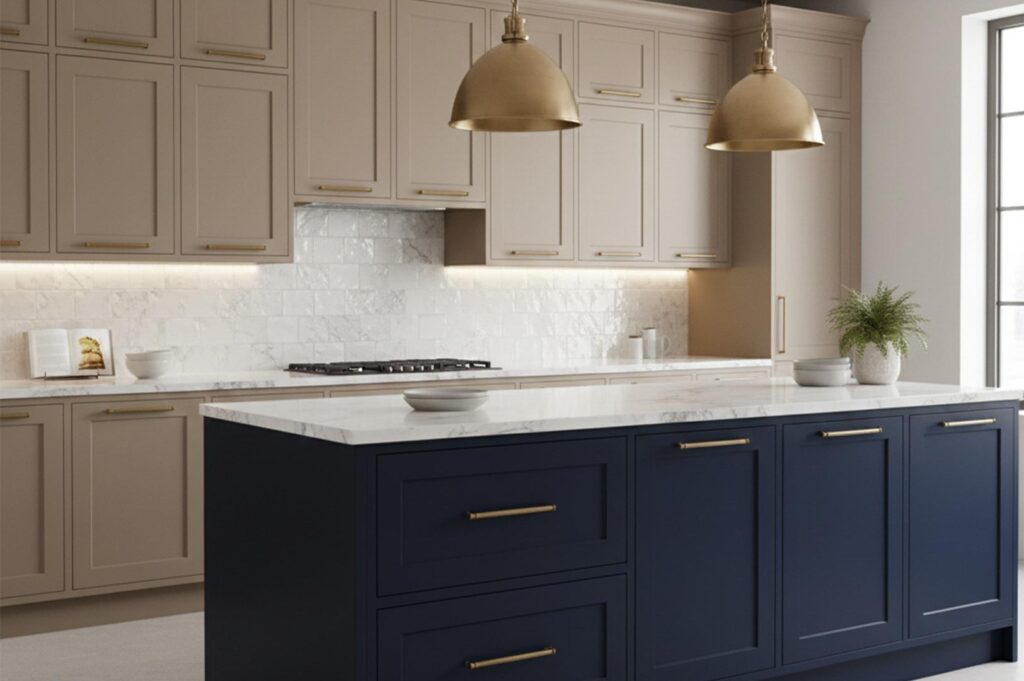
Color choices set the mood and style of your kitchen. Contemporary kitchens blend lighter tones and natural wood hues with bold accents for a balanced, inviting look. Neutrals like gray, taupe, and warm whites provide a calm backdrop that complements natural materials. Deep navy blue and matte black add drama, especially with metallic accents like brushed brass or gold. Two-tone combinations, mixing colors on cabinets or the kitchen island, add depth and personality. Textured or contrasting backsplashes enhance visual appeal. Warm walnut or oak veneers bring timeless, organic warmth that complements natural light and open layouts.
Many first-time renovators underestimate how color and finish affect the kitchen’s atmosphere—a good palette can make a small kitchen feel spacious, while a poor one can feel cramped.
Smart Storage Ideas: Maximizing Space in Contemporary Kitchens
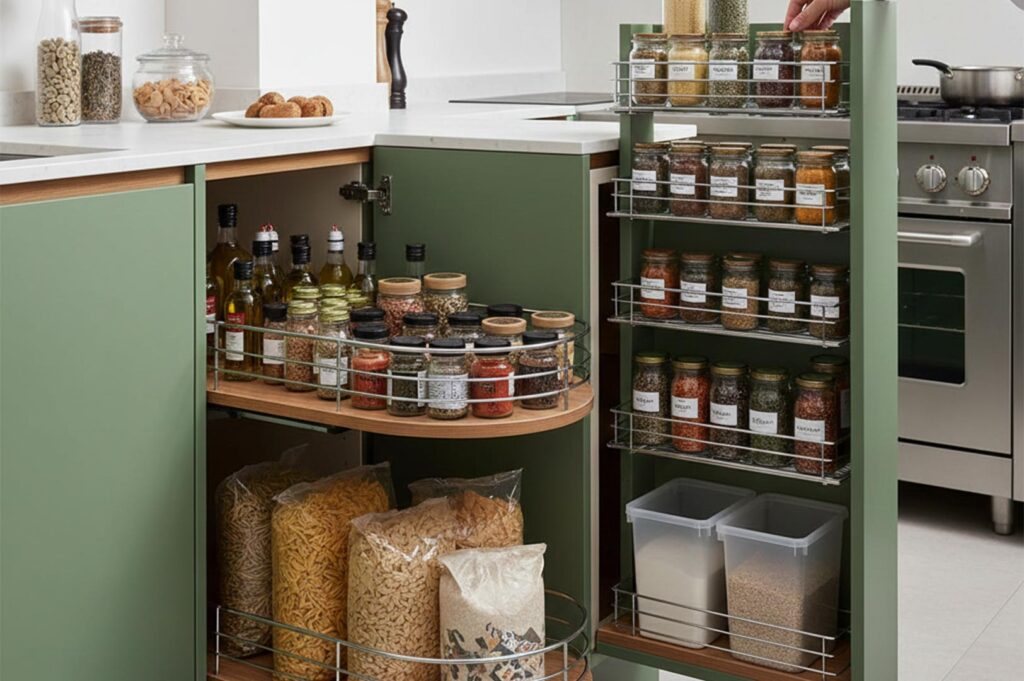
Efficient storage is a key feature of contemporary kitchen cabinet design, especially in small kitchens and hdb flats.
- Vertical Storage: Floor-to-ceiling pull-out pantries maximize counter space and keep essentials organized. You can picture the relief of having every spice and ingredient within arm’s reach without cluttering your workspace.
- Advanced Corner Solutions: Systems like “Magic Corner” make use of every inch of space, turning awkward corners into accessible storage.
- Deep Drawer Systems: Ergonomic and efficient for storing pots, pans, and equipment, reducing the need to bend or reach awkwardly.
- Specialized Drawer Inserts: Custom inserts for utensils, spices, and plates enhance organization, helping staff find what they need quickly during peak hours.
- Mobile Cabinet Units: Provide flexibility for reconfiguring prep areas or service stations, a feature that supports evolving kitchen workflows.
- Integrated Waste Stations: Concealed bins maintain a clean, hygienic environment, which is crucial for health inspections and daily cleanliness.
Contemporary Kitchen Design Ideas by Kitchen Zone and Overall Look
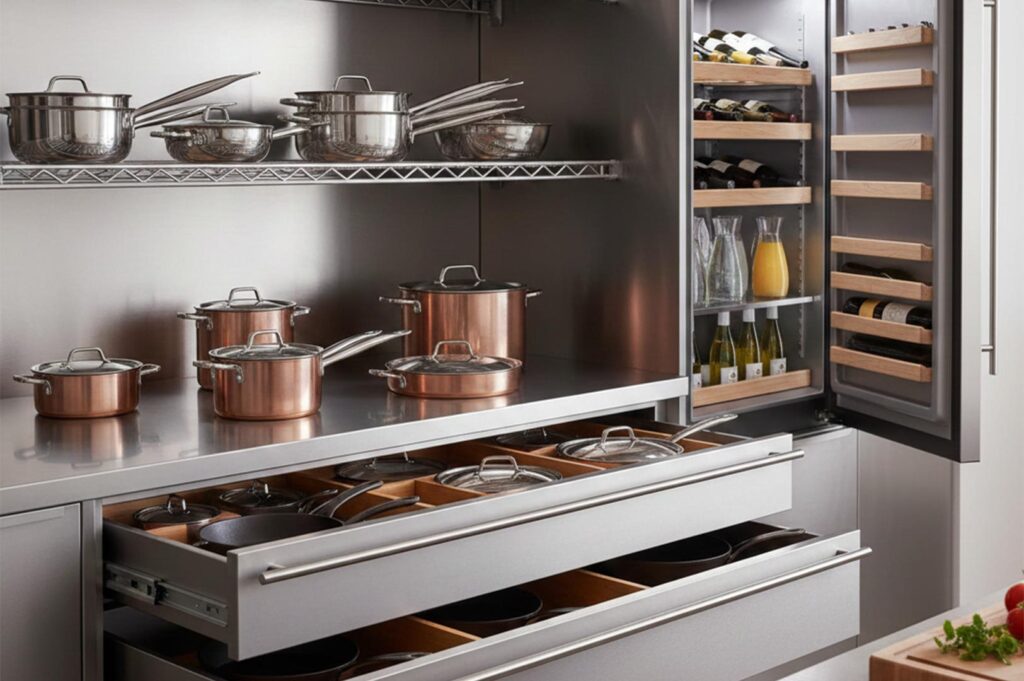
When designing a new kitchen, especially when clients wanted a space tailored for entertaining or specific functional needs, it’s important to apply contemporary kitchen design principles to each functional area for a cohesive, efficient kitchen that can transform commercial spaces with style and efficiency.
- Prep Stations: Combine deep drawers and stainless steel open shelving for easy access. This setup supports a smooth flow from ingredient preparation to cooking.
- Cooking Areas: Use heat-resistant materials and narrow pull-out cabinets for oils and spices, keeping essentials close but safely stored.
- Plating and Pass Areas: Shallow drawers with custom dividers and warming drawers streamline service, ensuring dishes leave the kitchen quickly and at the right temperature.
- Beverage Stations: Integrated glass racks and refrigerated drawers enhance functionality, making drink service efficient and stylish.
Lighting Integration: Enhancing Contemporary Kitchen Cabinets
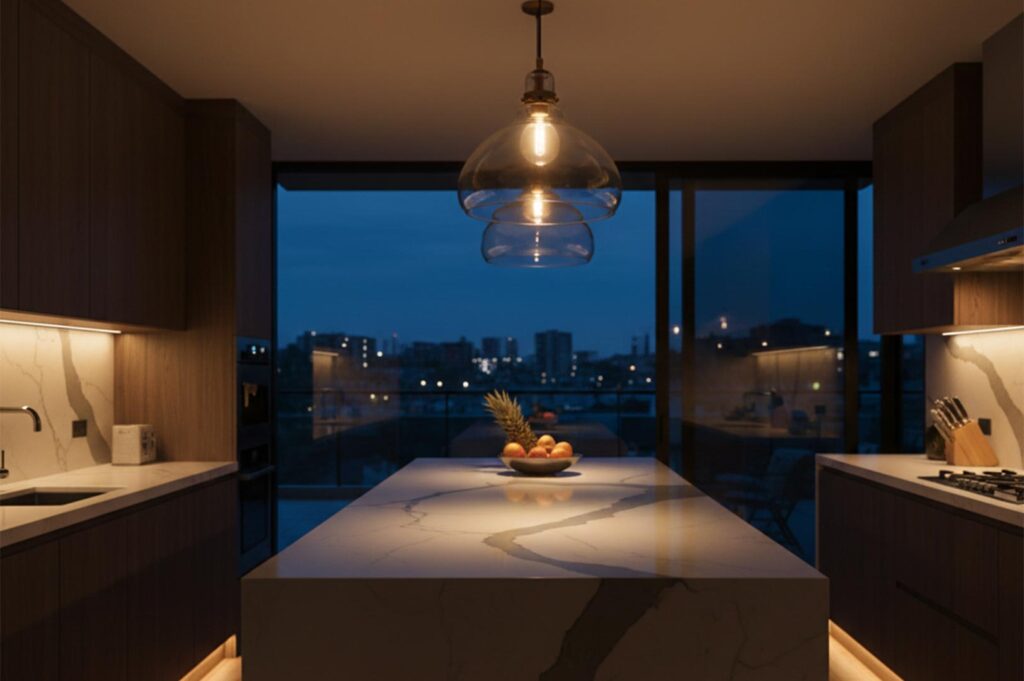
Lighting is a key element that enhances both the design and functionality of contemporary kitchen cabinetry. Under-cabinet LED strips offer bright, focused task lighting that improves visibility on countertops, making food preparation safer and more efficient. Interior cabinet lighting is often used to showcase glass-front cabinets, adding a touch of ambiance and highlighting decorative items. Toe-kick lighting, installed at the base of lower cabinets, creates a floating effect while softly illuminating pathways for safety during low-light conditions. Additionally, pendant lights positioned above the kitchen island serve as stylish fixtures that add warmth and character, becoming focal points that complement the overall kitchen design.
You might not realise how much lighting influences the kitchen atmosphere until you see how a well-lit workspace reduces eye strain and speeds up prep work during busy shifts.
Working with Restaurant Renovations SG: Expert Advice for Your Dream Kitchen
Translating contemporary kitchen cabinet design into a functional, compliant, and durable commercial kitchen requires expert guidance. Our design team understands how to blend modern designs and contemporary kitchen design with practical needs for Singaporean homes and restaurants. We help select the right materials, design smart storage, and ensure flawless installation with minimal disruption.
Ready to explore contemporary cabinet solutions for your restaurant? Contact our design specialists for a no-obligation consultation at Restaurant Renovations, your trusted partner in transforming commercial kitchens. Visit our website restaurant renovations today!