
What Restaurant Renovations Really Reveal
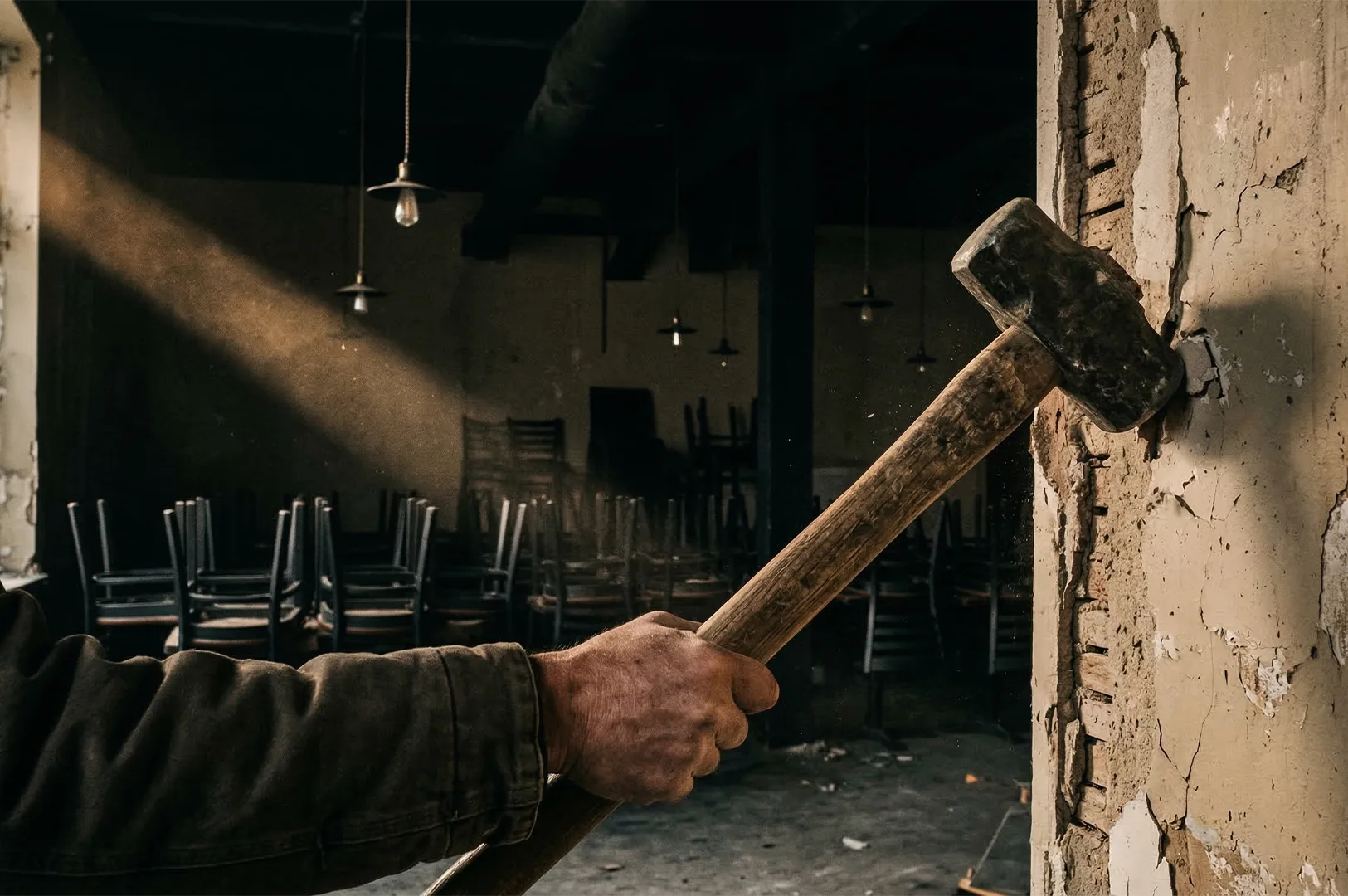
The First Swing of the Hammer
Every restaurant renovation has a moment that feels strangely quiet.
It happens right before demolition begins.
The chairs have already been moved out. The lights are off. The room that once carried the rhythm of service suddenly feels suspended in time. Then someone picks up a hammer or a crowbar and the first section of wall gives way.
This is when a renovation stops being an idea and becomes a discovery.
Most owners imagine renovations as a process of building. But the real story begins with removal. Once the walls open, the space starts to reveal things no one expected.
And that is when the past starts speaking.
What the Walls Remember
Older restaurant spaces have long memories.
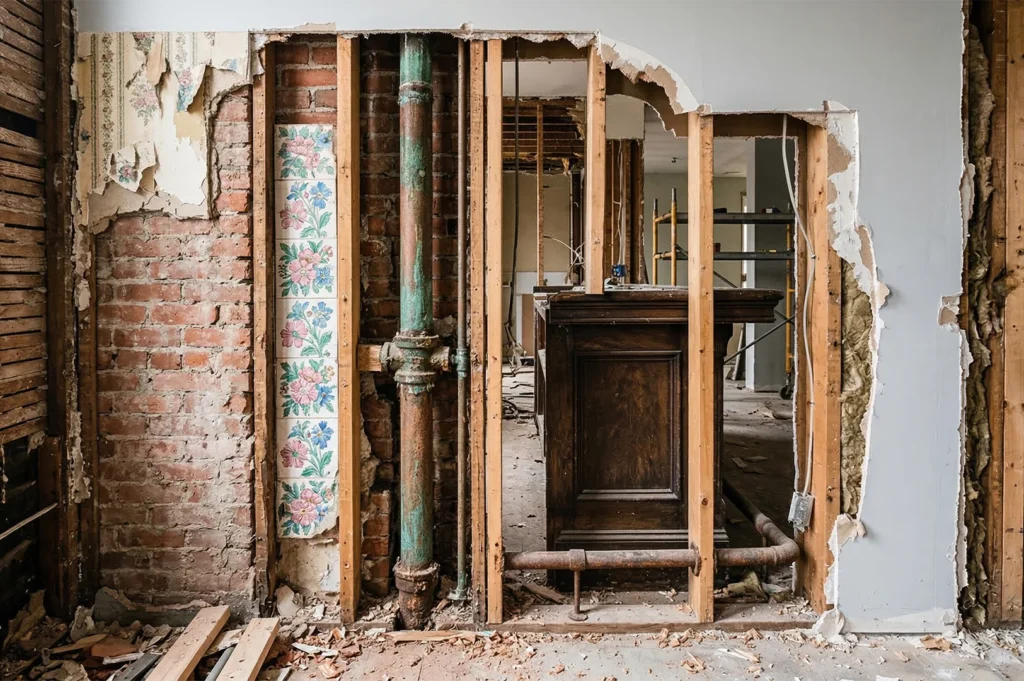
Behind a layer of drywall you might find pipes that belong to a previous tenant. Electrical lines added quickly during a rush renovation ten years ago. Sometimes there are tiles, bricks, or old signage from a restaurant that once stood in the same place.
It feels a little like archaeology.
One renovation team once opened a partition wall and found the outline of an old bar counter that had been sealed away during a previous redesign. Another project uncovered hand painted tiles from a café that operated there in the 1980s.
These discoveries rarely make it into the final design plan, but they shape how owners see the space.
A restaurant is never just one story. It is layers of stories stacked on top of each other.
When demolition begins, those layers briefly surface.
The Surprises That Change Everything
Demolition also reveals the practical realities that no design drawing can fully predict.
A pipe runs exactly where the new bar counter was meant to go. A structural column appears behind a wall that was assumed to be hollow. Ventilation ducts are not where the original plans suggested they would be.
In renovation work, surprises are normal.
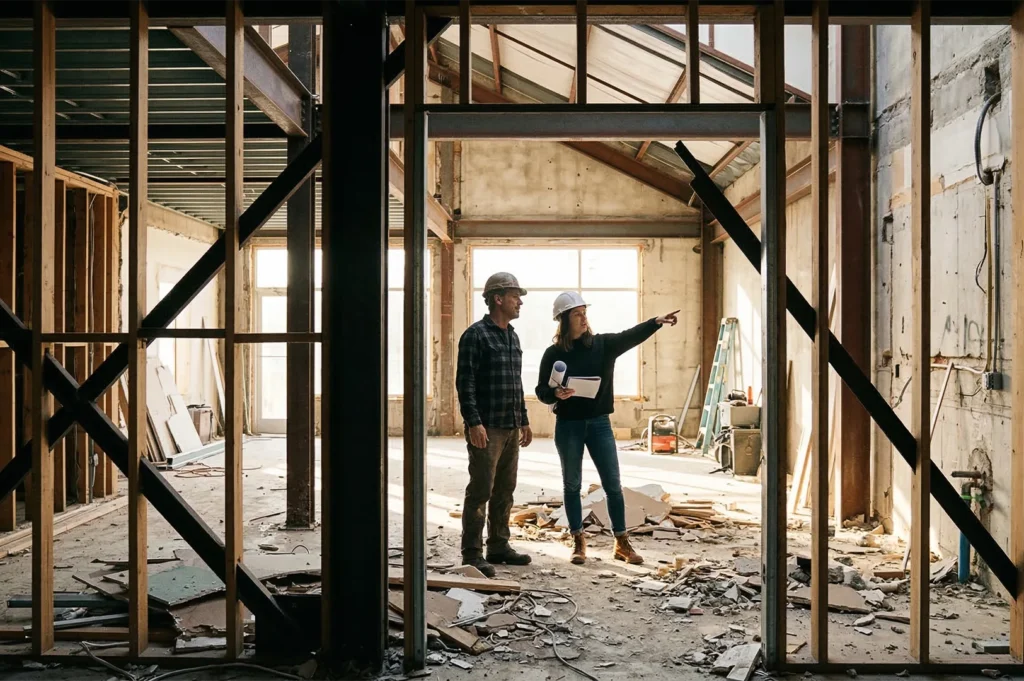
This is the moment when the design team gathers around exposed beams and wiring, studying the bones of the building. Sometimes they adjust the layout slightly. Sometimes they rethink the flow of the entire space.
What seemed like a finished concept on paper suddenly becomes flexible again.
And in many ways that flexibility improves the final design.
Spaces begin to respond to the building itself rather than forcing the building to follow a drawing.
When the Space Starts Talking Back
There is a strange intimacy in this stage of renovation.
For a few days the restaurant exists in a raw and unfinished state. Concrete, brick, pipes, and steel beams are exposed. Without finishes and decorations, the structure becomes visible.
Owners often say this is the first time they truly understand the space they have been working with.
They notice ceiling heights. They see how natural light enters through the windows. They start imagining how the room might breathe once it opens again.
Design decisions that once felt abstract suddenly become clear.
Where the bar should sit. How the kitchen should connect with the dining room. Which wall should remain open instead of being rebuilt.
Demolition creates clarity.
A New Chapter Begins in the Dust
It may look chaotic from the outside. Dust on the floor, broken panels leaning against the wall, contractors carrying out piles of debris.
But this moment carries a quiet sense of possibility.
Because once the walls come down, the restaurant is no longer bound by its previous version.
The hidden pipes, forgotten structures, and traces of earlier tenants remind everyone that spaces evolve. Each renovation becomes another chapter in a longer story.
Soon the noise of construction will fill the room again. New walls will rise. Fresh lighting will be installed. Tables will return and the sound of conversation will replace the echo of empty space.
Yet the most revealing moment of the entire project will have already happened.
It was the day the walls came down.