
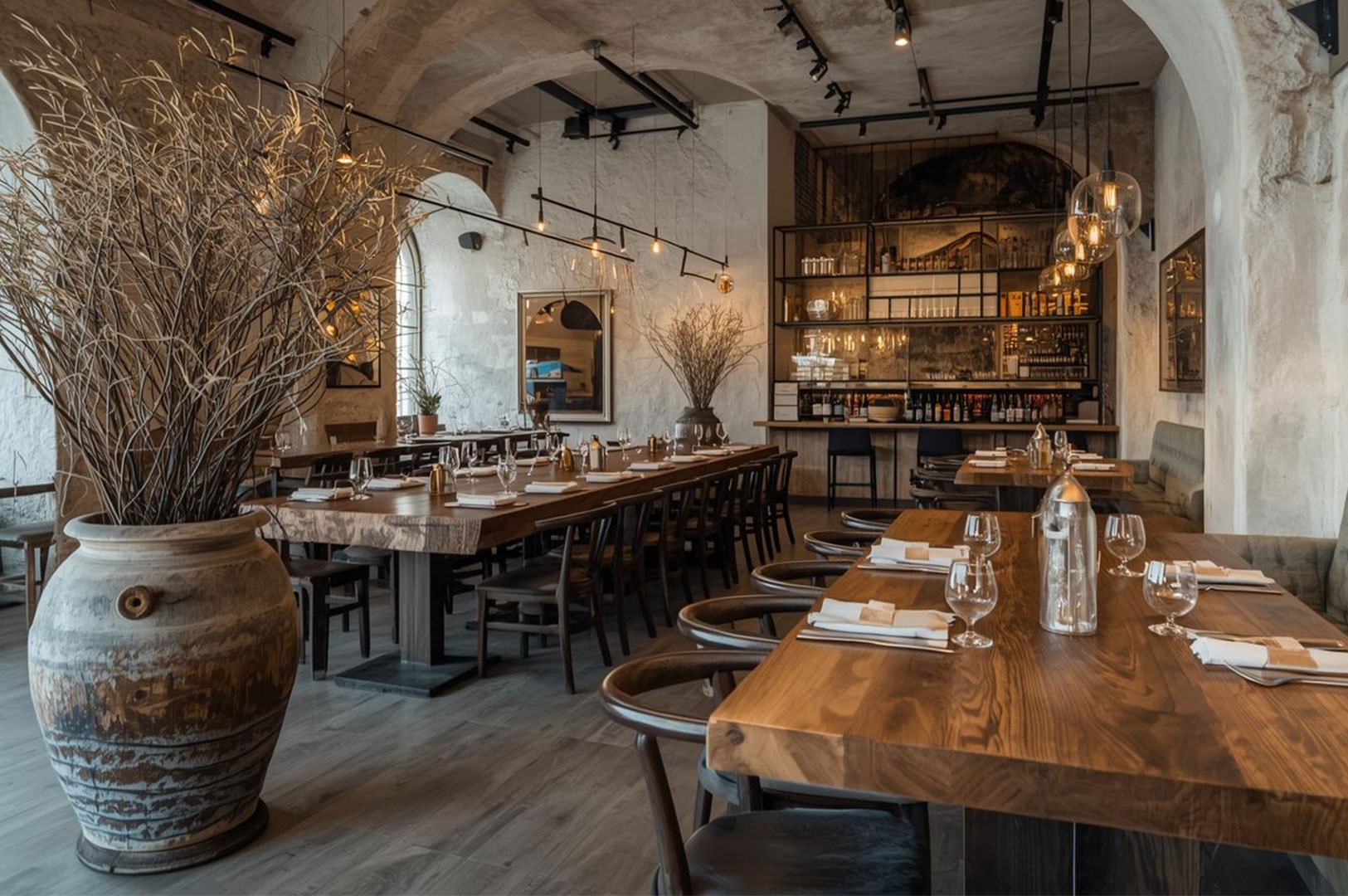
When thinking of Greek island restaurant design, many picture iconic whitewashed walls paired with light blue domes. While this look is famed worldwide, authentic greek interior design offers much more than the classic blue-and-white palette. Rooted in ancient traditions, greek style draws from natural elements and reflects a harmonious relationship with the surrounding environment. The principles of greek architecture—simplicity, practicality, and an organic blend with nature—define the spaces that inspire true Mediterranean ambiance.
For restaurant owners seeking a unique interior design direction, embracing the essence of greek island restaurant design means going beyond the expected. By integrating natural elements, celebrating craftsmanship, and honoring the diverse history of greek architecture, you can create a restaurant interior that tells a compelling story to guests.
This depth and authenticity transform ordinary dining into a memorable escape, making every meal an experience rather than just a service. For restaurant owners seeking a unique interior design direction, embracing the essence of Greek island restaurant design means going beyond the expected. Learn more at Restaurant Renovations.
Regional Variations: Greek Island Restaurant Design Diversity

Greece’s islands are celebrated for their rich history, dynamic character, and unique approaches to greek island restaurant design. Each island group offers distinctive inspiration for restaurant design, demonstrating how regional greek architecture, natural materials, and interior design philosophies can come together in fresh and authentic ways.
- The Cyclades (Beyond Santorini): While Santorini may set the trend for light blue accents, the Cyclades collectively reveal a deeper tradition. Islands like Tinos and Sifnos highlight restaurant design built around rugged stonework, cubist forms, and organic, asymmetrical layouts—details rooted in traditional greek architecture. The use of natural materials like stone and lime plaster, combined with a restrained color palette, creates inspiring interiors that celebrate simplicity and the landscape itself.
- The Dodecanese: In this region, greek island restaurant design is influenced by centuries of Venetian and Ottoman presence. Here, restaurant interiors often feature ornate neoclassical facades, colorful walls, and intricate pebble mosaic patterns known as chochlaki. Outdoor bar areas and dining patios may be framed by natural wood and ironwork, blending old-world elegance with functionality—a hallmark of both historic greek architecture and thoughtful interior design.
- The Ionian Islands: Distinct from the Aegean, the Ionian islands like Corfu and Kefalonia infuse restaurant design with Venetian-style arches, decorative windows, and tiled roofs. Warm ochre and terracotta hues, paired with natural materials like marble and weathered wood, define interiors and exteriors alike. The region’s greek architecture brings a softer, earthier touch to restaurant spaces, ideal for those seeking to create a relaxed yet artful dining experience.
Greek Design Color Palettes: Earth Tones, Light Blue, and Natural Elements

The authentic Greek island color palette goes far beyond the familiar blue and white, showcasing subtle earth tones, soft blues, and rich natural elements that reflect both the land and the sea. These hues are central to any greek interior design project and provide the perfect foundation for a welcoming restaurant interior.
- Linen White (#F7F5E6): This soft, warm white mirrors sun-aged plaster and amplifies natural light in the room, creating a clean, airy backdrop characteristic of classic greek design.
- Terracotta (#E2725B): Inspired by clay pots and traditional tiles, this earthy shade introduces warmth and rustic charm—ideal for accent walls, planters, or tiled flooring in restaurant spaces.
- Ochre (#CC7722): A golden hue used on facades across the Ionian islands, ochre highlights natural elements and brings a sense of sunbaked landscape indoors.
- Stone Gray (#A9A9A9): Echoing weathered stone, this neutral shade offers a grounding effect and a tactile backdrop for wood and other natural materials.
- Light Blue and Soft Blues (#87CEEB, #4D80A4): These colors recall the Aegean and Mediterranean seas, bringing a soothing sense of nature into the restaurant interior. Use light blue for painted surfaces or decorative elements, and incorporate soft blues in textiles, artwork, and seating.
For a cohesive look in greek island restaurant design, let linen white be your canvas, introduce terracotta and ochre for visual warmth, and use gradients of light blue and soft blues throughout your décor. Combine these shades with abundant natural elements—think stone, wood, and greenery—to create a restaurant interior that feels both authentically Greek and deeply connected to its surroundings.
Architectural Elements: Curves, Arches, and Organic Forms
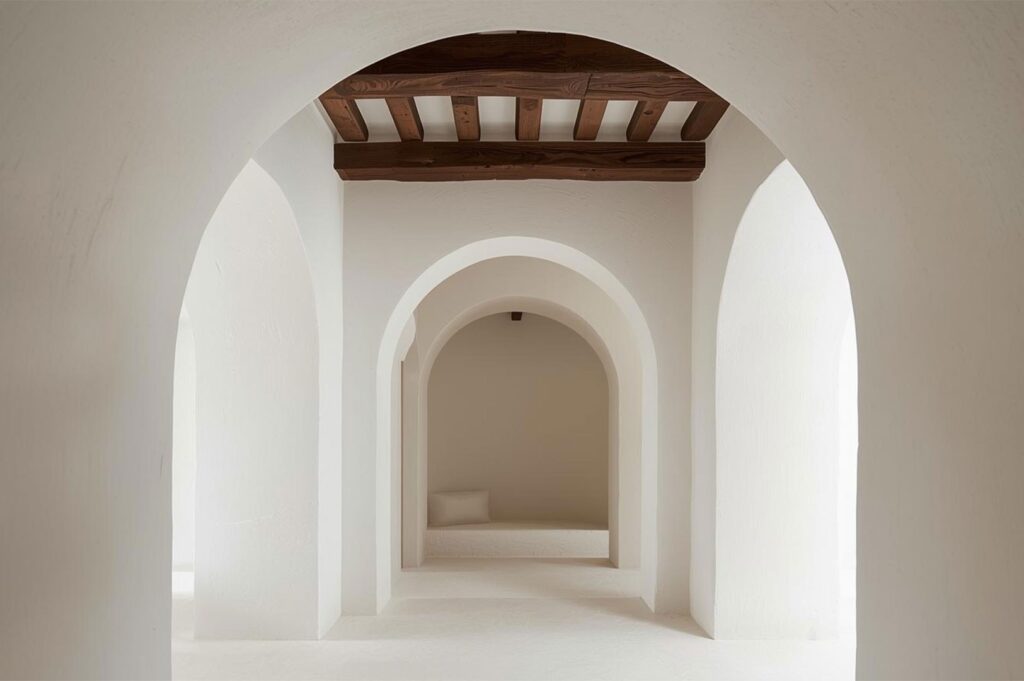
Greek island architecture is defined by its soft, organic shapes that blend seamlessly with the natural environment.
- Curved Walls: Interior and exterior walls often curve gently, creating a sense of flow and softening the transitions between spaces. This can be adapted in a restaurant to guide guests through the dining room or to create intimate, cocoon-like seating nooks.
- Arched Doorways and Windows: Arches are a common feature, used not just for structural support but also to frame views and create elegant entryways. A simple arched opening between the bar and dining room can add immense character.
- Asymmetrical Layouts: Traditional island homes grew organically over time, resulting in charmingly imperfect and asymmetrical floor plans. This can inspire a restaurant layout with varied seating areas, different floor levels, and unexpected corners, making the space more interesting to explore.
- Ceiling Treatments: Exposed wooden beams, often made from local timber, are a staple. Another technique is the vaulted ceiling, which helps keep interiors cool. Faux beams or a simple barrel vault can replicate this look effectively.
Material Authenticity: Stone, Wood, and Natural Materials in Greek Style Interior Design

Choosing the right natural materials is central to authentic Greek style and effective interior design. Greek island restaurant design is characterized by the use of stone and wood, which add timeless beauty and a hint of rustic charm to any space.
- Flooring: Bring the essence of ancient Greece into your restaurant interior with stone floors—polished concrete, marble, or large-format stone tiles all provide durability and a clean look. For a more rustic Greek decor, reclaimed terracotta tiles or patterned ceramics are excellent for introducing both texture and tradition.
- Wall Treatments: Natural materials shine on the walls, where textured plaster finishes like kourasani reference classic Greek architecture. These imperfect surfaces add depth and a handcrafted feel central to genuine Greek design.
- Countertops: Feature the raw beauty of nature with a thick, stone countertop or a robust slab of wood for your bar or service area. Both options not only serve as functional surfaces but also become statement pieces that anchor the interior.
Blending stone, wood, and other natural materials helps create a warm, authentic, and inviting environment—one that honors Greek style and tells a story of heritage through interior design.
Lighting Strategies: Capturing Mediterranean Luminosity in Greek Island Restaurant Design
Bringing the serene, sunlit feel of the Aegean into your restaurant interior starts with thoughtful lighting strategies grounded in classic Greek design. The interplay of natural elements and soft lighting is central to authentic interior design, especially in spaces inspired by Greek style. Maximize daylight by installing large windows framed in light blue or white to echo the hues of the Greek sea and sky. This not only invites nature indoors but also fills the space with uplifting brightness.
Use sheer linen curtains to soften sunlight, creating a gentle transition between outdoor and interior environments. For artificial lighting, select fixtures crafted from natural materials—think woven basket pendants, carved wood sconces, or rustic ceramic lamps. These choices enhance the overall connection to nature within the restaurant interior. Recessed lighting along curved walls or ceilings can highlight architectural elements like arches, core to Greek architecture and design.
Warm-toned bulbs (around 2700K) bathe your dining area in the distinctive glow of a Greek summer evening, while strategic placements can draw attention to key areas—such as the bar, communal tables, or cozy nooks. Layered lighting, combining ambient, task, and accent sources, helps to create a welcoming atmosphere and highlight textures unique to your interior design. Ultimately, the right lighting is essential to achieving an inviting, harmonious space that embodies the best of Greek island restaurant design.
Furniture Selection: Balancing Tradition with Comfort
Choosing the right furniture is key to capturing authentic Greek style within your restaurant interior. Greek island restaurant design is characterized by simplicity and a strong connection to natural materials such as wood and stone. In your interior design, opt for clean-lined wooden chairs, sturdy tables, and built-in banquettes that evoke a sense of rustic charm and comfort. Avoid excessive ornamentation; instead, seek contemporary pieces that reflect the straightforward elegance of traditional Greek style. Mixing seating options—pairing wooden furniture with cushioned benches—not only increases comfort but also enhances the casual, welcoming atmosphere that defines a successful Greek restaurant interior. This approach allows your space to blend timeless Greek elements with modern interior design sensibilities.
Decorative Elements: Authenticity Through Artifacts
Authentic Greek restaurant decor is about curated, meaningful objects, not clutter.
- Ceramics: Display large, handmade terracotta or ceramic pots (pithoi), either empty or with olive branches.
- Textiles: Use hand-woven rugs or cushions with traditional geometric patterns.
- Metalwork: Simple wrought-iron details on light fixtures or railings can add a touch of craftsmanship.
- Art: Instead of generic travel photos, commission a local artist for a piece inspired by Greek mythology or landscapes.
Indoor-Outdoor Flow: Bringing Greek Interior Design and Natural Elements Into Your Restaurant Design
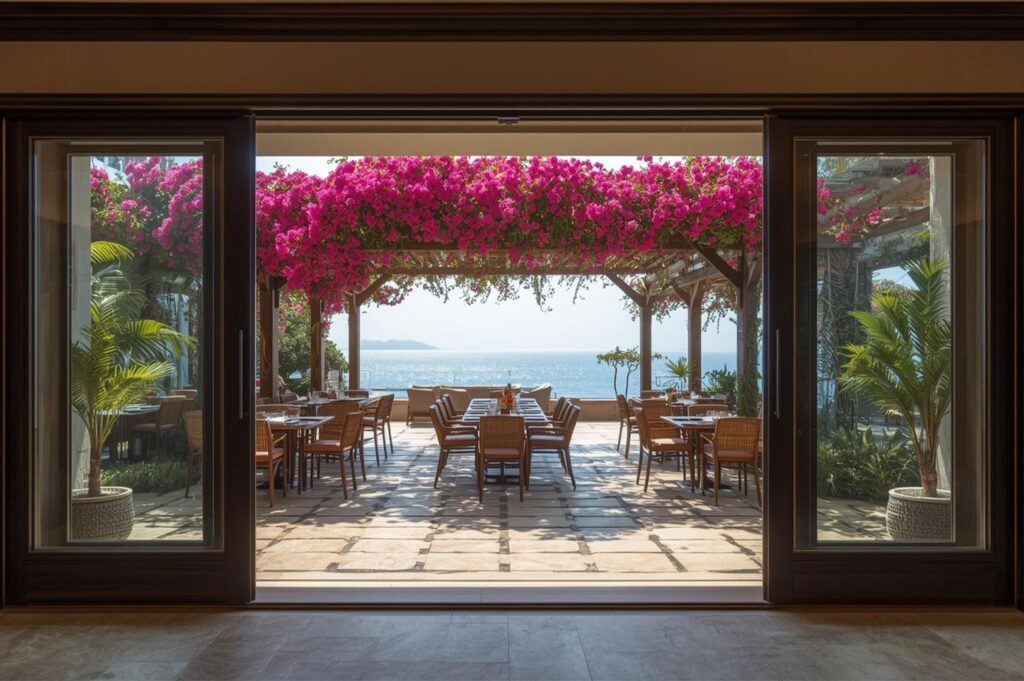
One of the most inspiring features of Greek architecture is its ability to dissolve barriers between the interior and the natural surroundings. Authentic greek island restaurant design uses indoor-outdoor flow to make the most of nature, light, and local climate. For your restaurant, consider large glass doors or expansive windows that open onto patios or courtyards, filling the space with sunlight and offering diners a seamless transition between inside and outside.
Extend your flooring—such as rustic stone tiles or pale wood—across both interior and exterior areas to maintain visual continuity. Incorporate natural elements like lush greenery, classic white walls, and signature light blue accents to echo the colours of the sea and sky, creating a tranquil summer atmosphere. Outdoor nooks with pergolas dressed in bougainvillea or jasmine, paired with simple tables and chairs, reinforce the blend of interior design and nature. This approach not only enhances the charm of your restaurant interior but also invites guests to experience the essence of Greek Style in every corner.
Expert Tips: Adapting Greek Island Restaurant Design for Different Concepts
When considering how to apply authentic Greek island restaurant design across various restaurant concepts, it’s important to focus on the core principles of Greek style: clean lines, harmony with nature, and the creative use of natural materials. Here’s how to tailor your interior design to match your restaurant’s personality:
- Casual Tavernas: Highlight rustic restaurant design with abundant use of wood and stone, simple tables and chairs, and a communal layout. Greek style here is relaxed, full of character, and infused with natural elements that encourage easy conversation and lively gatherings.
- Upscale Fine Dining: Elevate your interior design with refined natural materials like marble countertops, polished stone surfaces, and bespoke lighting. The essence of greek design in this concept is understated elegance—think soft textiles, elegant curves, and a muted palette. Incorporate signature Greek architectural elements, such as graceful arches and textured walls, to create an inviting yet sophisticated space.
- Fast-Casual Concepts: Blend practicality with aesthetic by using durable natural materials in a way that feels fresh and modern. Utilize stone or tile counters, basket-weave lighting, and plaster-finish walls to quickly communicate the charm of Greek design. Focus on clean lines and functional decor for a streamlined yet welcoming restaurant interior.
No matter the concept, embrace natural elements such as plants, classic white walls, and touches of light blue to reinforce your restaurant’s authentic Greek story and create an enduring sense of inspiration for diners.
Sustainability in Greek Architecture and Restaurant Design: Harnessing Natural Materials and Elements
Sustainability lies at the heart of authentic Greek architecture and is vital for contemporary restaurant design inspired by the islands. Using natural materials such as stone, wood, and clay not only echoes tradition but also promotes energy efficiency and environmental stewardship. Thick stone walls offer superb insulation, while whitewashed surfaces reflect sunlight, helping restaurants stay cool during Singapore’s summer months. Classic design features like arched windows, cross-ventilation, and shaded courtyards—core to Greek interior design—bring natural elements indoors, reducing reliance on artificial cooling and lighting. By referencing these approaches in your restaurant interior, you blend heritage and innovation, creating spaces that respect both ancient wisdom and modern sustainability trends. Embracing these expert tips will transform your dining area into an environmentally conscious destination that celebrates the beauty and practicality of Greek style.
Successful Greek Island Restaurant Design Projects
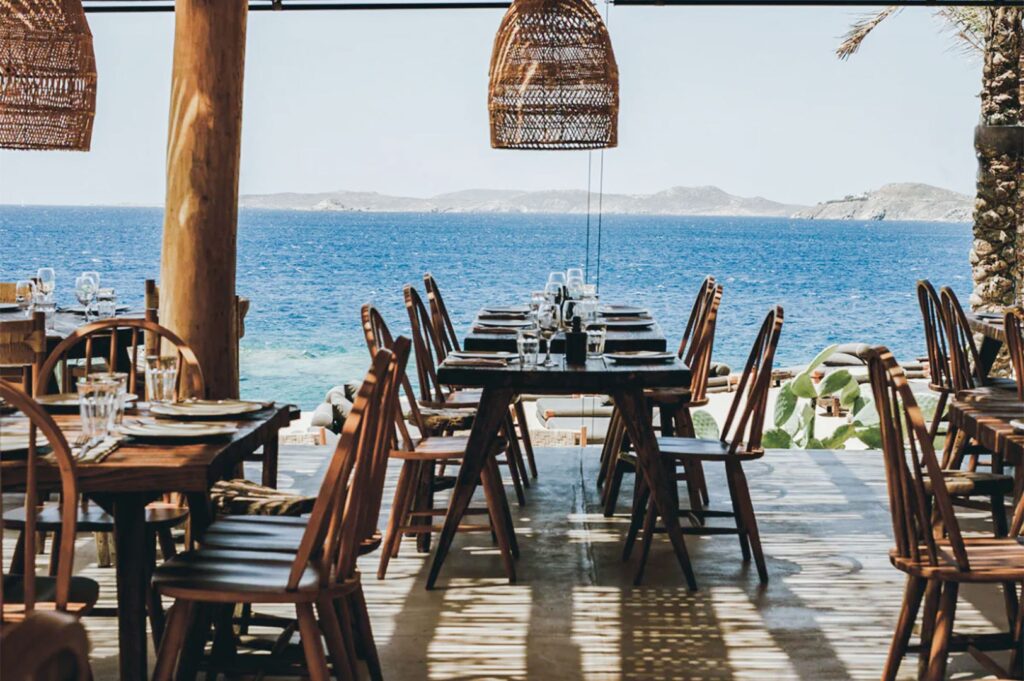
Exploring real-world examples provides tangible inspiration for anyone considering authentic Greek island restaurant design. Each featured restaurant interior showcases how natural materials, thoughtful greek design, and expert interior design choices come together to create immersive spaces that transport guests.
- Scorpios, Mykonos: A benchmark in modern greek island restaurant design, Scorpios blends rustic natural materials like stone and wood with soft earth tones. This restaurant interior is carefully curated, with weathered textures and artisanal decor reflecting the raw beauty of the Mediterranean. The careful use of natural materials and open architectural elements showcase how an environment can feel both luxurious and relaxed, perfectly balancing comfort and sophistication in greek design.
- Opa, Dubai: This venue takes greek interior design to new heights, introducing curved plaster walls, mature olive trees, and a palette of deep greens and neutrals in its restaurant interior. Opa’s adaptation of classic greek style—using arches, authentic artwork, and natural materials—proves that greek island restaurant design can be dramatic and elegant. This is a standout illustration of how interior design can blend tradition with a cosmopolitan energy, honoring the legacy of Greek architecture and the practical needs of a modern restaurant.
Where to Experience Authentic Greek Island Restaurant Design in Singapore
- Bakalaki Greek Taverna (Martin Road (River Valley)): Bakalaki is a prime example of authentic greek island restaurant design brought to life in Singapore. Its welcoming restaurant interior features white plaster walls and exposed wood beams, blending greek style with the buzz of a communal taverna. The carefully chosen natural elements—like rustic tables and artisan ceramics—reflect classic interior design concepts that immerse visitors in an atmosphere reminiscent of the Mediterranean.
- Alati Divine Greek Cuisine (Amoy Street): Alati stands out for its commitment to clean, minimal interior design inspired by the Cyclades. Located in a shophouse, this restaurant interior leverages natural elements such as curved banquettes and textured plaster finishes, incorporating subtle blue accents and ample natural light. It’s a refined greek style venue where the seamless blend of modern sensibility and traditional charm offers ongoing inspiration for anyone passionate about restaurant design.
- Mykonos on the Bay (Quayside Isle): Overlooking Sentosa Cove, Mykonos on the Bay channels the easy elegance of greek island restaurant design through its open-air layout and signature use of natural elements. The restaurant interior features simple white-and-blue décor, traditional tiles, and wooden furniture that convey a relaxed greek style. The blend of indoor and outdoor spaces, punctuated by natural textures, captures the true spirit of Mediterranean interior design for guests and restaurateurs alike.