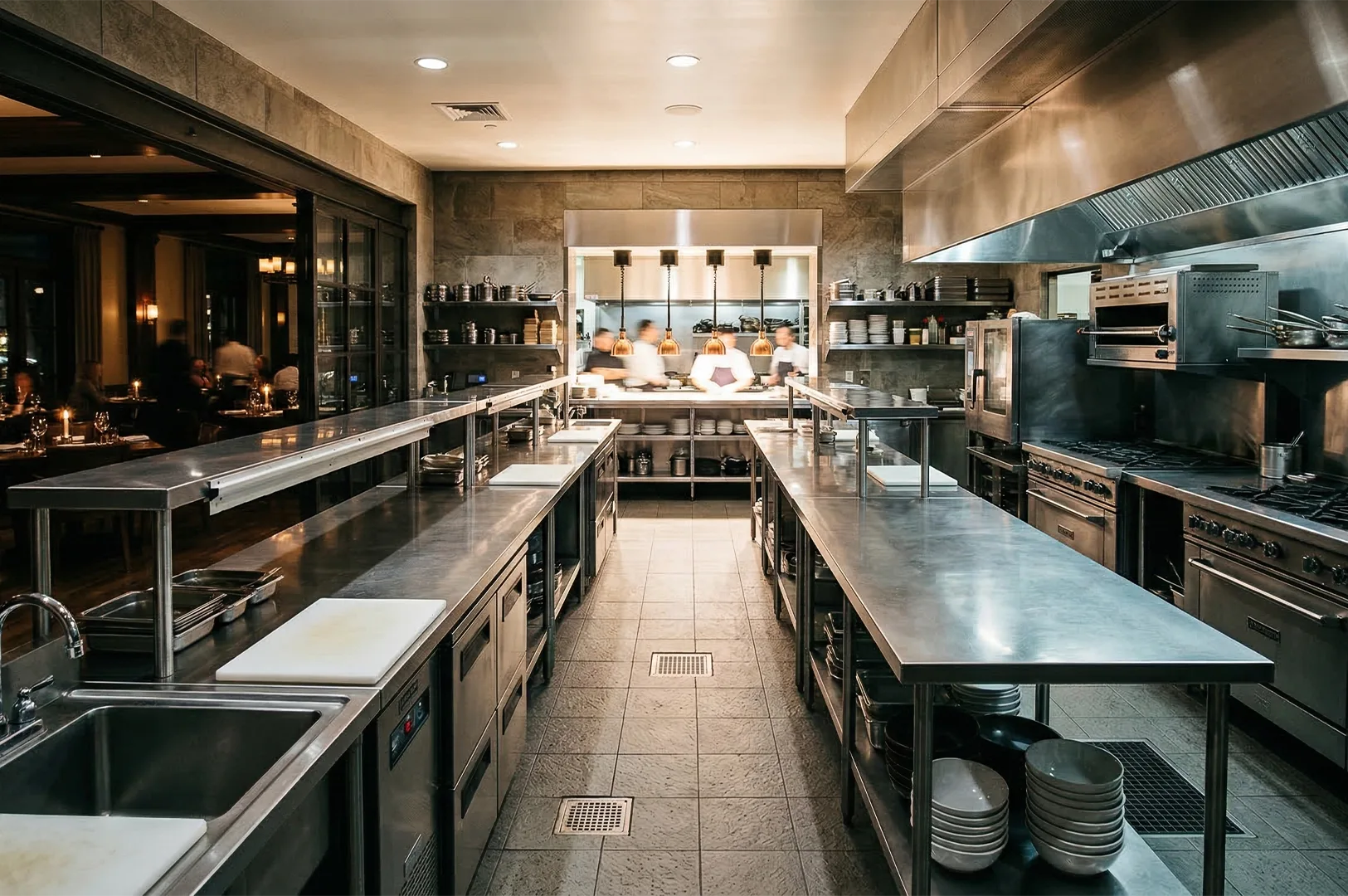

The Hidden Engine of Every Dining Room
The Room Guests Rarely See
When people imagine restaurant design, they usually picture the dining room.
They think about lighting, furniture, textures, and the mood of the space. Designers sketch where the bar should sit, how the tables will be arranged, and how the entrance should welcome guests.
But the real design often begins somewhere else.
It begins in the kitchen.
Because long before guests notice the atmosphere, the restaurant has already been shaped by how food moves from stove to table.
Where the Rhythm of Service Begins
A restaurant does not function like a living room or a retail shop. It operates more like a living system, one that moves in waves of activity throughout the day.
Lunch service arrives quickly and demands speed. Dinner unfolds more slowly but with higher complexity. Orders come in bursts. Plates leave the kitchen in sequences. Staff move constantly between stations.
The kitchen sits at the center of that rhythm.
If the kitchen workflow is smooth, service feels effortless to guests. If the workflow is awkward, the entire restaurant begins to struggle.
This is why experienced restaurant designers often begin by asking chefs a simple question.
How do you want to cook here?
The answer shapes everything that follows.
Designing Around Movement
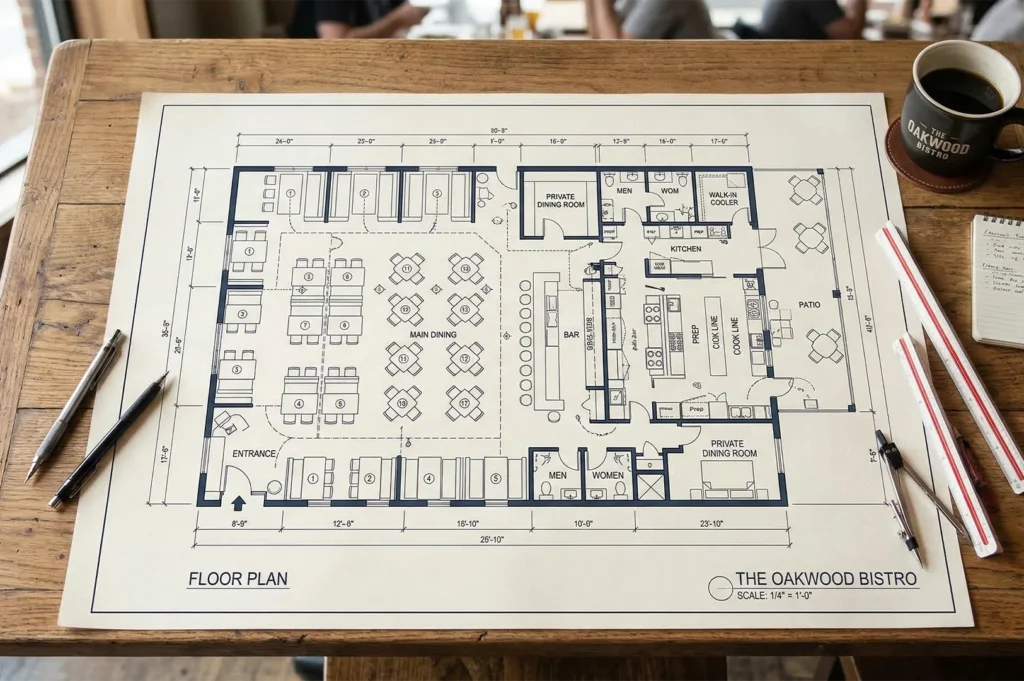
In a well designed restaurant, every plate follows a natural path.
Ingredients arrive through the back entrance. Prep stations sit close to cold storage. Cooking equipment aligns with plating areas. Finished dishes move quickly toward the pass where servers collect them.
From there the journey continues into the dining room.
When these movements are considered early in the design process, the restaurant operates with a quiet efficiency. Staff take fewer unnecessary steps. Orders reach guests faster. The kitchen team maintains focus instead of constantly navigating obstacles.
Even the placement of doors, counters, and corridors influences this flow.
Design is not only about what people see. It is about how people move.
When Beauty Comes Second
This might sound surprising to some owners.
After all, the dining room is where guests spend most of their time. It seems natural to prioritize its appearance.
But experienced restaurateurs often take the opposite approach.
They start with the kitchen.
Once the cooking stations, storage areas, and service pathways are carefully mapped out, the dining room begins to form around them. Walls shift slightly. Walkways widen or narrow. Service stations appear exactly where they are needed.
Only then does the visual design begin to take shape.
Lighting, textures, materials, and furniture are layered onto a layout that already works.
A beautiful dining room cannot compensate for a poorly designed kitchen.
But a well organized kitchen quietly supports every guest experience.
The Invisible Choreography
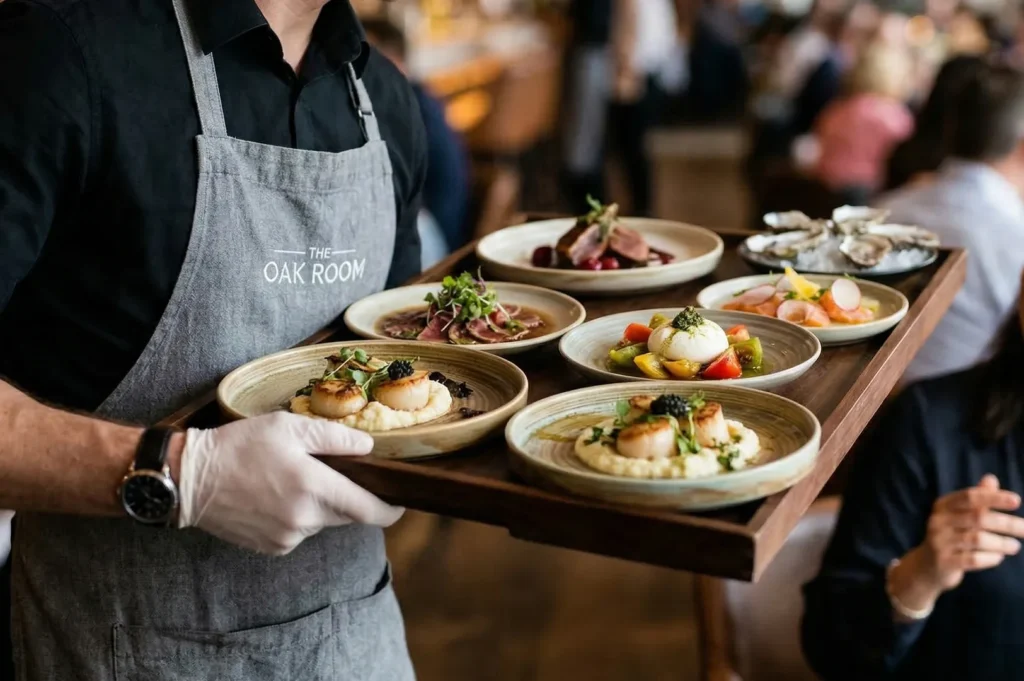
Watch a busy restaurant long enough and you will notice something interesting.
Servers move through the room with a certain rhythm. Plates arrive at tables just as conversations pause. Empty dishes disappear without interrupting the moment.
It feels natural, almost effortless.
Behind that ease lies careful planning.
Service stations positioned within reach. Clear pathways between kitchen and dining room. Spaces that allow staff to pass each other without disruption.
This choreography is rarely noticed by guests, yet it defines how comfortable the entire experience feels.
And it almost always begins in the kitchen.
The Heart That Shapes the Whole Space
A restaurant may be remembered for its atmosphere, but it lives through its kitchen.
The energy of the cooks, the pace of preparation, and the movement of dishes outward into the dining room create the pulse of the space.
When renovation teams or designers understand this, the entire project becomes clearer.
Instead of forcing the kitchen into a leftover corner, they allow it to shape the layout from the beginning.
The result is a restaurant that does not only look good.
It works.
And when a space works well, guests may never realize why their evening feels so smooth.
They simply enjoy the meal and the moment around it.