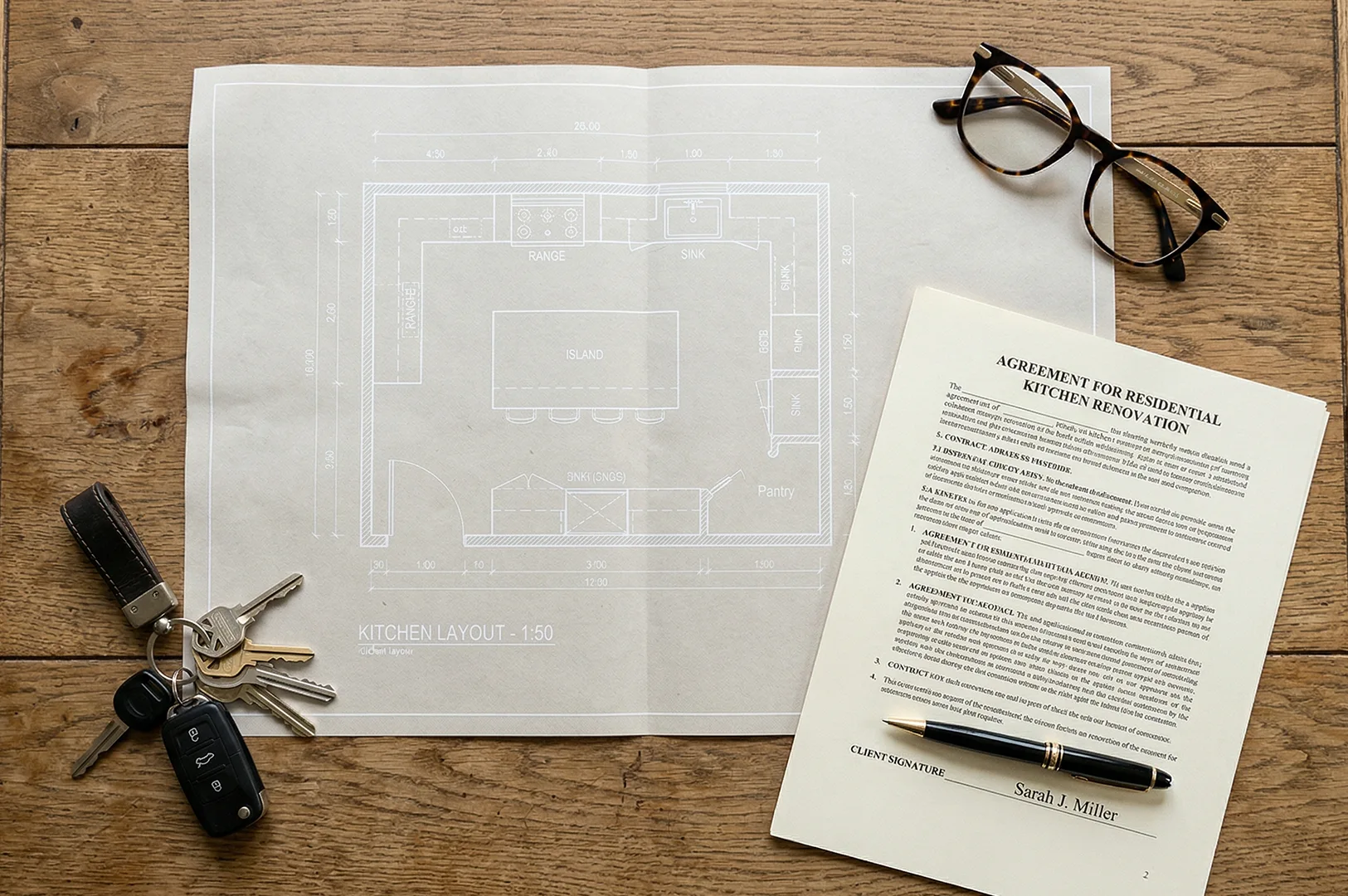

In 2018, I renovated a 1,000 sq ft restaurant near Tanjong Pagar, signing what seemed like a solid contract and paying my deposit. However, three weeks past the opening date and $40,000 over budget, I realized the contract was vague on key details. Despite professional quotation and 3D renders, the agreement allowed the contractor to add costly “extra works” that delayed completion.
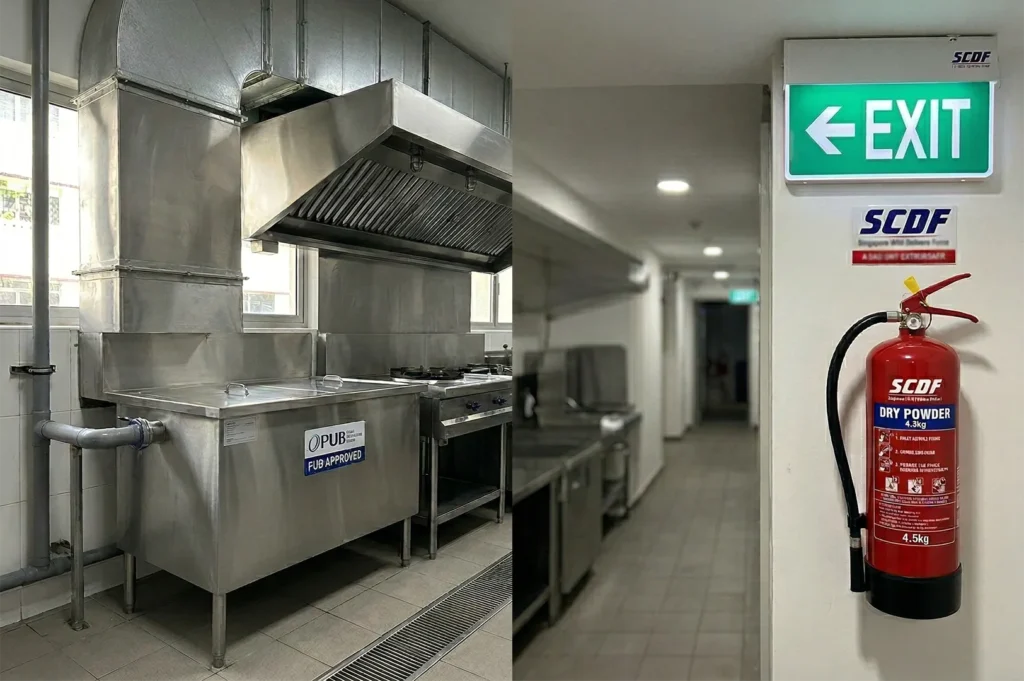
This overview is for restaurant owners in Singapore; not homeowners or retail operators. Restaurant renovations involve multiple authorities: SCDF for fire safety, SFA for kitchen layouts, PUB for grease traps, and building management restrictions. Missing these in your contract can cause delays, costly variations, or regulatory rejection.
Common fears include contractors disappearing after large deposits, unexpected costs, and work delays turning excitement into frustration. That’s why a detailed renovation contract is essential. It should clearly define the scope of work, payment schedule tied to key milestones, completion date, dispute resolution, and defect rectification provisions. Written proof protects both parties and provides legal recourse if needed.
What Contractors Don’t Explain About Restaurant Renovation Contracts
When I first signed a renovation contract for a small café in Lavender, I thought the quotation was the contract. It looked official with company letterhead, itemised pricing, and my signature. But once work began, extra electrical upgrades appeared that weren’t covered. Without a proper scope of work, timeline, payment milestones, and dispute terms, that quotation was nearly impossible to enforce.
Contractors often don’t explain this. Many interior designers and renovation contractors sell concept drawings and 3D renders well but keep contract details vague. These details determine whether your project stays on budget and schedule.
I once saw a restaurant owner face a $28,000 variation and three-week delay because the contractor excluded mall fire safety requirements from the scope. Verbal promises meant nothing without written agreement.
Key Questions Singapore Restaurant Owners Ask Before Signing
I keep hearing the same questions from first-time operators in areas like Joo Chiat, Tiong Bahru, and Tampines Hub. The concerns are remarkably consistent, and they deserve straight answers.
How Much Deposit Is Reasonable?
In my experience, a safe deposit range sits between 10% and 20% of the total contract value. Usually, Singapore contractors cap deposits at 20% as part of their guidelines. When a contractor asks for 30% or 40% upfront, that’s a red flag worth discussing. Works stopped for two weeks mid-project while he juggled cash flow across multiple sites. I had no leverage to push him because he already had nearly half my money.
Can the Contractor Increase the Price Midway?
Technically, no—not without your written agreement through a variation order. The problem arises when the original scope is vague. For example, if your contract states “kitchen works – $35,000” without details on equipment loads or fixture counts, it leaves room for additional costs the contractor may label as “necessary” rather than “extra.”
What Happens If the Contractor Disappears?
This is a major complaint in Singapore’s renovation industry. Options include filing a complaint with CASE, pursuing Small Claims Tribunal for sums up to $30,000, or legal recourse through State Courts for larger amounts. None are quick or pleasant. Prevention is better: keep deposits small, stage payments by milestones, and work with Singapore accredited contractors who have more to lose.
What If We Don’t Pass SFA or SCDF?
This depends entirely on what your contract includes. If authority submissions are your contractor’s responsibility and they’ve included at least one resubmission in the scope, any rejection becomes their problem to resolve. If the contract is silent—as many are—you’ll be paying for redesigns and resubmissions yourself.
What If the Workmanship Is Poor?
A proper defects liability period of 6 to 12 months should be standard in your agreement. Most contractors guidelines mandate a 12-month workmanship warranty for accredited firms. This gives you recourse to request defect rectification without additional charges for a reasonable period after handover.
Liora’s tip: Restaurant fit-out costs in Singapore are front-loaded on mechanical and electrical works. If a quotation looks suspiciously cheap on exhaust systems, electrical upgrades, or plumbing, question it immediately. These are the areas where variation orders most commonly arise.
A detailed contract respects both you and your contractor by setting clear deadlines and expectations from the start.
Step-by-Step: How a Restaurant Renovation Contract Typically Works in Singapore
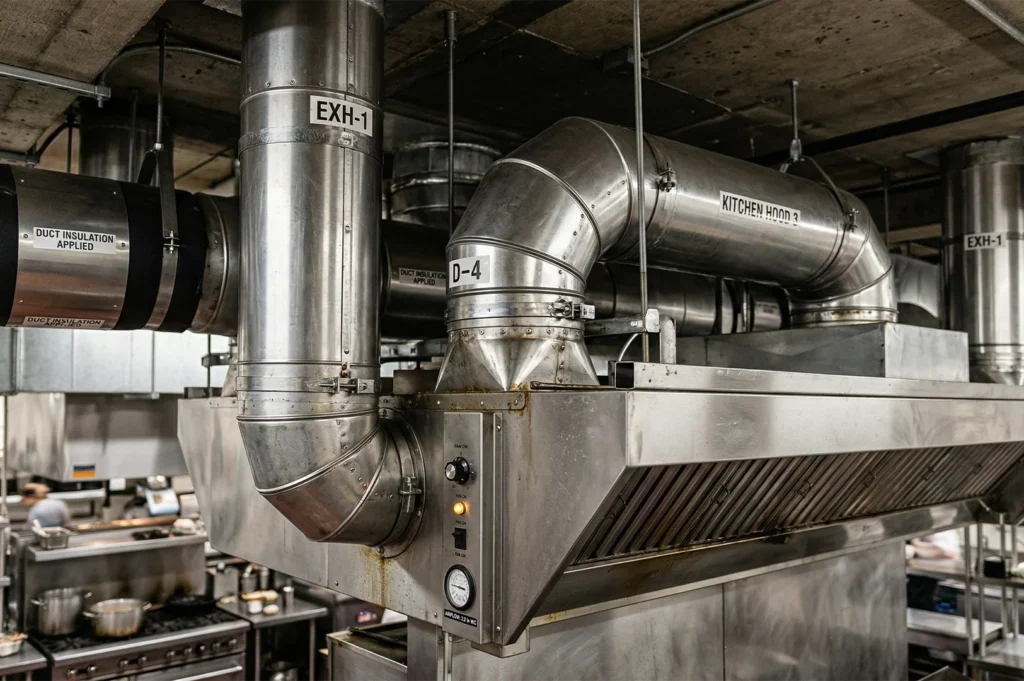
Think of the renovation contract as the backbone of your 3 to 4 month journey from concept to first paying customer. Understanding the renovation process shows why certain contract clauses matter.
Step 1: Concept and Budget Planning
Clarify your restaurant concept, seating, kitchen layout, and equipment list. This affects electrical load, ventilation, and compliance.
Step 2: Site Inspection
A responsible contractor inspects your premises before quoting, checking electrical load, ceiling height, grease trap location, and landlord restrictions. Identify upgrades before signing.
Step 3: Quotation and Design Proposal
Receive concept drawings, 3D visuals, and an itemised quotation. Ensure line items like “Kitchen exhaust system – $45,000” have clear scope: capacity, duct routing, fan specs, and SCDF submission included. Vague scope leads to disputes.
Step 4: Contract Signing
A proper contract includes payment terms tied to milestones, with staged payments:
| Stage | Payment % | Trigger |
|---|---|---|
| Deposit | 10–20% | Upon contract signing |
| Commencement | 20–30% | Start of works/demolition complete |
| Mid-progress | 30–40% | M&E and wet works completed |
| Completion | 10–20% | Satisfactory completion and handover |
Avoid deposits over 20% before work starts.
Step 5: Authority Approvals
Your contract must state who handles submissions. Avoid “Authority submissions – to be advised.”
Step 6: Renovation Phase
Typical sequence: demolition, M&E rough-in, tiling, carpentry, painting, kitchen installation, final fit-out. Expect 6 to 10 weeks of active works. Tie payments to visible milestones; withhold mid-progress payment until M&E and wet works are complete.
Step 7: Inspection and Defects
After completion, conduct joint inspection and compile defects list: uneven tiling, paint touch-ups, misaligned cabinetry, equipment issues. The defects liability period (6-12 months) obligates contractor to fix these at no extra cost. Withhold 5-10% of final payment until defects rectified to keep parties motivated.
Crucial Clauses to Negotiate Before You Sign

I once accepted a contractor’s “standard contract” without pushing back on terms. It seemed reasonable until delays mounted and there were no delay penalties or clear variation order processes. I had no leverage.
The goal isn’t to rewrite their template but to add key clauses that reduce your risk.
Payment Schedule
Keep upfront payments under 20%, with staged payments tied to verifiable milestones. Avoid schedules demanding 50% before hacking.
Variation Orders
All change orders must be written, priced, and signed before work proceeds—no verbal or after-the-fact agreements.
Timeline and Delay Penalties
Include a firm end date with consequences for delays, such as liquidated damages (e.g., $300–$500/day capped at 10% of contract value). The daily rate should reflect your actual losses.
Authority Approvals
Specify who handles submissions to SCDF and SFA, including professional fees up to first approval. Don’t accept silence on this.
Warranty and Defects
Require a minimum 12-month workmanship warranty. Clarify manufacturer warranties vs. contractor workmanship. Provide warranty terms at completion.
Dispute Resolution
Include mediation through CASE or Small Claims Tribunal before legal action. Require written notice and a cure period (e.g., 14 days) before termination.
Liora’s tip: Negotiate these clauses before paying deposit. Once the contractor has 40% of your money, your leverage drops sharply.
What to Add to Your Restaurant Renovation Contract That Most People Forget
The most expensive surprises come from what’s not written down. Here’s a checklist of add-ons to insist on before signing.
Detailed Scope of Work
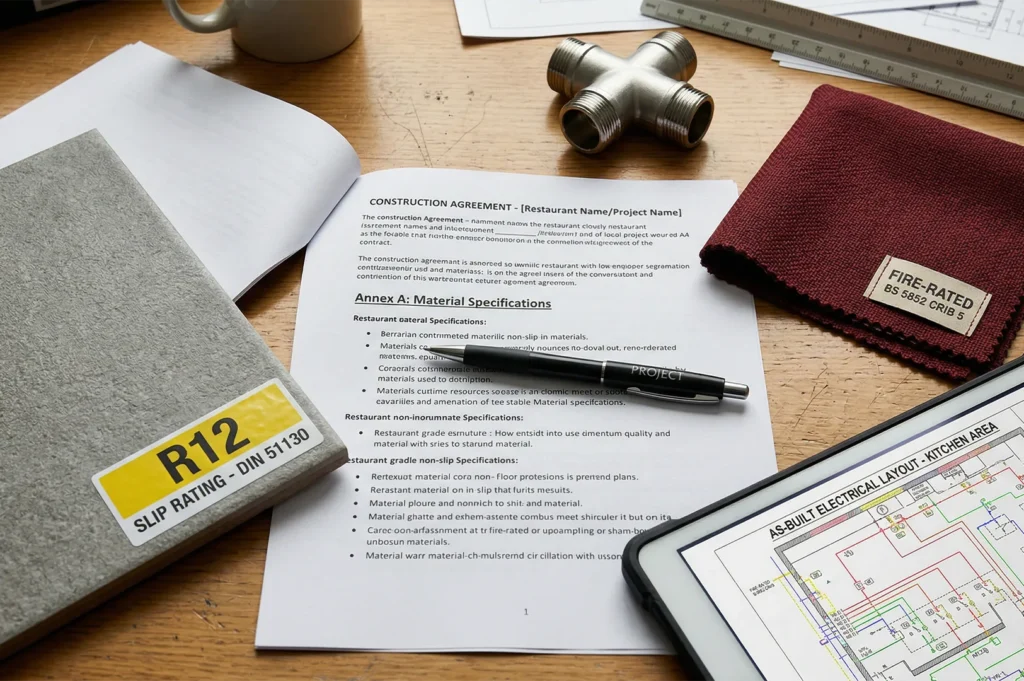
Avoid generic descriptions. Specify and for flooring, specify brand, size, slip rating, and whether substrate prep is included.
Material Specifications Table
Include an annex listing key materials with specifications to ensure compliance with SFA regulations and prevent contractors from substituting inferior materials without approval. This provides a clear reference to avoid disputes and supports future maintenance, repairs, and warranty claims.
Authority Responsibility Matrix
Create a simple attachment stating who is responsible and who pays for each approval:
| Authority | Responsible Party | Fee Included |
|---|---|---|
| SFA layout approval | Contractor | Yes |
| SCDF fire safety | Contractor | Yes |
| PUB grease trap | Contractor | Yes |
| BCA (structural) | Owner | No |
| Building management | Contractor coordinates, Owner pays deposit | Partial |
This eliminates ambiguity on responsibilities and costs if resubmissions are needed.
Handover Checklist
Include an annex listing tests before final payment, such as:
- Exhaust fans operational and balanced
- Power points tested under load
- Floor traps draining correctly
- Hot water points reaching temperature
- Emergency lights and exit signs functional
- Gas system pressure tested and certified
- Cold room holding temperature
Documentation Requirements
Contract should state that soft copies of as-built drawings, electrical diagrams, exhaust routing plans, and equipment lists will be provided at completion. These are essential for maintenance and proving compliance.
Liora’s tip: Malls like PLQ or Jewel require these documents before granting final approval to open. Having documentation requirements in your contract saves last-minute delays.
Local Realities: Singapore Regulations, Landlords, and Industry Red Flags
Singapore’s renovation contracts must address multiple authorities:
- SFA: kitchen flow and food safety
- SCDF: fire safety
- PUB: drainage and grease traps
- BCA: structural changes
- Building management: working hours, noise, insurance, security deposits ($20,000–$50,000)
Contracts should clarify who handles deposits, submissions, and approvals.
Red Flags
- Vague quotes without details
- No material brand or model specified
- Deposits over 20%
- Cash payments without invoices (illegal)
- Contractors unwilling to name SCDF or SFA consultants
Good rapport with contractors helps, but a solid contract is essential to avoid disputes.
Conclusion: Protect Your Opening Date, Not Just Your Renovation Budget

A renovation contract is not just paperwork to rush through. It controls your launch date, cash flow, and stress for months. Every clause you negotiate now saves disputes later.
The cheapest quote often costs more with delays, variations, and regulations. For Singapore restaurants, a detailed contract with clear responsibilities is your best protection.
Reading contracts may feel tedious, but it’s a high-ROI effort. Clear deadlines, payment terms, and warranties let you focus on welcoming guests.
Looking back, I’d spend more time on the contract to avoid delays and extra costs. Treat this guide as a start—not legal advice. For complex projects, consider a lawyer review.
Your restaurant deserves a renovation that’s on time and on budget. It starts with the contract. Visit Restaurant Renovations for expert advice and trusted contractors.