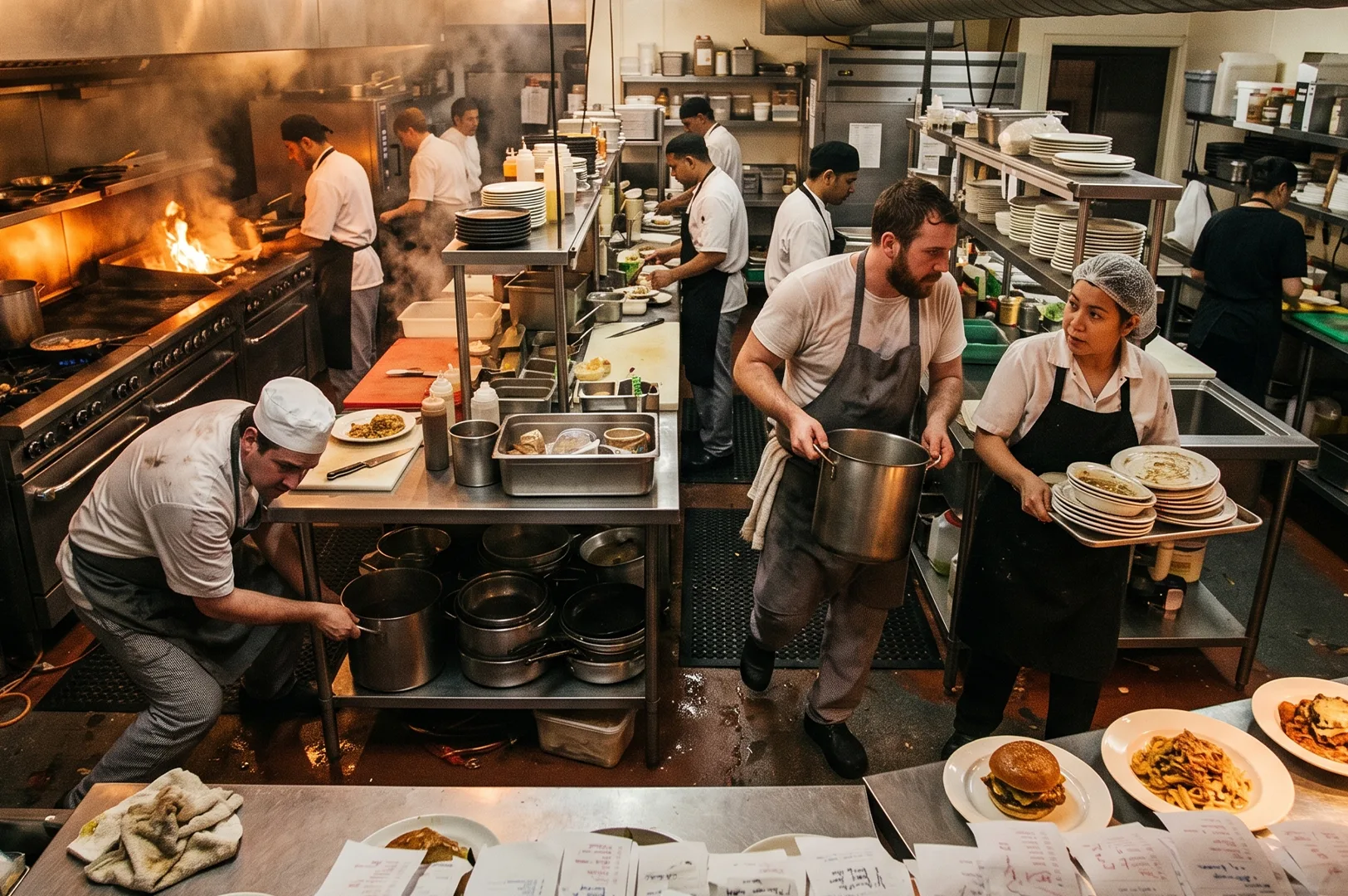

When a chef quits, most owners blame salary, hours, or attitude. Sometimes that is true. But often, the real problem is the kitchen itself.
A poorly designed kitchen creates friction every minute of every shift. Staff walk extra steps, cross paths, bend awkwardly, and work in heat pockets. Tickets pile up. Tempers rise. Mistakes happen. By the end of the week, everyone is exhausted. Burnout is not only emotional. It is architectural.
In Singapore, where kitchen footprints are tight and labour is expensive, layout matters more than ever. Every station should support a clear workflow from prep to cook to plate to pass. If your team keeps bumping into each other, your design is costing you productivity and morale.
The biggest issue is cross-traffic. When dishwashing, prep, and plating share the same pathway, collisions are constant. Even small interruptions break rhythm. In a lunch rush, one blocked route can delay ten orders.
Another common problem is poor reach zones. If frequently used items are stored too high, too low, or too far, staff waste energy on unnecessary movement. It sounds minor, but over a 10-hour shift, those extra motions become physical strain. Add heat and pressure, and burnout accelerates.
Ventilation is another hidden factor. If your hood system is weak or airflow is uneven, some stations become unbearable by peak hour. Heat stress reduces focus and increases errors. It also increases staff turnover, because no one wants to work in a kitchen that feels like a furnace.
Good kitchen design is not about making things look clean. It is about reducing cognitive load. Staff should not have to think about where to move next. The layout should make the next step obvious.
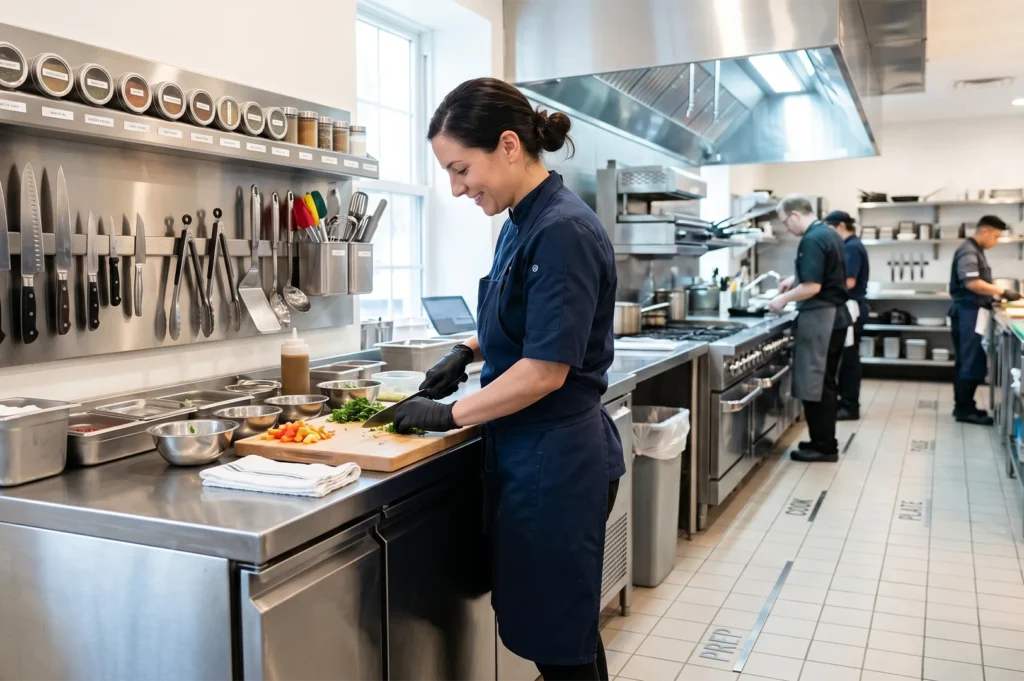
Here is a practical framework:
- Place high-frequency tools within one arm’s reach
- Separate hot line and cold prep traffic
- Keep plating close to the pass
- Minimise backtracking to fridges and dry storage
- Ensure dish return does not cut through production
These are small changes with massive impact.
In Singapore’s F&B market, staff retention is a strategic advantage. If your team stays longer, your food quality stabilises, your training costs drop, and your culture improves. Renovation is one of the few moments when you can redesign the system, not just the décor.
For workplace safety and ergonomics guidance, the Workplace Safety and Health Council (WSH Council) offers resources that are directly relevant to kitchen fatigue, repetitive strain, and heat stress management.
Do not wait for burnout to show up as resignations. Watch for early signs:
- Increased mistakes during peak periods
- Staff avoiding certain stations
- More sick days after busy weekends
- Constant complaints about heat or storage
These are design signals, not just HR signals.
A kitchen that works with your team, not against them, changes everything. Service becomes smoother. Communication improves. Staff leave less often. Guests feel the difference even if they never see the kitchen.If your people are burning out, your layout may be the first thing to fix. Better design is not just about efficiency. It is about keeping your best people.
Check our article about: Kitchen Design: Staff Comfort and Efficiency in Singapore Kitchens