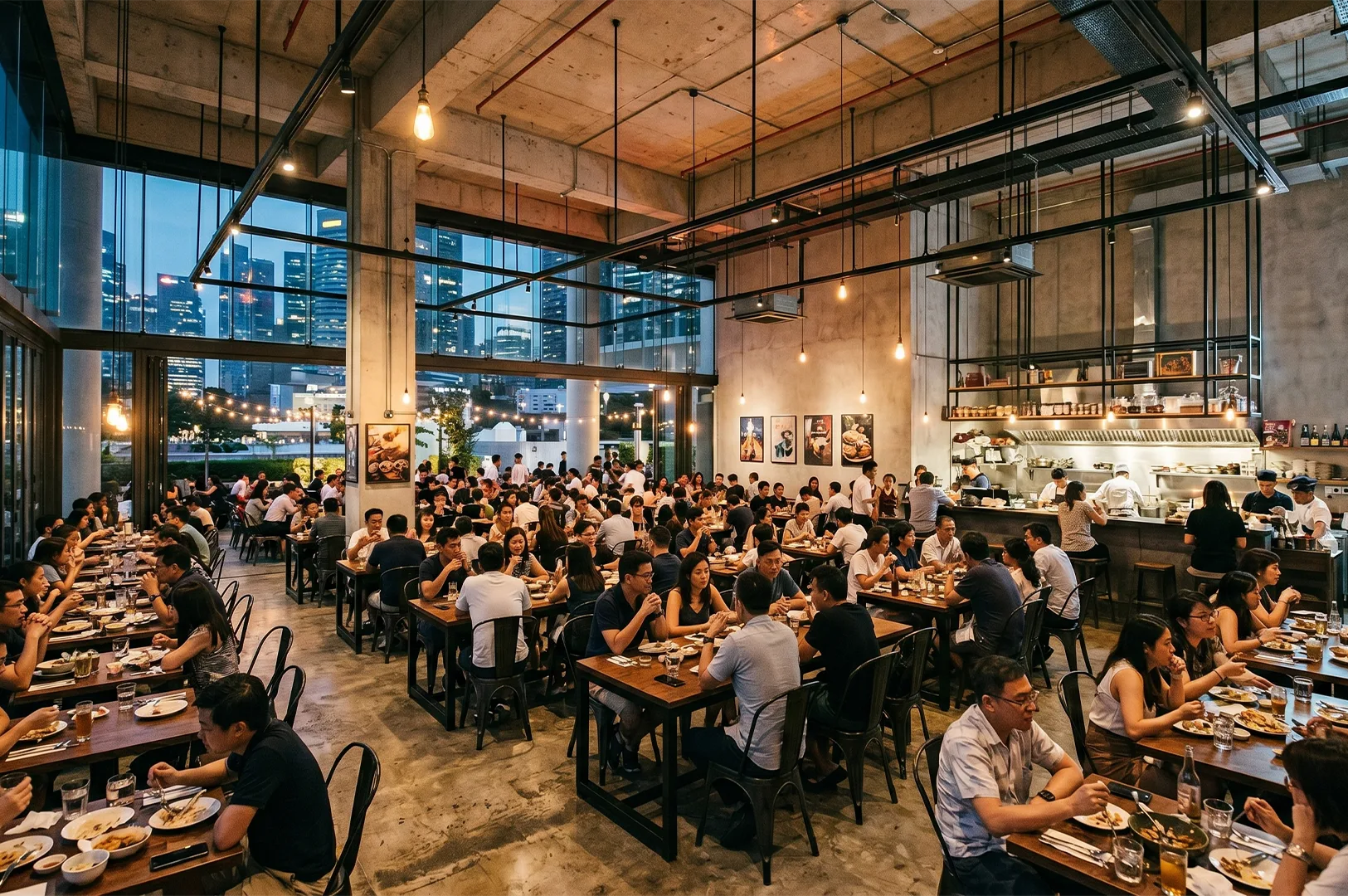

You can have beautiful interiors, a strong menu, and great service, then still lose customers because of one invisible problem. Noise.
In Singapore’s busy dining scene, many restaurants are unintentionally too loud. Hard surfaces, open kitchens, concrete ceilings, and packed tables create a sound environment that feels energetic at first, then exhausting after 20 minutes. Guests may not complain, but they shorten their stay, skip dessert, and choose somewhere quieter next time.
Acoustics is not a luxury issue. It is a business issue.
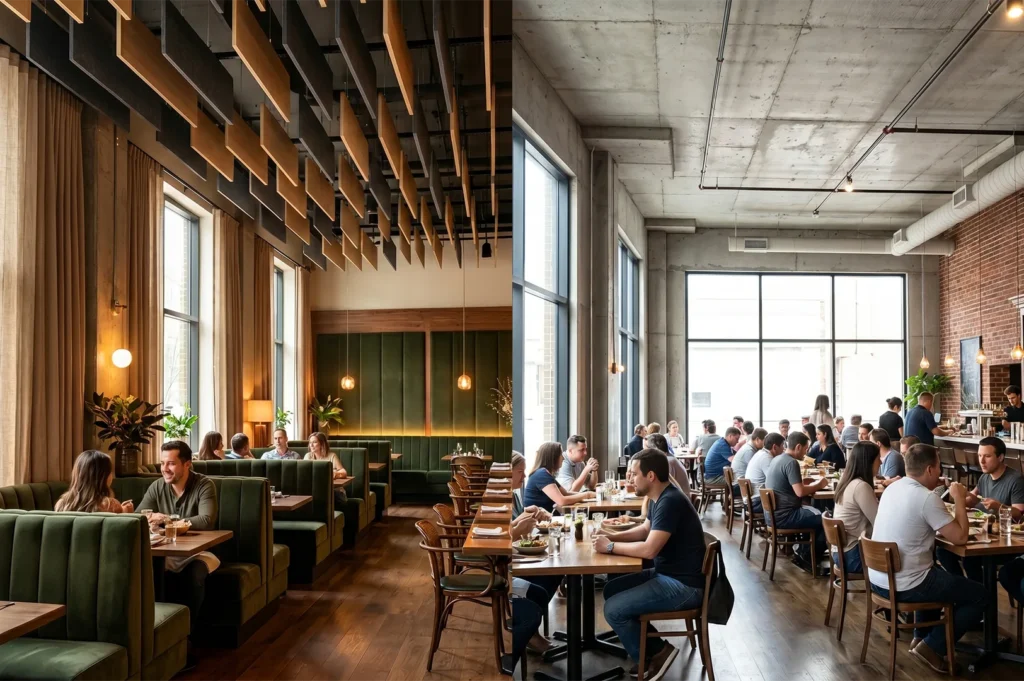
The human brain treats noise as cognitive load. When people struggle to hear each other, they spend more mental energy on conversation and less on enjoyment. This creates subtle stress. Stress reduces appetite and patience. It also reduces perceived service quality, even if your staff are doing everything right.
Many owners think loudness equals popularity. It can, for a while. But sustained high noise levels hurt the very behaviour that drives profit: lingering, ordering another drink, and recommending the place to friends.
The worst acoustic offender is the all-hard-surface trend. Exposed concrete, glass, metal, and tiled floors look modern, but they reflect sound aggressively. Add an open kitchen and a crowded dinner rush, and your room becomes a speaker box. The solution is not to cover everything in fabric. It is to strategically absorb and diffuse sound.
Here are high-impact fixes:
- Acoustic panels disguised as design features
- Upholstered seating in key zones
- Curtains or soft partitions near glass walls
- Ceiling baffles above noisy clusters
- Rubber buffers under chairs and tables
These changes can reduce reverberation significantly without changing your aesthetic.
Table spacing also matters. If guests are too close, they hear multiple conversations at once and feel less private. In compact Singapore units, this is hard to avoid, but even small layout adjustments can improve acoustic comfort.
Then there is music. Many restaurants set volume based on mood, not acoustics. If your room is already loud, louder music makes everything worse. The right playlist at the wrong volume is still the wrong choice. Music should support conversation, not compete with it.
Acoustic planning should happen early in renovation, especially if you are choosing hard finishes. It is much cheaper to integrate sound control before opening than to retrofit after bad reviews. If your Google reviews mention “too noisy,” take it seriously. That feedback is often a predictor of declining repeat visits.
Singapore’s built environment standards also recognise the importance of indoor sound quality. The National Environment Agency provides guidance on noise management and environmental comfort that can inform commercial design decisions.
A restaurant should feel lively, not chaotic. There is a difference. Lively means people can hear laughter and conversation. Chaotic means people lean in, repeat themselves, and check their phones to escape the effort.
If you want customers to stay longer, spend more, and come back, design for the ears, not just the eyes. Silence is not the goal. Comfort is. And comfort is what keeps tables full.If you want customers to stay longer, spend more, and return, it’s time to design beyond visuals, discover how sound shapes comfort in our full guide: The Quiet Details That Make a Restaurant Feel Right