
Every delayed restaurant renovation starts with confidence.
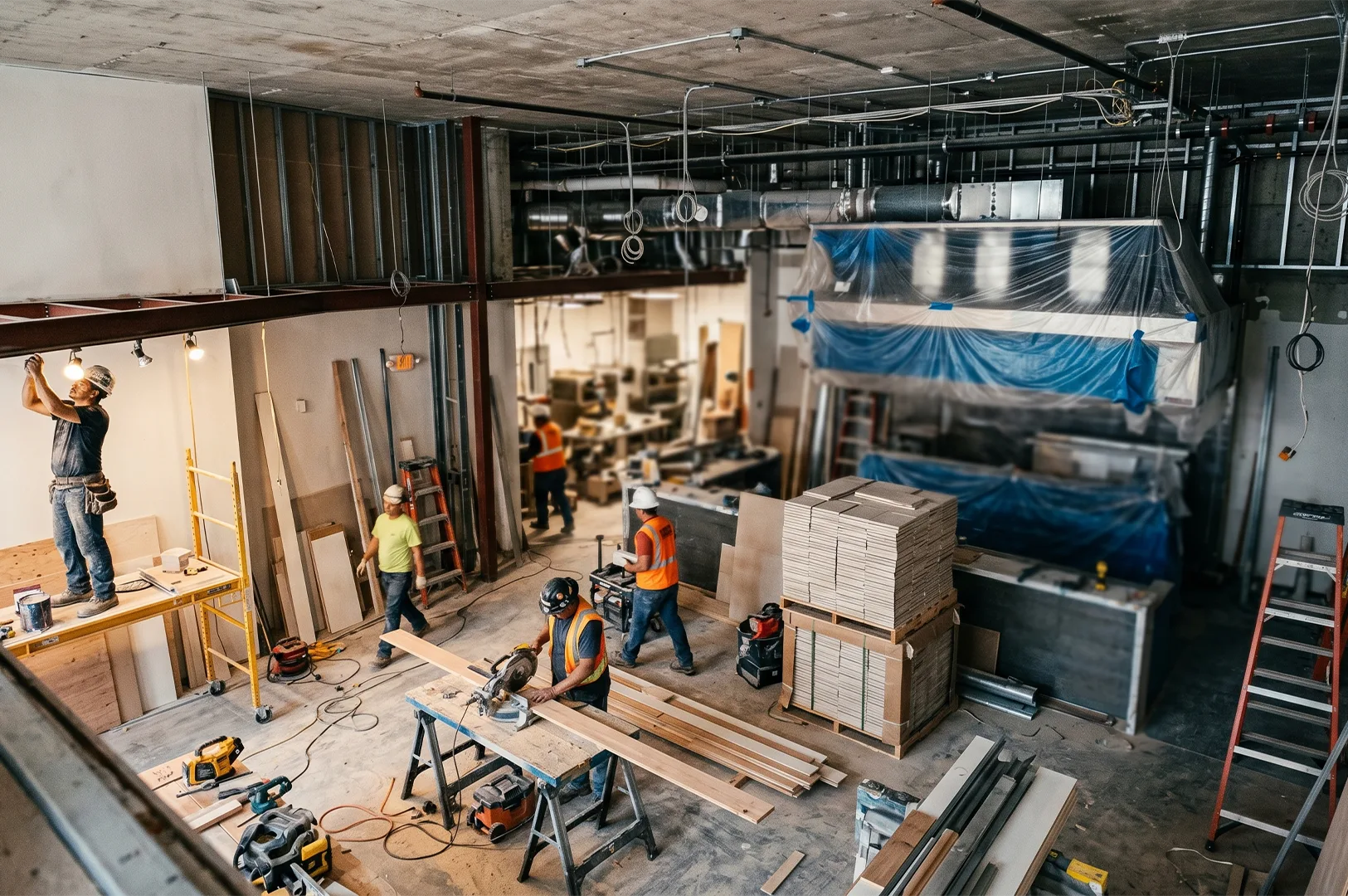
The contractor says eight weeks. The owner plans marketing. Hiring begins. Suppliers are lined up. Then week five arrives and the ceiling is still open, the kitchen hood is delayed, and nobody can confirm the handover date. Sound familiar?
In Singapore, renovation delays are common, but they are not inevitable. They happen for predictable reasons. Once you understand the pattern, you can reduce risk dramatically.
The first reason is sequencing failure. Renovation is not one job. It is a chain of dependent jobs. Tiling cannot finish before waterproofing cures. Carpentry cannot install before M&E points are confirmed. Equipment cannot be commissioned before power is stable. If one task slips, the next five tasks wobble. A delay is rarely one problem. It is a domino effect.
The second reason is incomplete drawings. Many projects start with concept visuals but weak technical documentation. When site conditions do not match assumptions, teams stop to ask questions. Every question becomes a delay. Every delay becomes a variation. Every variation becomes a budget issue.
The third reason is long lead items. In F&B, custom stainless steel, exhaust systems, grease traps, and imported lighting often have lead times longer than the renovation itself. If procurement starts late, your site can be “90 percent complete” and still not open.
The fourth reason is decision bottlenecks from the owner side. This is not criticism. It is reality. Owners are busy with staffing, menu development, and financing. But when site teams wait two days for tile confirmation or one week for signage approval, the schedule slips quietly. Fast decisions keep projects alive.
So how do you stop delays before they start?
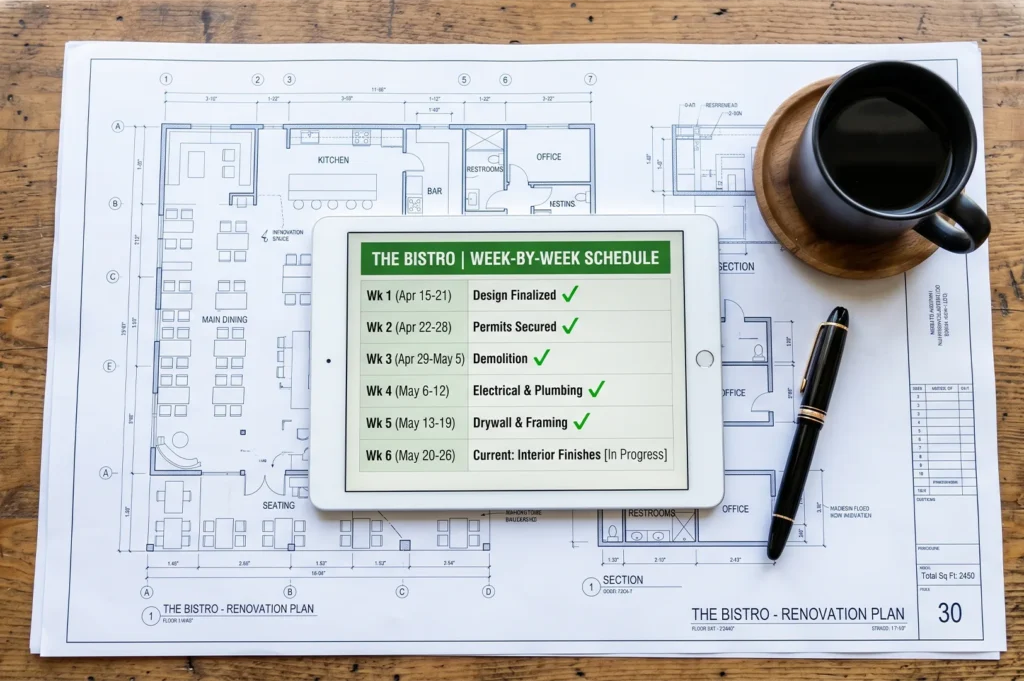
Start with a realistic timeline, not a hopeful one. Add buffer for approvals, inspections, and delivery uncertainty. If a contractor promises a timeline that sounds too good, ask for a week-by-week schedule with milestones and dependencies. If they cannot provide one, they are guessing.
Next, lock your scope early. Changes during construction are expensive and slow. If you want flexibility, reserve it for soft elements like décor, not hard infrastructure like plumbing and ducting.
Then, assign one decision-maker. Too many voices create conflict and confusion. Your contractor should know exactly who can approve changes and how quickly.
Most importantly, run weekly site reviews with written updates. You want three things every week:
- What was completed
- What is delayed and why
- What decisions are needed from you by when
This simple discipline prevents surprises.
For practical project planning references, the Enterprise Singapore resources on business setup and operational readiness can help owners align renovation timelines with launch planning.
Delays are expensive because they hit from all sides. You pay rent, salaries, and opportunity cost while earning zero revenue. In some cases, a two-month delay can erase a year of profit.
The goal is not perfection. The goal is control. A well-managed renovation still has problems, but none of them become disasters. If your opening date matters, treat your schedule like a financial document. Protect it, review it, and challenge anything that feels vague.Because in F&B, time isn’t just money, it’s survival; learn how to plan every phase right in our full guide: Complete Restaurant Renovation Timeline: Planning a Successful Restaurant Renovation from Start to Finish