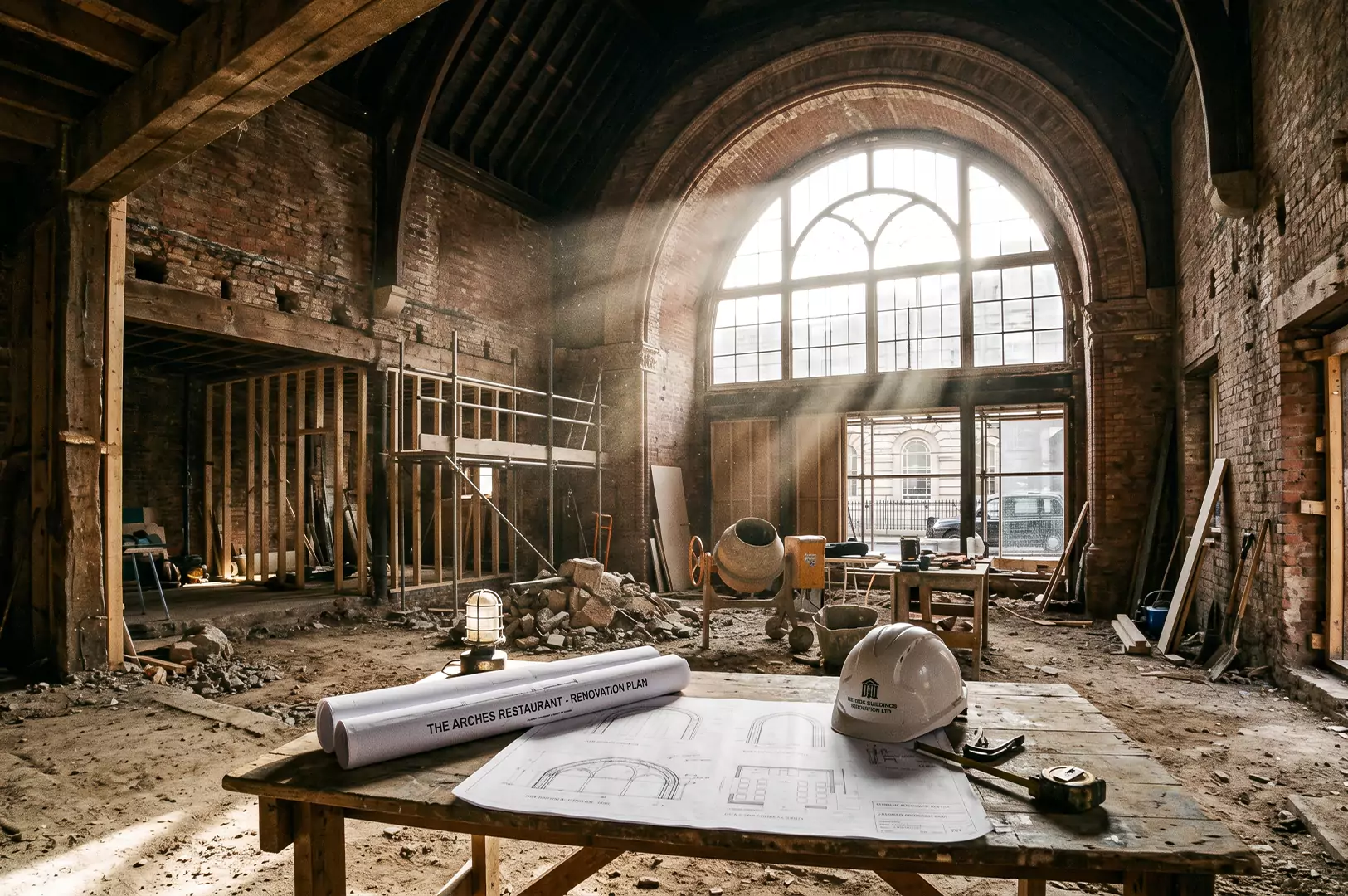

How Restaurant Spaces Reveal Hidden Histories
Sometimes renovation begins quietly, with plans and sketches.
Other times, it begins loudly, with the first swing of a hammer.
The moment a wall comes down, the restaurant stops being a blueprint and starts revealing its story. Pipes, beams, tiles, and openings hidden for decades quietly appear.
What once looked like empty space suddenly carries memory. A sealed doorway might hint at an old bar. A pattern of tiles may recall a café from years ago. These discoveries do not just inform practical changes. They shape the feel and rhythm of the space.
Renovation is often seen as creation. But demolition is revelation.
A pipe in an unexpected spot may adjust a counter. A beam may inspire a feature wall. Even an uneven floor can shift table placement.
Every exposed layer gives designers a new lens. Decisions about lighting, seating, and circulation evolve to match the story the space begins to tell.
Guests rarely see these hidden layers.
Yet they feel them.
A restaurant that flows naturally, where the kitchen, dining room, and service paths align intuitively, creates comfort. Patrons sense the rhythm without knowing why. Staff move through the space more efficiently. Operations feel smoother.
These hidden elements often define success more than finishes or decorative touches.
Sometimes surprises change everything.
A previously hidden window can guide sightlines. An old alcove can inspire a service station. Structural quirks might determine the kitchen workflow or dining layout.
When these discoveries are integrated, the space becomes alive. It feels functional and authentic. Every decision aligns with the building’s history and the restaurant’s future.
Renovation is as much listening as it is building.
The walls tell their story. The team observes, adapts, and designs with that story in mind. Guests will never see the pipes, beams, or tiles. But they will feel the result: a restaurant that breathes, flows, and carries memory quietly in its structure.
When renovation honors history and function, the restaurant feels both lived-in and intentional.
To see how demolition sets the stage for design, explore The Day the Walls Came Down: What Restaurant Renovations Really Reveal.