
Why Restaurant Design Begins in the Kitchen
Restaurants are often judged by what guests see first: the dining room, the décor, the lighting, the mood.
But the true measure of success begins somewhere guests rarely see: the kitchen.
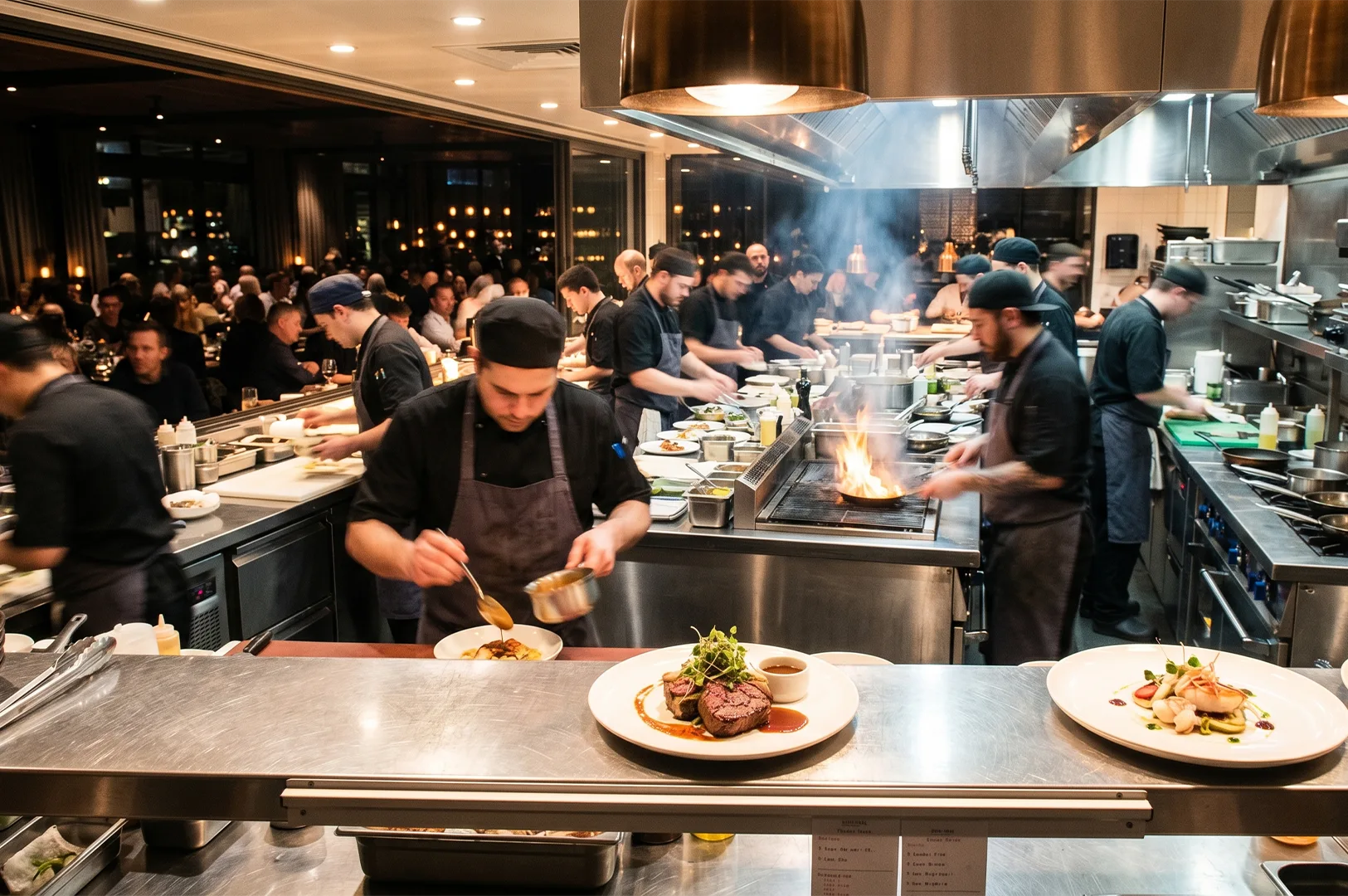
It is in the kitchen that rhythm is created. Where ingredients are prepped, cooked, and plated.
Where the team moves in precise sequences that determine how quickly food arrives and how smoothly service flows.
When renovation starts with the kitchen, the rest of the space adapts naturally.
Designing around workflow allows staff to navigate efficiently. A well-positioned prep counter can save steps, reduce collisions, and increase speed.
Proper pass placement ensures orders leave the kitchen in order and on time. Even a small shift in aisle width or storage location can improve the entire dining experience.
Focusing first on aesthetics often backfires.
A dining room may look perfect on Instagram, but if the kitchen is chaotic, service will always feel strained. Conversely, a kitchen designed for efficiency allows the dining room to function effortlessly.
Flow, timing, and comfort for both staff and guests begin here.
The kitchen dictates rhythm, not style. Decisions about counter placement, prep areas, and equipment layout influence every guest experience. Designers who prioritize the heartbeat of the restaurant understand how unseen elements define visible results.
Guests rarely notice the kitchen, yet they feel its influence. Meals arrive on time. Service feels seamless.
The dining room flows naturally.
All of this stems from the careful choreography that begins in the kitchen.
Renovation that starts with workflow and service rather than decorative finishes creates a restaurant that works, not just looks good.
For insight on how workflow drives design decisions, see Ergonomic Kitchen Design for Workflow Optimization in Restaurants.