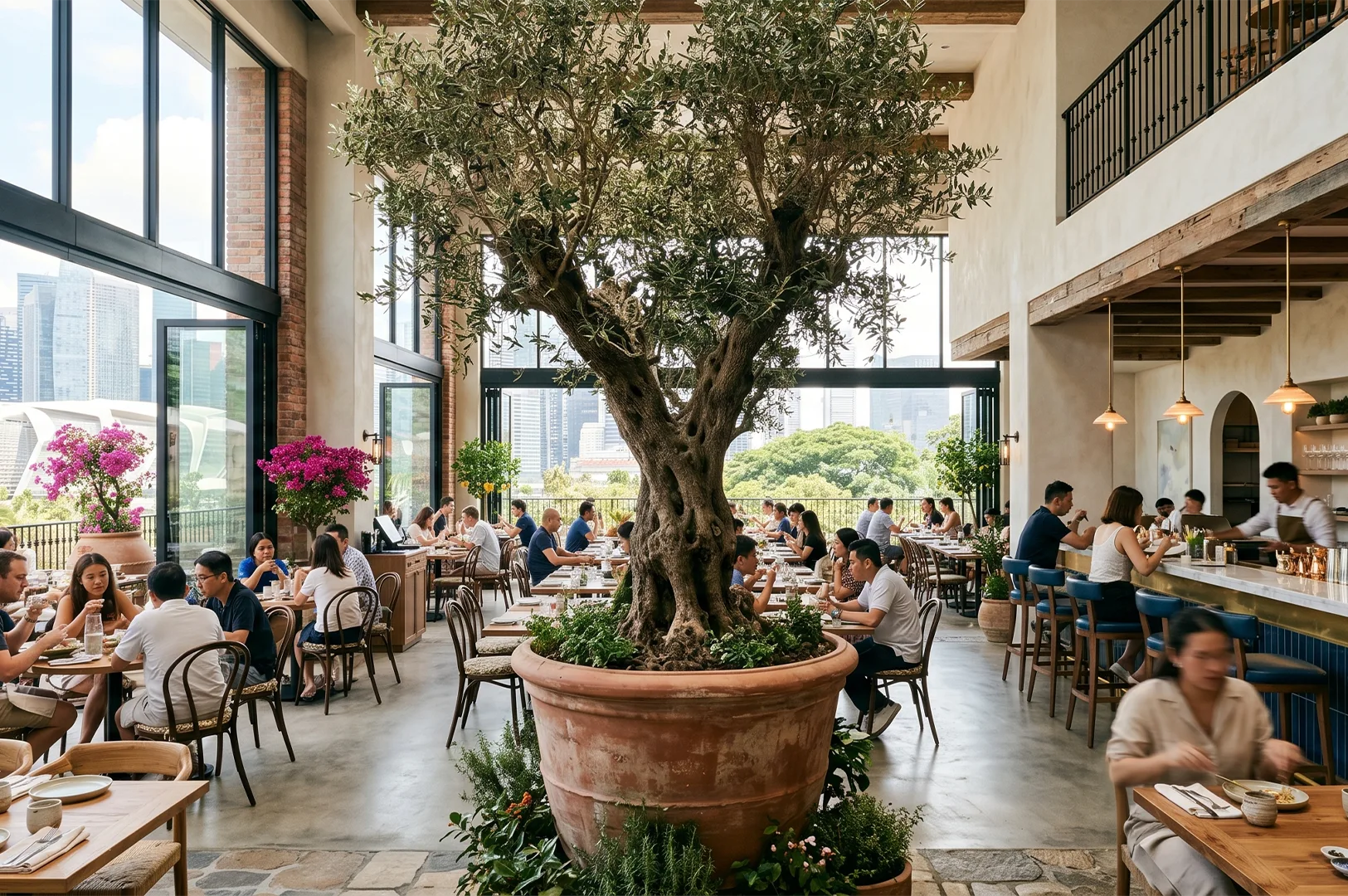

In today’s vibrant city dining scene, Mediterranean plants restaurant design defines my memorable venues. The aroma of rosemary, olive trees’ silver leaves, and vibrant bougainvillea transport me and my guests from Singapore’s urban energy to the relaxed coasts of the Mediterranean. For my restaurant, native plants do more than decorate; they create an immersive world of taste, tradition, and pleasure that enhances every service moment, from classic cocktails to house-made desserts.
Across the Mediterranean, native plants such as citrus, olive, and aromatic herbs are woven into daily life and restaurant design. Their cultural significance in both food and decor helps me set the scene for authentic tasting notes, the combination of fresh ingredients, and the perfect pairing of signature dishes and spirits.
Key Mediterranean Plants for My Mediterranean Restaurant Interiors
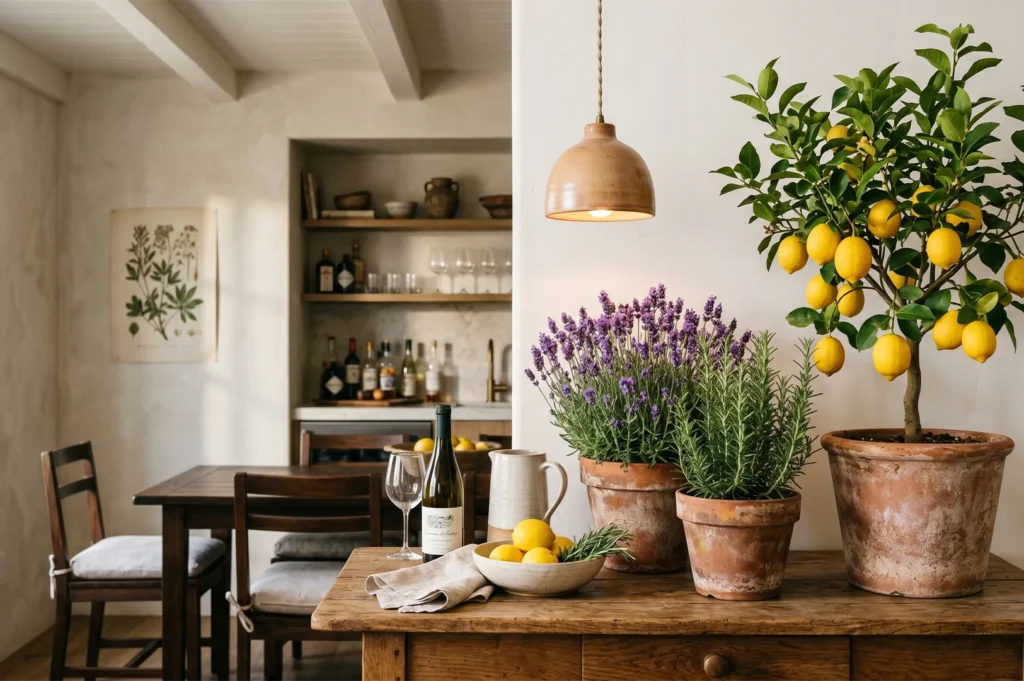
Selecting the right Mediterranean plants allows me to create a bold, elegant impact in my restaurant, bar area, or even a private dining room. Each choice adds unique appeal, from visual statement to taste and aroma, with practical considerations for Singapore’s climate.
- Olive Trees (Olea europaea): Recognized for their rounded leaves and gnarled trunks, olive trees are a signature of my Mediterranean restaurant. They’re perfect for anchoring an entryway or as a dramatic accent by the bar area. They require 6–8 hours of direct sunlight, well-draining soil, and careful watering. Price starting from S$200.
- Citrus Plants (Lemon, Kumquat): I add a pop of orange or yellow to my pizza parlor or bar area with a dwarf citrus tree. These provide a refreshing aroma, smooth and sweet notes that complement a gin & tonic or signature classic cocktails.
- Lavender (Lavandula): The clean, soothing scent and deep purple color of lavender perfectly complement my desserts and delicate dishes. French or Spanish lavender varieties fare best; I position these in terracotta pots near breezy, sunlit windows to avoid mold.
- Rosemary (Salvia rosmarinus): Classic in both look and taste, rosemary thrives in my Mediterranean restaurant interiors. Rosemary likes strong light and dry soil; I keep it in a well-drained container and use the sprigs directly to celebrate fresh ingredients and add a signature finish to any dish.
- Bougainvillea: For outdoor zones or the brightest indoor corners, bougainvillea adds a bold, vibrant splash to my bar area or outdoor dining space. Regular pruning ensures compact growth and encourages more color, echoing the famous feeling of summer dining in Barcelona.
Creating Outdoor Spaces with Mediterranean Plants: Build, Add, and Complement
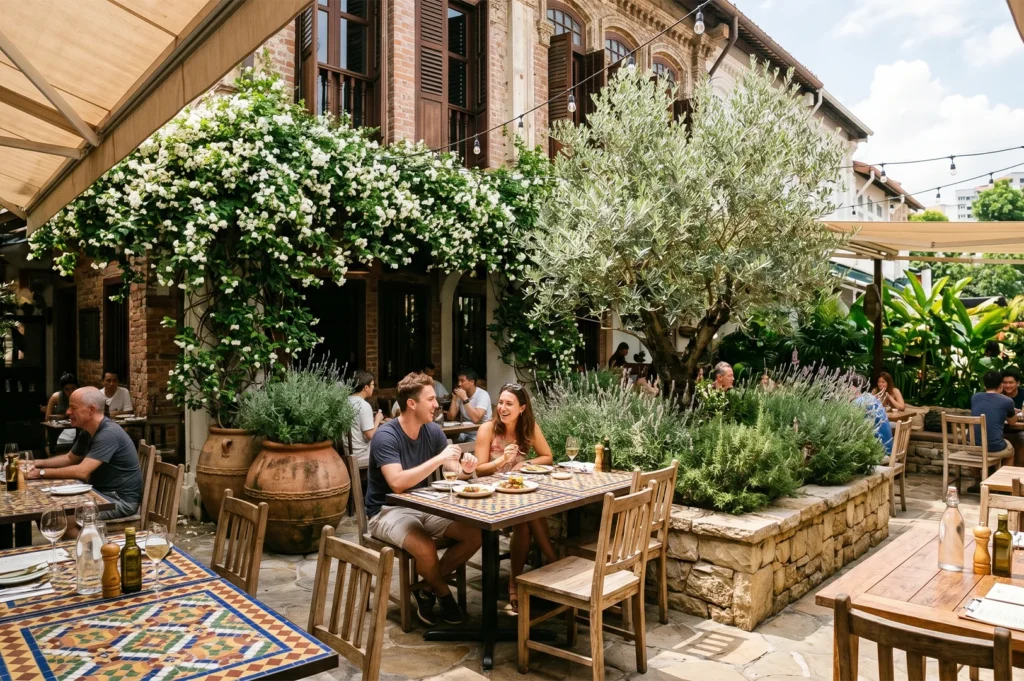
The outdoor dining area is where my Mediterranean plants restaurant design truly shines. I use raised beds or clusters of potted plants to define space, add visual interest, and create natural shade for my guests. Design combinations such as olive trees with lower lavender and rosemary plantings provide layers of color and scent; climbers like jasmine frame entryways or patios, delivering a sweet fragrance throughout the day.
Singapore’s climate means good drainage is critical, so I consider large pots with volcanic rock or lightweight expanded clay. For dramatic effect, I combine chairs in natural wood with tiles or mosaic inserts inspired by Greek or Spanish tradition, ensuring my venue feels both welcoming and fresh even when located in the heart of the city. This approach embraces a timeless, traditional design ethos, showing that modern does not have to mean fusion or losing cultural authenticity.
Functional Benefits: Natural Dividers and Privacy Screens in Restaurant and Bar Areas
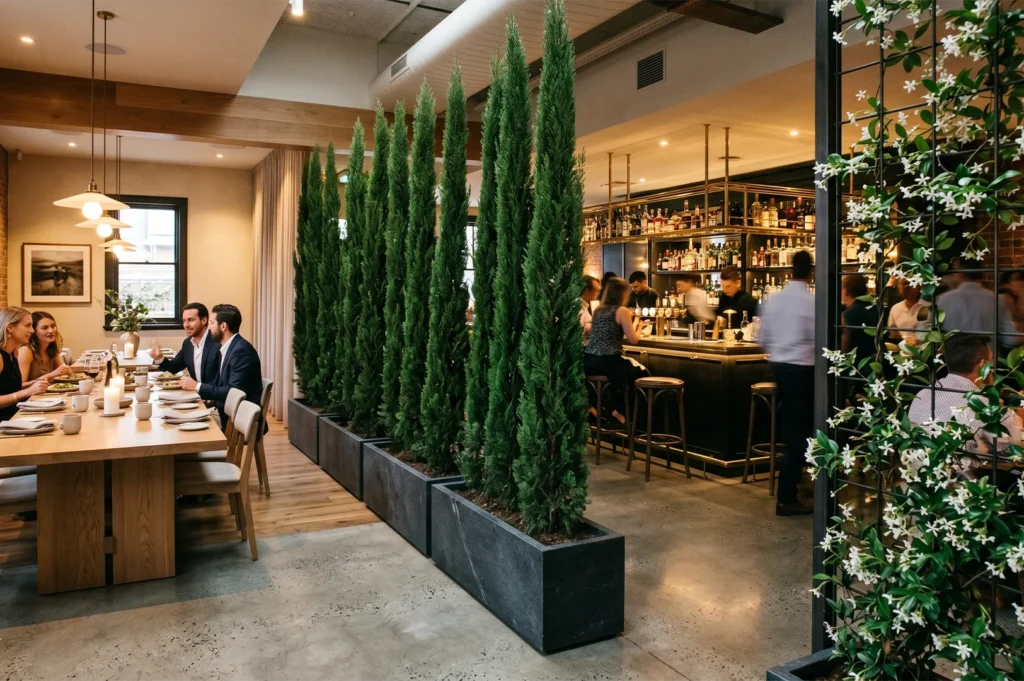
Mediterranean plants such as Italian Cypress and Bay Laurel are perfect for acting as room dividers. In both indoors and outdoors, their height (1.5–3 meters) helps me define dining vs. bar areas and provides the perfect level of privacy for guests.
Fast-growing jasmine on trellises marks a distinction between the bar and restaurant, while their aroma and sweetness enhance the overall sense of place. Maintenance is straightforward; a yearly prune and consistent watering are all that’s required for these plants to thrive in Singapore.
Engaging the Senses: Aromatic Herbs, Tasting Notes, and Fresh Ingredients
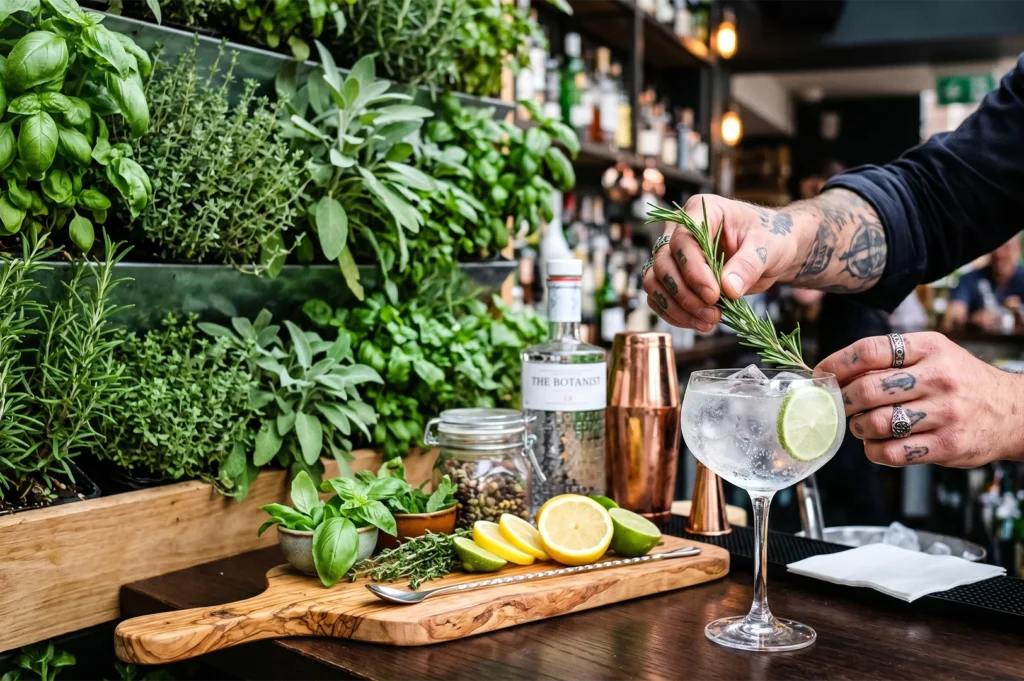
No Mediterranean restaurant is complete without the sensory engagement that comes from aromatic herbs. Rosemary, thyme, sage, and basil not only stimulate appetite with their bold and fresh aroma but are essential to the tasting notes of world-famous dishes and classic cocktails alike. I grow herbs in vertical wall gardens near the kitchen or bar area: their presence signals quality and freshness, and bartenders can harvest sprigs to create house signature cocktails with complex, rounded finish.
When diners enter my restaurant and are greeted with the aroma of fresh basil (the perfect partner for pizza or feta-topped dips) or the cool pine notes of thyme in a gin-based cocktail, they are instantly transported, no passport required.
Regional Inspirations: Greek, Italian, Spanish, and North African Plant Traditions for My Singapore Restaurant
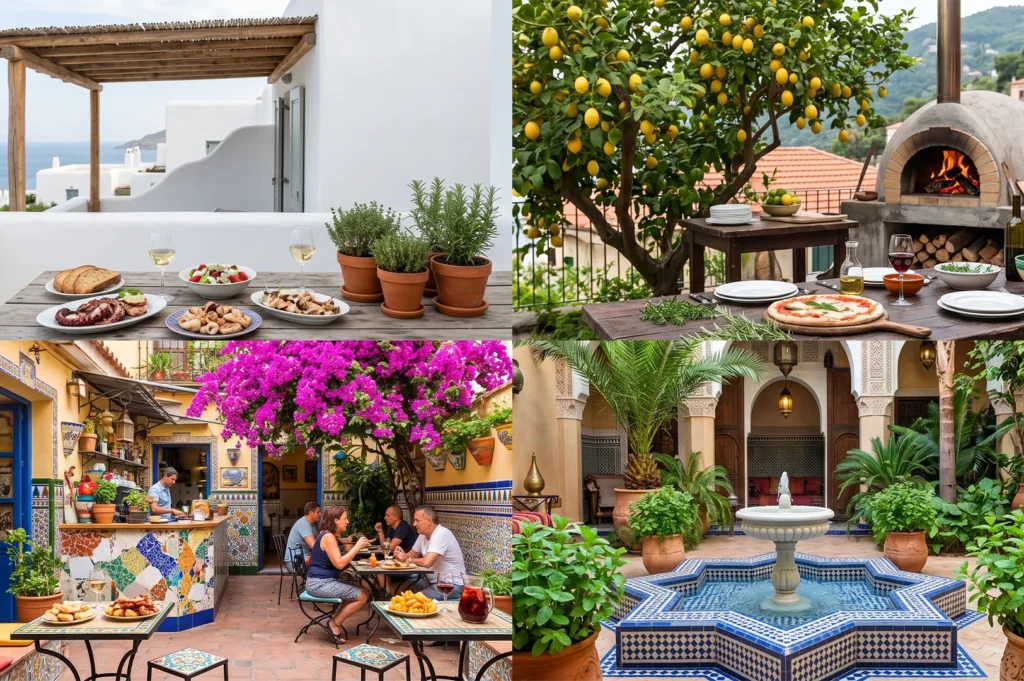
Every Mediterranean country boasts unique plant traditions that inspire my Singapore venue:
- Greece: The combination of whitewashed walls, olive trees, and bountiful jars of thyme on every table sets a clean, relaxing vibe. It’s perfect for seafood, fresh dips, and a classic gin and tonic garnished directly with herbs.
- Italy: I think of pizza ovens, large lemon trees by the doors, rosemary sprigs on the table, and rustic wood chairs for the perfect rustic-casual combination.
- Spain: Barcelona-inspired venues use vibrant tiles, orange trees, and plenty of bougainvillea both inside and out; my bar area comes alive when paired with sweet, aromatic cocktails and bold cocktails.
- North Africa: Courtyard centers with lush mint, bright tiles, and water features offer the perfect backdrop for flavorful tagines and bold, spice-forward tasting notes.
Integrating Mediterranean Plants with Classic Restaurant Design Elements
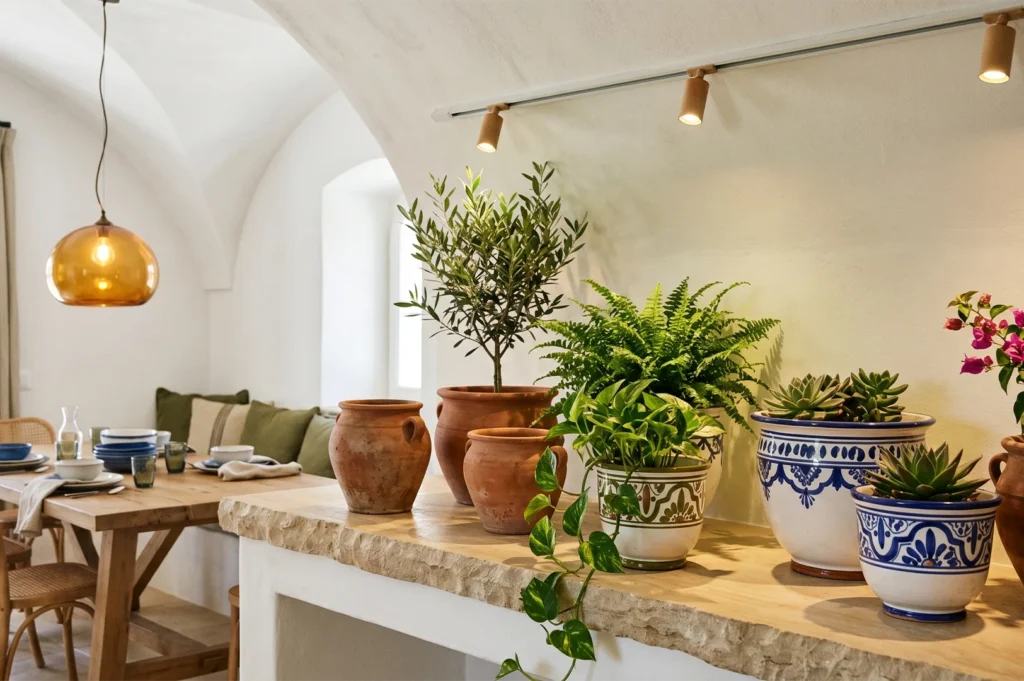
Pairing plants with the right materiality is key to an authentic Mediterranean restaurant. I use terracotta pots or hand-painted ceramics, priced from S$10 at World Farm, and set them on stone or wood surfaces with natural, clean lines. I combine these with signature color palettes, whites, deep blues, orange accents, and olive green, to complement the plants and uplift the space, indoors or out.
Lighting builds ambiance: spotlights for the bar area, soft pendant lighting over tables, and natural light wherever possible, all designed to celebrate my venue’s greenery and shine a spotlight on both food and drink.
Case Studies: Mediterranean Plants Restaurant Design in Practice
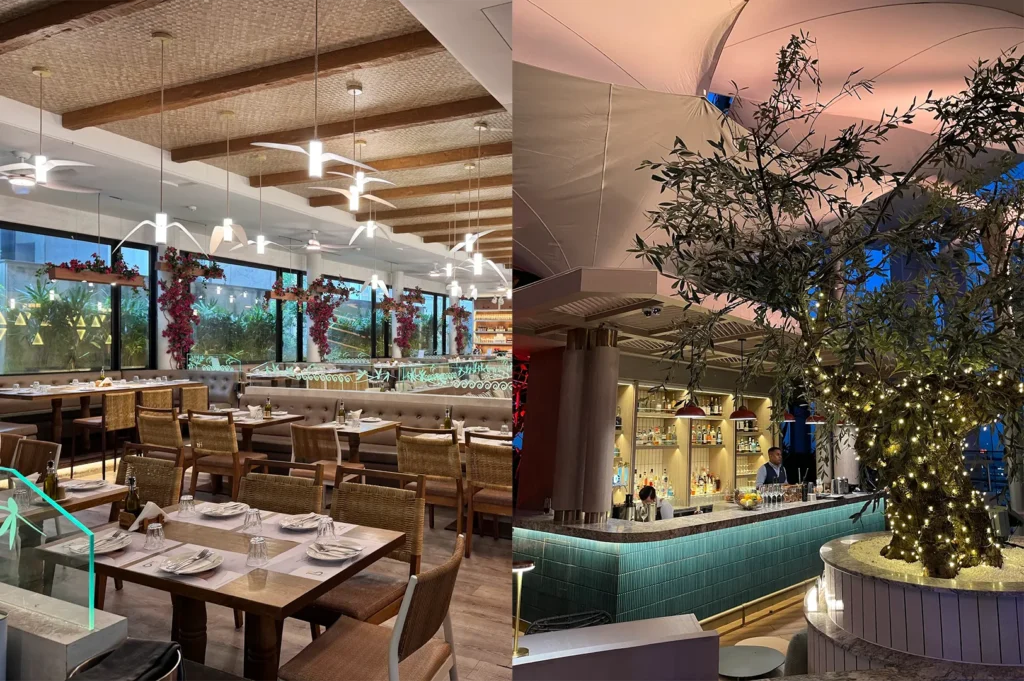
Bakalaki Greek Taverna (Singapore): Located in Tiong Bahru, Bakalaki uses signature olive trees and fresh herbs to define the space from entrance to bar area. The founders chose lavender and thyme for scent and décor, creating a feeling that is clean, welcoming, and unmistakably Greek.
Artemis Grill & Sky Bar (Marina Bay): This famed Mediterranean restaurant is home to a 100-year-old olive tree and a panoramic outdoor bar area. The design uses nature, wood, and potted citrus to build a relaxed, urban oasis. Signature classic cocktails are crafted using fresh ingredients and garnished with garden herbs, with tasting notes that range from bold gin and juniper to sweet orange and smooth finish with liquorice undertones, a testament to ingredient integrity.
Conclusion: Create, Celebrate, and Love Every Space
Mediterranean plants restaurant design invites me to bring a spirit of hospitality, nature, and taste to my venue, blending great food, world-inspired bars, and green design. Whether I’m building a signature bar area, refreshing interiors with classic plants, or looking for the perfect combination of tradition and innovation, Mediterranean botanicals add both rounded appeal and practical value.
I consult with local suppliers and experienced designers in Singapore who understand the materiality, climate, and service needs unique to my market. The result? An environment guests will love, return to, and recommend for years to come, a home away from home with a distinctly Mediterranean finish.
If I agree that every day is an opportunity to build a better dining experience, I start with the bold yet rooted beauty of Mediterranean botanicals and let my signature taste and service flourish. For more inspiration on how restaurants in Singapore are embracing exclusive and innovative design styles, see our article on Private Dining Singapore: 7 Exclusive Culinary Experiences and Innovative Renovations.