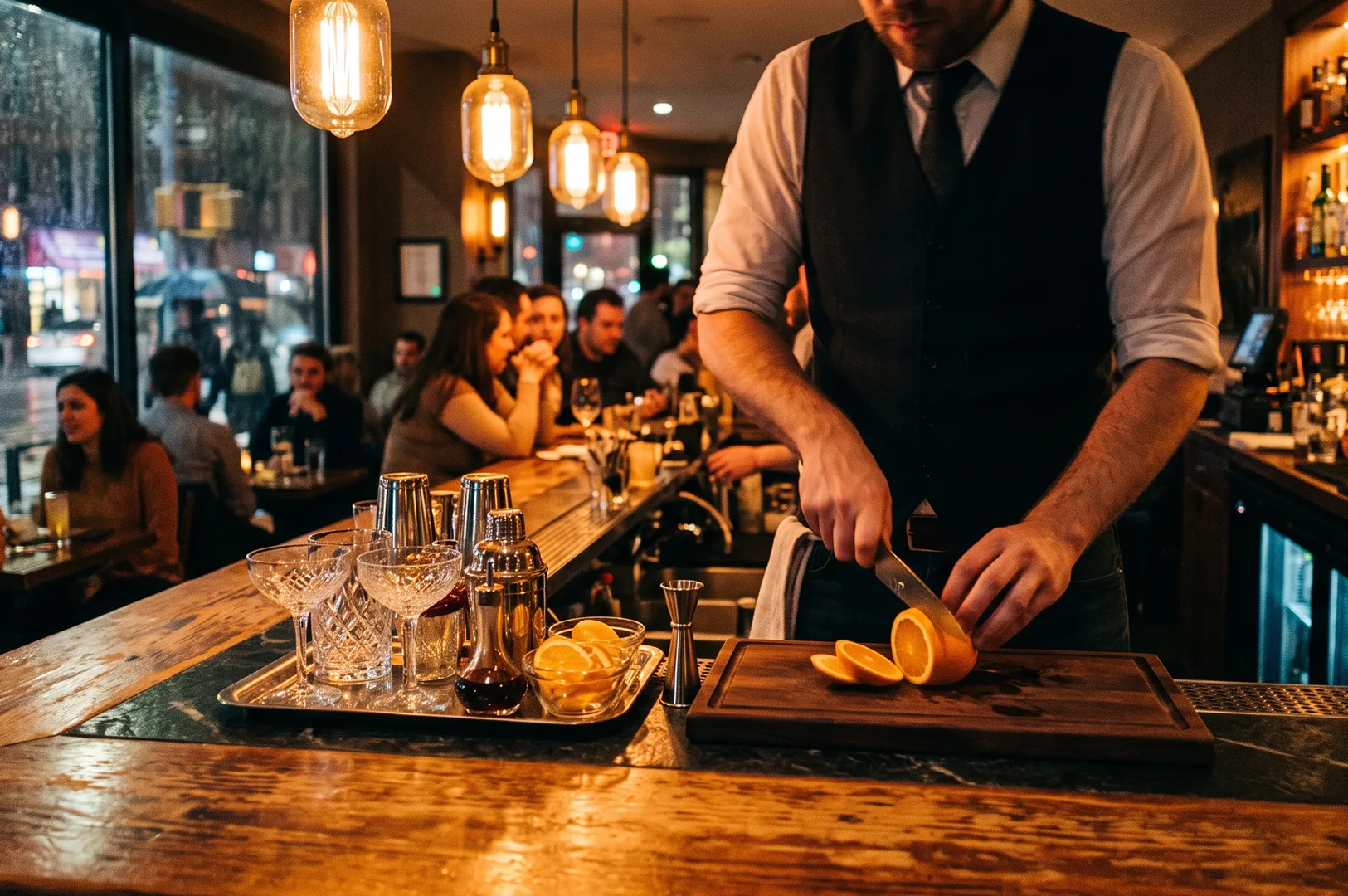

There was a small restaurant I walked into one rainy evening, fully expecting to wait. The host gestured toward a counter near the entrance, where a bartender was slicing citrus and a tray of glasses caught the light. I sat down, ordered a drink I had not planned to order, and somewhere in those fifteen minutes, the waiting simply dissolved.
I think about that often. Waiting is one of the most underestimated parts of the dining experience. Most restaurants treat it as an inconvenience, a gap to be apologized for. But a counter, designed with care, can turn that gap into something warmer. Anticipation instead of impatience. Presence instead of a queue by the door.
The bar counter is rarely just a place where drinks are made. It can be a welcome point, a social zone, a quiet retail display, and a storytelling surface. It can also, gently, be a sales engine.
A Bar Counter Should Give Waiting Guests a Reason to Stay
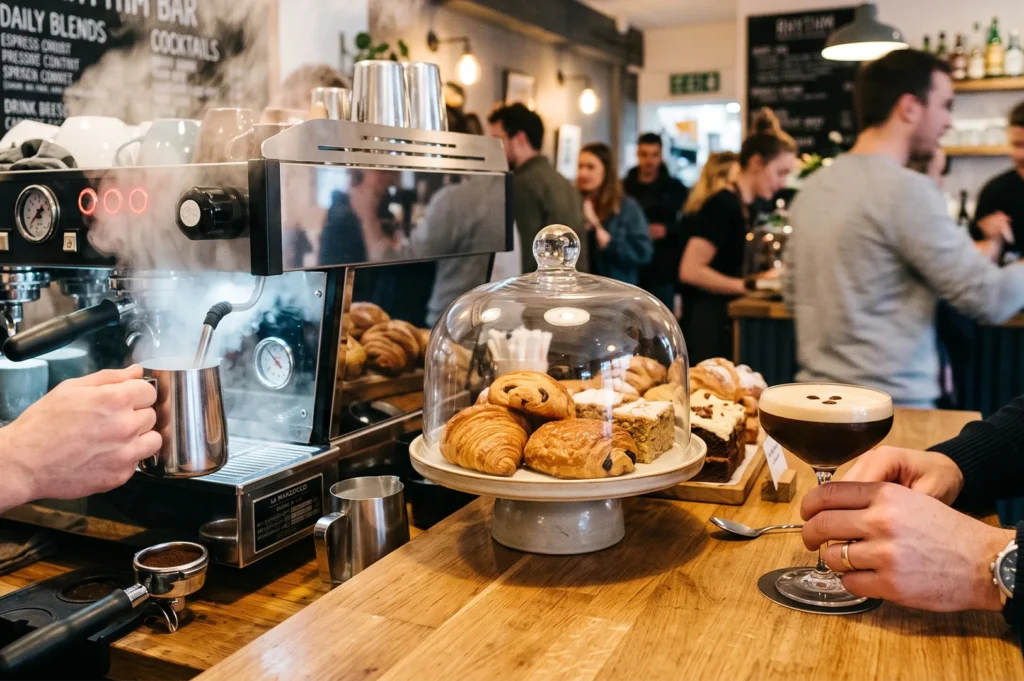
Guests are far more patient when they feel included in the rhythm of a place. A well-considered bar counter gives them something to watch, taste, or simply be near while they wait.
There is real comfort in watching drinks being prepared. The slow build of a cocktail, the hiss of a coffee machine, a row of pastries resting under a chilled display. These small acts pull a guest into the room rather than leaving them stranded at the threshold.
I have seen a simple counter change the mood of an entire restaurant because it gave people somewhere to belong. Waiting feels shorter when the space around you is alive. A small counter menu, a few stools, the murmur of other guests, and suddenly the wait is part of the evening, not a delay before it.
The Bar Counter Is Often the First Real Brand Interaction
The counter is sometimes the first physical surface a guest approaches. Before the menu opens, before the food arrives, it has already said something.
Materials carry that message quietly. Timber for warmth. Polished stone for sophistication. Tiles for character. Brass trims for a touch of energy. Textured plaster for softness, or backlit display shelves for a little drama. Each one shapes how a guest reads the room.
This is where designing a counter becomes storytelling. A casual neighbourhood spot and a refined dining room would never choose the same surface, because the counter speaks first. The materials, the height, the finish, all of it tells guests what kind of evening they have walked into.
Good Bar Counter Design Improves Revenue Without Feeling Pushy
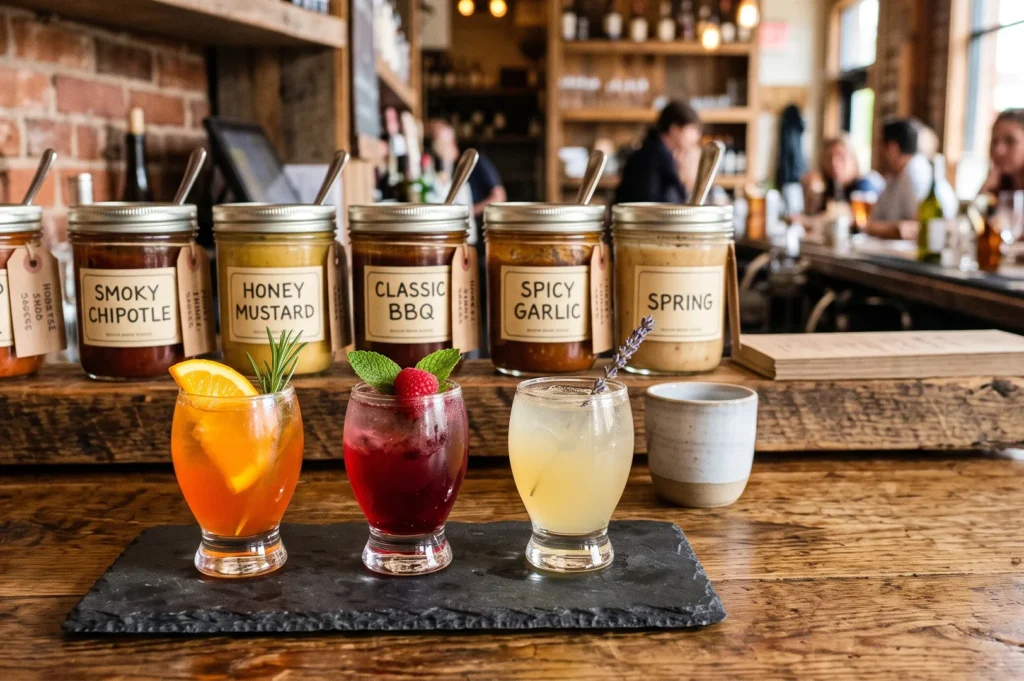
The most graceful upselling never feels like selling. It feels like noticing. A featured drink within view, a dessert resting on the counter, a row of bottled beverages that simply look good where they sit.
When add-ons are visible and easy, guests reach for them on their own terms. A pre-dinner cocktail while a table clears. A small snack for the children. A coffee after the meal, ordered without anyone needing to suggest it. Restaurant bar counter design works best when the product feels naturally placed in the guest journey, not pressed upon them.
I have watched people linger over a tasting flight or a jar of house-made sauce, curious rather than cornered. That curiosity is where the spend quietly grows. For more inspiration on crafting inviting and stylish bar counter designs that enhance the ambiance and guest experience, explore this guide to cafe design in Singapore, beloved by both owners and customers alike.
Thoughtful bar counter style and materials play a key role in creating the right atmosphere, helping guests enjoy their wait and enhancing the overall aesthetics of the space.
The Waiting Zone Needs Comfort, Not Just Bar Stools
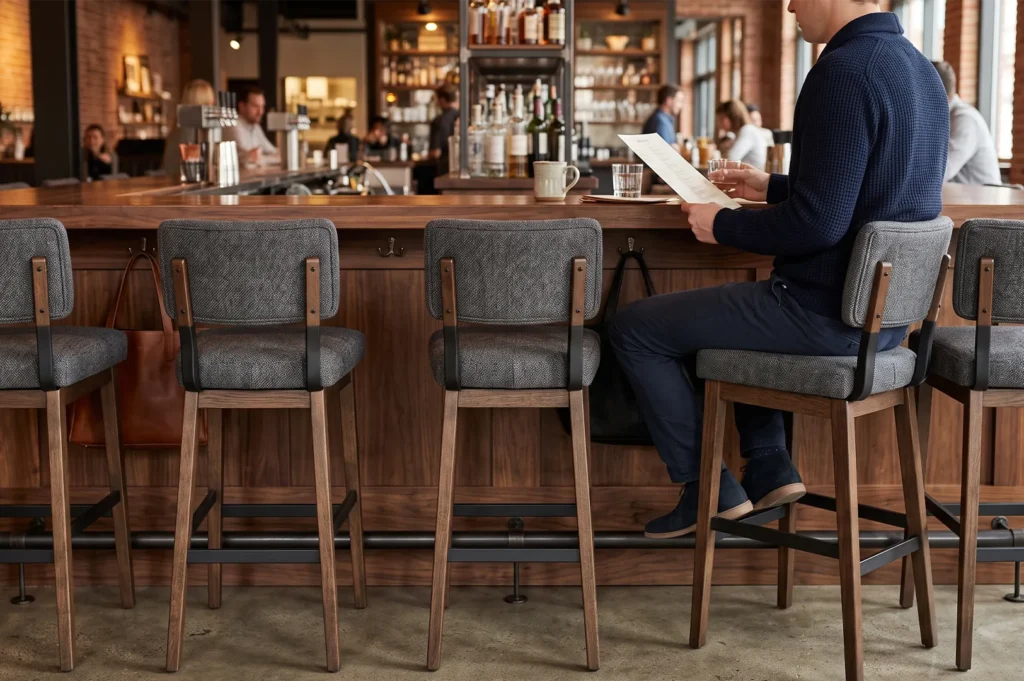
A few stools alone do not make a waiting zone work. Comfort lives in the details. Bar height that matches the stool, a footrest in the right place, enough elbow room so no one feels crowded.
Small touches matter more than people expect. A hook beneath the counter for a bag. A little space between seats so solo diners do not feel exposed. A charging point where it makes sense. These are the things that make someone settle in rather than perch awkwardly and watch the door.
Bar stools also welcome a particular kind of guest. The solo diner who wants a quick, easy meal. The couple stopping in without a reservation. For them, a thoughtful counter is not a waiting area at all. It is the table they actually wanted.
Staff Workflow Can Make or Break the Counter
A beautiful counter fails the moment it slows the people working behind it. Everything the guest does not see has to be planned with as much care as the surface they admire.
POS placement, pickup points, the drink preparation zone, undercounter refrigeration, a sink within reach, waste bins tucked away. When these sit in the right places, service feels effortless. When they do not, staff collide, orders stall, and the whole counter tightens with tension a guest can feel.
The goal is quiet competence. Guests should sense ease, never realizing how much difficult work was arranged just out of sight to create it.
Bar Height, Lighting, and the Counter as a Visual Anchor
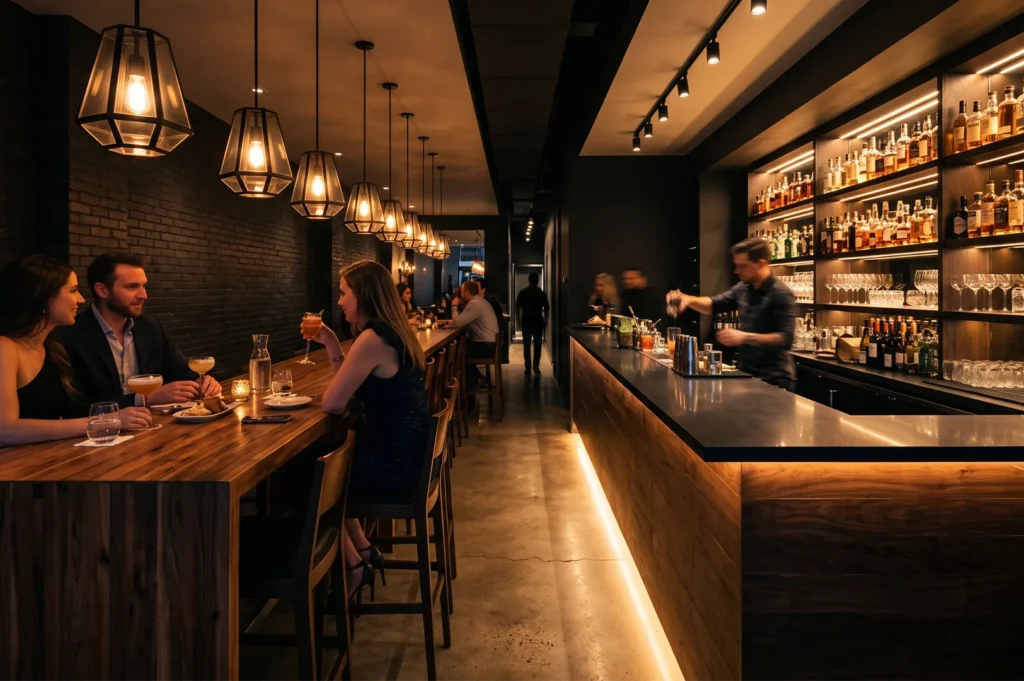
Light is what turns a counter into a destination rather than a service station. In a dim room, the right glow can make the bar the first thing the eye finds.
Pendant lights hung at the correct height frame the space without blinding anyone. A warm undercounter glow softens the base and lifts the whole structure. Shelf lighting brings out the colour of bottles, while a gentle spotlight makes a tray of desserts look worth ordering. The trick is avoiding harsh glare, letting the food and drinks carry the shine instead.
In a narrow restaurant, this matters even more. A well-lit counter at the right bar height creates depth, guiding the eye through the room and giving a small space a sense of layered movement.
The Counter Can Solve Small-Space Problems
In a compact restaurant, a single counter can do the work of many things. Waiting area, dining seat, service station, display zone, payment point, and brand feature, all in one well-planned stretch.
In Singapore, where so many F&B units are narrow or tightly fitted, this flexibility is a gift. The counter lets owners use vertical space and edges that would otherwise sit idle. For owners working with a tight footprint, I would also pair this with Small Restaurant Interior Design: How Compact Dining Spaces Can Still Feel Premium, because the counter often becomes one of the smartest ways to make a small restaurant feel active, useful, and complete.
One honest caution though. A counter earns its keep only with discipline. The moment it becomes a resting place for menus, tissue boxes, takeaway bags, and stray clutter, all that careful design quietly unravels.
A Good Home Bar Counter Idea Translated Into a Restaurant Creates Community

Some of the best restaurant counters borrow the same warmth you feel at a good home bar counter, where people gather close and talk while someone pours. That intimacy is hard to manufacture, but a counter invites it naturally.
Guests speak to the bartender. They watch the barista work, exchange a word with the chef, or sit near the gentle energy of the room. The counter becomes a place for regulars, for solo diners, for a quick meeting or an unplanned conversation that lingers longer than expected.
Revenue is not only the sale of the moment. It lives in memory and in the quiet decision to return. A counter that makes someone feel seen, even for fifteen minutes, is doing more for the business than any promotion could.
The Best Counters Make Waiting Feel Intentional
A counter built with care makes guests feel considered. It gives a restaurant a pulse before the meal has even begun, turning idle minutes into atmosphere, into small pleasures, into connection. The materials offer durability and a little sophistication, the lighting offers warmth, and the layout offers ease. Together, they create something a guest remembers without quite knowing why.
I keep returning, in my mind, to that rainy evening and the counter I never meant to sit at. I could not tell you now how long the wait was. I only remember the citrus, the light on the glasses, and the feeling that the evening had already begun.
That, I think, is the quiet measure of a counter done well. When the design truly works, guests may not remember that they waited at all. They may only remember that the experience started earlier than they expected, and that it felt like a welcome. Discover a world of inspiring design ideas at restaurantrenovations.com.sg, where creativity meets craftsmanship to transform your space into an unforgettable experience.