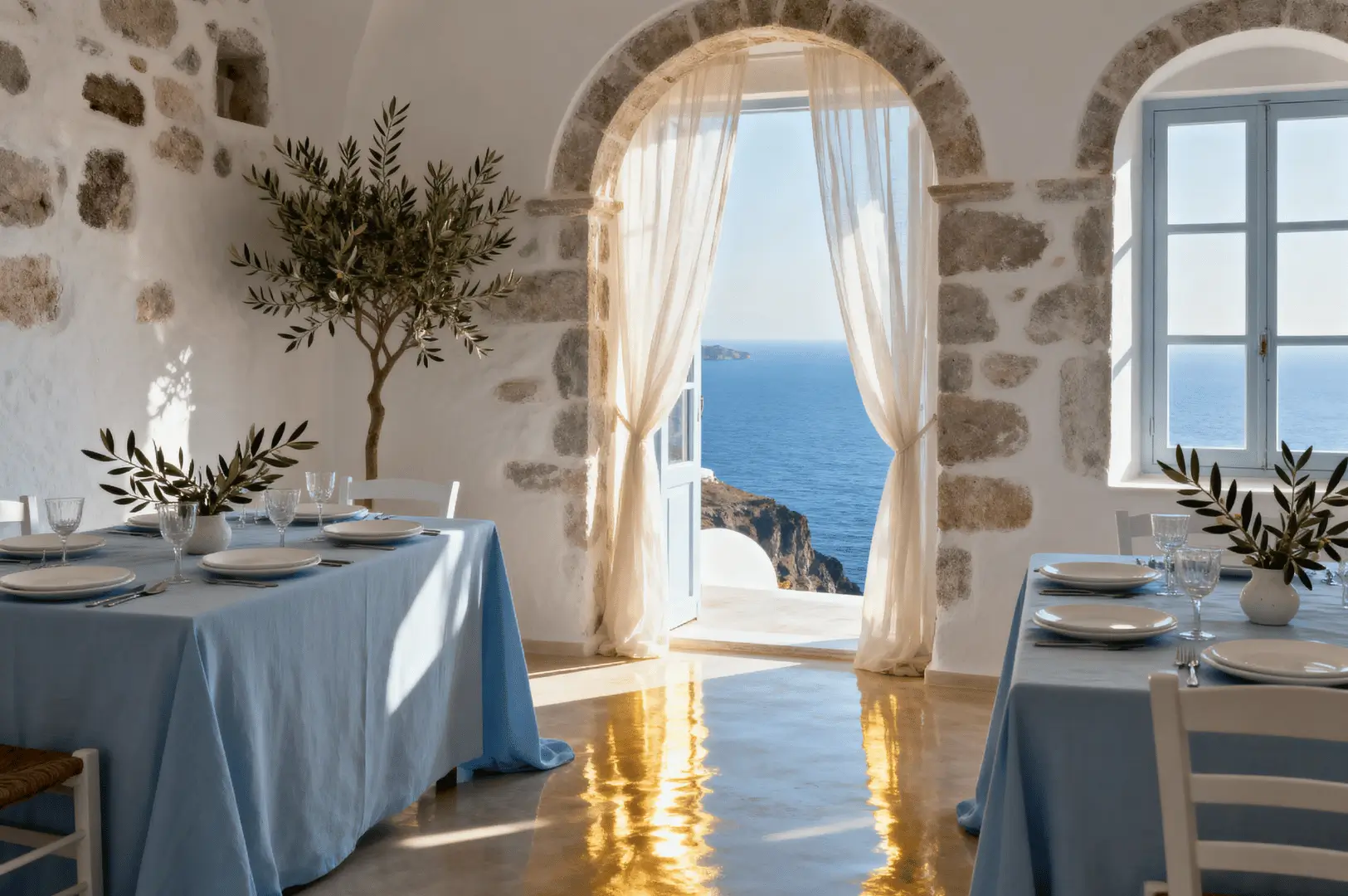

When you envision a Santorini restaurant, your mind likely conjures up cliffside villages where whitewashed walls and brilliant blue domes overlook the vast Aegean Sea—a signature image not only for the Cyclades, but for all of Greece. This Greek island aesthetic, shaped by geography, sea, and culture, offers a captivating style that many around the world now seek to recreate. As one of the most famous food destinations in the Mediterranean, Santorini’s design is more than visual—it’s a lifestyle, reflecting tradition, fresh culinary experiences, and a deep connection with the sea and islands. Today, restaurant owners and designers, from Singapore to London and beyond, are drawn to this authentic Mediterranean style to satisfy guests seeking memorable islands-inspired dining.
An effective Santorini restaurant design is about more than blue and white—it’s about working with tradition, features found in island towns, and infusing every site and space with Mediterranean life. Getting it right means capturing the heart of Greek island culture while avoiding tourist clichés and overdone “themed” features. This guide will provide restaurateurs with practical, industry-focused advice for using iconic Cycladic elements, achieving the right style for their restaurant, and ensuring that the Mediterranean dining experience is authentic, timeless, and elevated.
The Authentic Santorini Restaurant Color Palette: Influenced by Greek Island Life
Mastering the Blues: Choosing the Right Shade for Your Restaurant
On Santorini and other Greek islands like Naxos or Crete, blue is not simply one color. It’s a spectrum seen in the sea, sky, and even the famous domes of the towns.
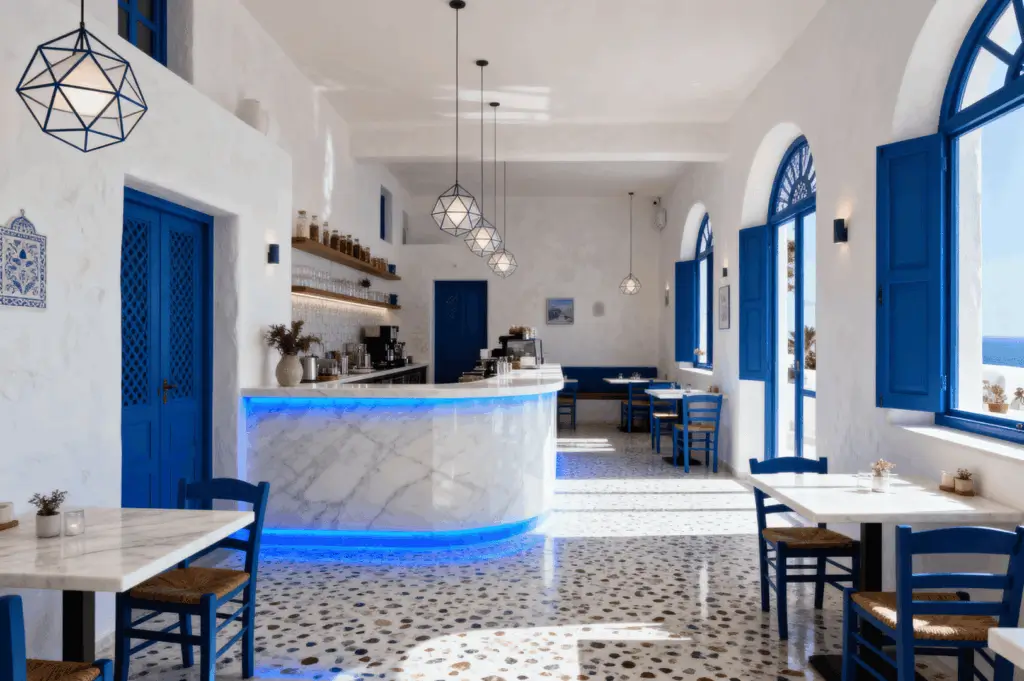
- Cerulean Blue: This vibrant shade, typically found on domes and doors, is the signature point of many a Santorini restaurant.
- Cobalt Blue: Often used for feature walls, upholstery, and decorative options, its depth adds instant style, reminiscent of long summer days spent by the Mediterranean.
- Navy Blue: A grounding accent, this provides a note of formality for bowl edges, staff uniforms, or even select large features.
The Importance of White: Foundation of Greek Island Style
Selecting the right white is crucial when crafting your Greek island restaurant or app-influenced menu board.
- Chalk White: A soft, matte finish, hand-applied, perfect for Cycladic-style plaster walls.
- Ivory or Bone White: These warmer whites are often found in the heart of traditional Greek towns and create inviting, sophisticated restaurant interiors.
Accent Colors and Mediterranean Landscape
Incorporate authentic accent colors—found around the Cyclades and wider Mediterranean—such as:
- Earthy Terracotta: Suggests volcanic soils and islands tradition, adding warmth through pottery or flooring.
- Soft Gray & Beige: Inspired by natural stone, these can be used for tabletops, weathered wood, or seating, echoing the options typically found in Greece.
- Bougainvillea Pink: Add a vibrant pop—whether through textiles, plant arrangements, or fresh details.
Strategic Color Placement: Guide to Restaurant Zones
Apply accent colors in options like seating, wall art, or pottery, for a style that never feels repetitive or overwhelming.
Use white as the base for open, airy heart-of-house areas, maximizing natural light and evoking a fresh, clean look.
Select blue as an end-point accent—framing main entry points, focusing attention on key features, or highlighting bowl displays.
Greek Island Architectural Style: Defining Features in Santorini Restaurant Design
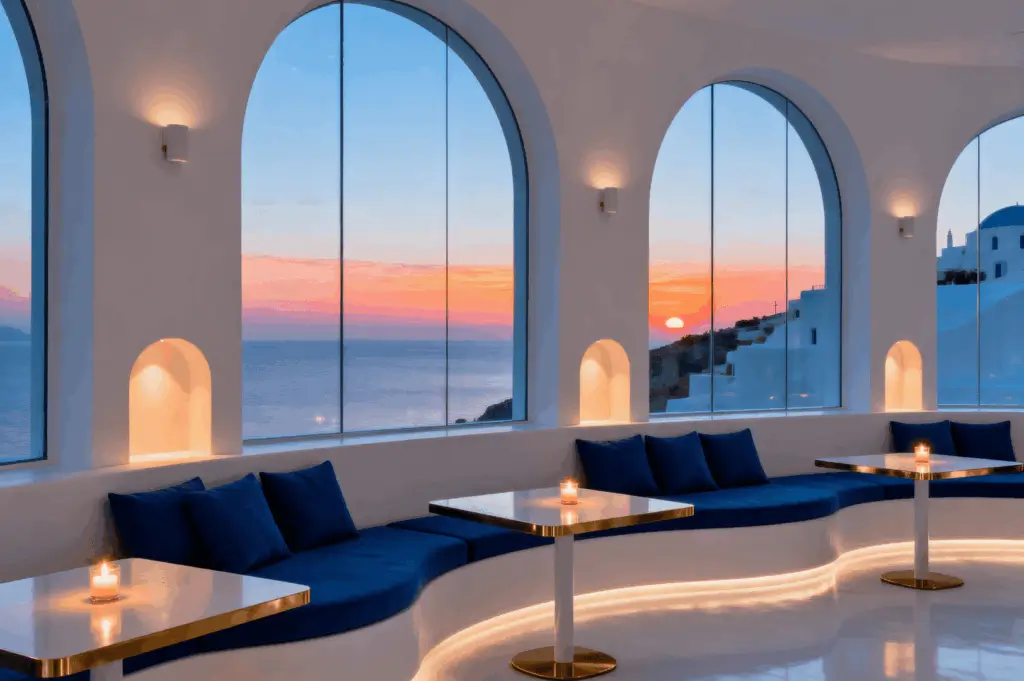
Curved Walls & Arched Doorways: Signature Islands Architecture
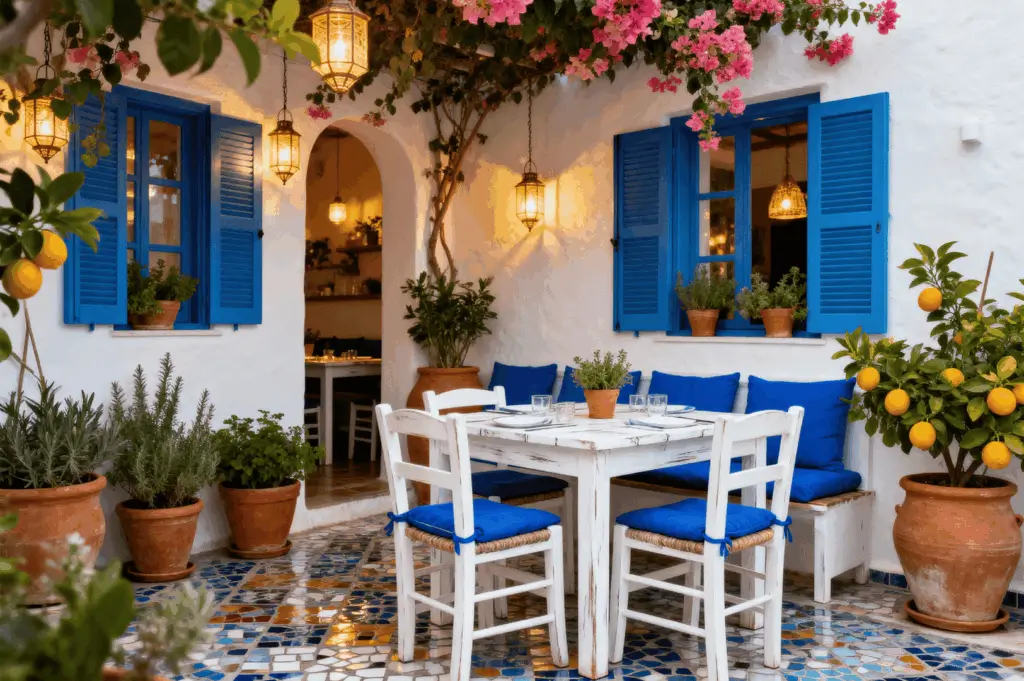
Traditional architecture in the Cyclades is nearly always defined by its curved walls and arched openings, a style that links back centuries.
- Introduce curved plasterwork or arch-shaped doorways to frame experiences and designate dining areas.
- Use level changes, such as steps, to differentiate sections, just as they do in cliffside towns, influencing guest movement and views.
Vaulted Ceilings & Dome Details
- Barrel-vaulted or domed ceilings replicate features found throughout Greek island towns.
- Even in small restaurants or sites in cities like Athens or Singapore, adapted ceiling profiles can influence interior volume and style.
Level Changes: Integrating Greek Island Traditions
- Intentional steps or tiered seating mimic cliffside sites such as those on Naxos or Santorini, creating variety and improving sightlines for long, narrow restaurants.
- Highlight these changes with materials like stone or tile for an authentic, hand-crafted appearance.
Window Treatments: Enhancing the View
- Deep-set windows in plaster, with simple sheer or unadorned options, allow fresh air, natural light, and sea-inspired views to fill the space—key for genuine Mediterranean culture.
Islands-Inspired Material Selection: Establishing Cycladic Tradition
Plaster and Wall Texture: Iconic Santorini Restaurant Surface
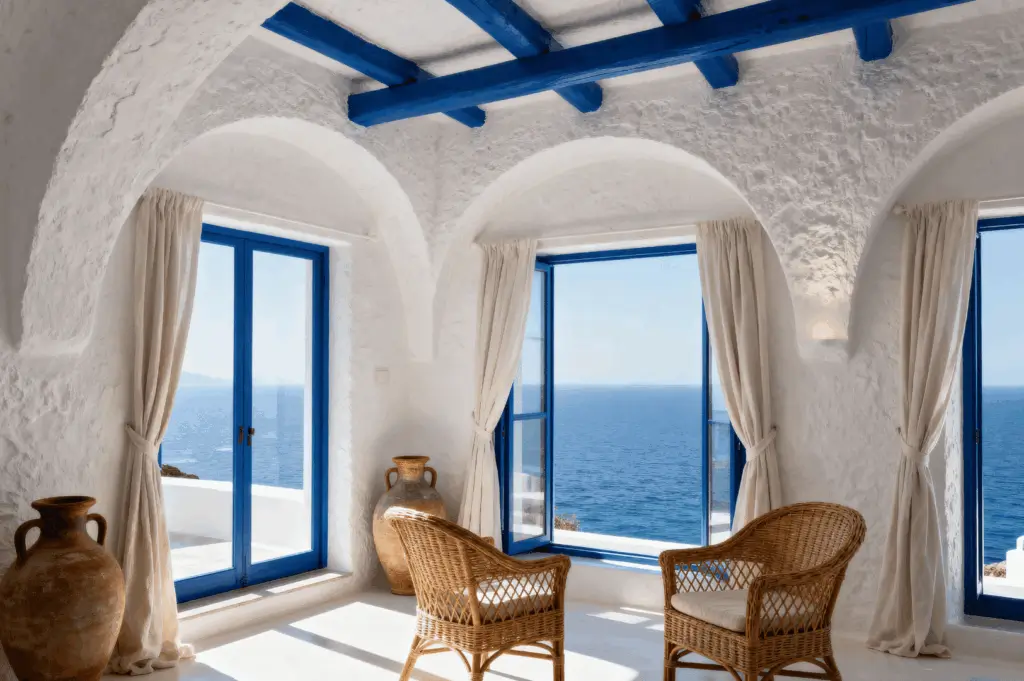
- Achieve tradition through textured, hand-applied plaster using tadelakt or cement-based techniques that evoke authentic Cycladic town walls.
- This roughness adds visual interest, typically encountered in the villages of Greece.
Stone Flooring: Grounding Your Greek Island Restaurant
- Polished concrete, travertine, or terracotta tiles provide durable, cool options reminiscent of Mediterranean tradition and culture.
- Suggest rusticity and connection to natural sites.
Wood, Glass, and Ceramic: Finishing Authenticity
- Use weathered wood with sun-bleached finishes for beams, furniture, or pergolas, differing each feature to avoid monotony.
- Add hand-blown glass or brightly glazed ceramics, options that receive light with a fresh, Mediterranean spirit.
Lighting a Santorini Restaurant: Capturing the Mediterranean Sea’s Luminosity
Natural Light Strategies: Harnessing the Mediterranean Atmosphere
- Employ white walls and reflective surfaces to maximize the flow of natural light.
- Install large windows or skylights where possible, mirroring open-island living.
Evening Atmosphere: Setting the Mood
- Shift to a warm, layered lighting plan—incorporate candles, wall sconces, and floor lamps, mirroring the famous sunset mood across the islands.
- Control lighting with dimmers to guide guest experiences from day to night.
Feature Lighting Placement and Styles
- Select fixtures made of rattan, ceramic, or rustic metals—materials long associated with the islands and Aegean culture.
- Use up lighting to enhance arched features or textured town walls, a dramatic style touch typically found in stylish island bars or lounges.
Furniture & Seating: Dining the Greek Island Way
Built-In Seating: Mediterranean Options That Last
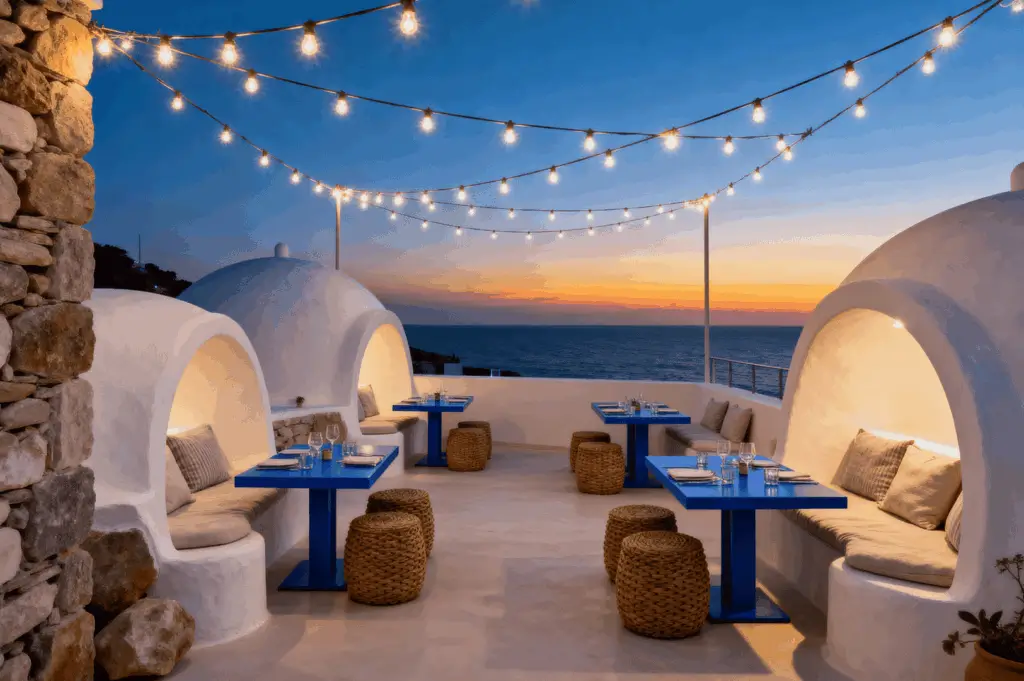
- Plaster banquettes topped with fresh, durable cushions create the heart of communal islands’ style, an option to satisfy both small and large groups.
- Suggest built-in seating for tight restaurant sites as a space-saving, authentic solution.
Standalone Furniture: Timeless Greek Restaurant Style
- Recommend weathered wood or simple Greek taverna chairs—features that influenced generations of design across Greece, Crete, and beyond.
Materials & Layout Strategies
- Use natural fabrics such as linen for upholstery, choosing shades found on the islands for variety and harmony.
- Guide seating layouts to make the most of every view and highlight both indoor and outdoor experiences, ensuring people receive the full style and atmosphere of Greek island life.
Decorative Elements: Honoring a Rich Santorini Restaurant Culture
Pottery & Ceramics: Adding Cycladic Tradition
- Display hand-crafted terracotta or ceramic bowls, amphorae, and platters, found or inspired by the Cyclades, for authenticity that satisfies both history and contemporary restaurant culture.
Textiles & Patterns: Living Island Life
- Include geometric or hand-woven Greek patterns in throws, table runners, or wall hangings, a feature in many islands restaurants.
Art, Photography, and Greenery: Telling a Story
- Suggest black-and-white photos of island life, paintings evoking the Aegean, or abstract art influenced by the sea and towns of Greece.
- Incorporate olive trees, succulents, and climbing plants that thrive on the Greek islands.
Outdoor & Transitional Zones: Blurring the Line Between Sea and Restaurant
Terrace & Patio Design: Drawing from Santorini Cliffs
- Design patios with tiered seating and low, plastered walls—features typically found on cliffside terraces.
- Use a pergola draped in bougainvillea or canvas to create a shaded nook for guests to enjoy fresh air in the Mediterranean style.
Seamless Transitions: Indoor-Outdoor Flow
- The same flooring material can be used inside and outside for visual unity—a long-standing technique in Greek and Mediterranean architecture.
- Retractable doors and minimal barriers help people move easily and enjoy every site and view.
Local Adaptations
- Suggest weatherproof fabrics and plants if adapting the style to climates beyond the Mediterranean.
Islands Style for Every Restaurant Concept
Fine Dining: Modern Greek Island Sophistication
- Use navy and ivory paired with elegant stone or ceramics, creating a restaurant interior that channels both tradition and contemporary style.
- Select refined, minimalist details and finishes that found their way from Athens and London’s top restaurants to global fine dining.
Casual Dining & Cafés: Embracing Everyday Greek Life
- Brighter blue hues, more rustic surfaces, and varied tile features help evoke the daily life and freshness of an island café or family restaurant.
Small Spaces & Bars: Adaptability of Santorini Restaurant Style
- Use built-in elements and bold accents to make small restaurants or bars feel long on style, even with limited options.
- Incorporate cozy nooks and mood lighting for site-specific experiences.
Case Studies: Learning From Successful Santorini Restaurant Designs
Global Benchmarks in Islands Style
Blu Kouzina, Singapore: This Mediterranean restaurant has become one of the most famous Greek-influenced eateries outside the Cyclades. Through pottery, wood, and classic color choices, it found success in both authenticity and satisfaction, adapting to the local culture and tradition while delivering a distinctly Mediterranean experience.
Kymá, New York City: Featuring sweeping arches and blue ceilings, this Greek island restaurant brings high-end Cycladic-inspired dining to the heart of Manhattan. Its elegance lies in restraint, while texture and natural materials influence each space.
Avoiding Clichés: Balancing Greek Island Tradition and Fresh Style
- Common Mistakes: Avoid plastic Greek statues, faux nets, or other features that feel more like a tourist post than a genuine Mediterranean restaurant.
- Subtle Suggestions: Let color, archways, hand-placed ceramics, and textiles influenced by island tradition speak quietly but unmistakably of style and place.
- Contemporary Adaptations: Invite a new generation of diners by fusing tradition with fresh, modern elements and unique art—suggesting, not imitating, the soul of the islands.
Lazy Susan
No article on storage would be complete without mentioning the Lazy Susan. Perfect for deep shelves or awkward corners, this spinning tray is ideal for spices, sauces, or even baking supplies.
It keeps items within easy reach, reducing wasted space and making organization feel effortless. The Lazy Susan is proof that simple, low-cost solutions can have a huge impact.
Implementing Santorini Restaurant Style in Singapore and Beyond
- Climate Adaptations: Use materials and finishes that support longevity in high humidity without sacrificing Mediterranean texture and style.
- Sourcing & Compliance: Work with local craftspeople or suppliers experienced in Mediterranean and Greek island restaurant projects. Ensure all features comply with regulatory standards of your area, from Singapore to London.
- Budget Options: Not every restaurant needs a full-scale Cycladic renovation. Consider starting with core elements like color, wood, and pottery, and evolve the design as the site and budget allow.
Conclusion: Bringing the Heart of Santorini and Greek Islands to Your Restaurant
Santorini-inspired restaurant design is about more than copying a style—it’s about inviting your guests to enjoy the famous culture and life of the Greek islands, with every bowl, feature, and site crafted authentically. By focusing on a nuanced color palette, Mediterranean architectural features, and genuine decorative elements, you can create a restaurant that stands the test of time and receives guests with the warmth and tradition of the islands.
Consulting an experienced designer can ensure that your new style captures both tradition and innovation, helping you work smarter, satisfy a variety of guests, and enjoy long-term success. To turn Greek-inspired ideas into a functional, memorable restaurant space, visit Restaurant Renovations and see how thoughtful design brings concepts to life.