

Every restaurant owner knows the dread of a health inspection. It’s a pass/fail test where a single violation can tarnish a reputation. Most food service establishments aim to meet the minimum food safety regulations required to get that coveted “A” grade. But what if passing the test isn’t the real goal? What if the secret to a safer, more efficient, and more profitable commercial kitchen lies in designing a space that makes hygiene effortless—a space that naturally exceeds regulations?
Merely complying with the code is like aiming for a C- on an exam—it passes, but barely. Kitchen hygiene design is about aiming for an A+. It creates a system where the easiest way to work is also the cleanest, making hygiene second nature and protecting your customers, staff, and brand.
Why Meeting Minimum Food Safety Standards Isn’t Enough
Food safety regulations provide a foundation, but they are often outdated compared to modern technology and best practices. Relying solely on them leaves you vulnerable to food contamination, cross contamination, and foodborne illnesses. A single sick food handler, one careless moment with raw chicken, or using the same knife for raw foods and ready-to-eat foods can spark a food poisoning outbreak. Many food businesses never fully recover from that kind of reputational damage.
The real goal isn’t just to avoid violations, it’s to foster good hygiene practices so strong that harmful bacteria and cross contamination become nearly impossible.
The Business Case for Exceeding Food Safety Regulations
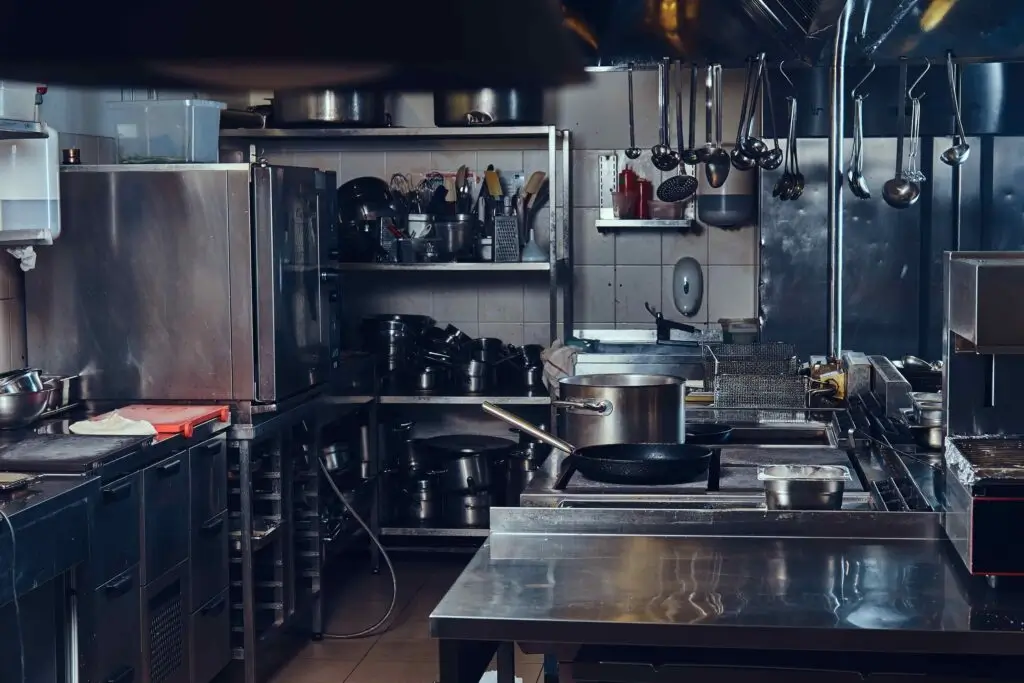
Designing with food hygiene in mind is not just a cost but also an investment that pays back across every part of the restaurant.
- Reduced Risk of Food Poisoning: A cleanable, logical kitchen layout drastically lowers the chance of contamination.
- Improved Staff Efficiency: Proper kitchen equipment placement and easy-to-clean surfaces mean food preparation, cleaning, and service all run faster.
- Brand Reputation: In today’s hospitality industry, cleanliness is part of your identity. Customers equate pristine kitchens with food safety and professionalism.
Food Preparation Workflow: Designing to Prevent Cross Contamination
The most important hygiene feature isn’t fancy kitchen equipment—it’s the kitchen layout. A logical food preparation workflow is your first defense against food contamination. In catering kitchens—specialized environments distinct from restaurant kitchens—design focuses on large-scale food production, efficient workflows, and maintaining food quality for delivery and large gatherings. In both catering kitchens and restaurants, the layout should create a one-way path for food items, from delivery to service.
- Receiving Area: A zone where fresh produce and raw ingredients arrive, separated from the food preparation area.
- Raw Food Prep: Dedicated spaces for handling food such as raw chicken, with separate cutting boards, sinks, and color-coded knives.
- Cooking Area: Where cooking appliances handle raw food, transforming it into food safe meals. The layout should support the cook in maintaining food safety and efficiency.
- Plating & Service: A clean space for ready to eat foods, kept apart from raw meat or raw ingredients, and organized to streamline the workflow as you prepare to serve food to customers.
- Ware washing & Washing Area: A section for dirty dish cloths, dishware, and hot water sanitization—completely separate from food prep, with explicit handling and sanitization of dish cloths as part of hygiene.
This workflow makes it easy to avoid cross contamination and ensure compliance with health and safety rules.
Kitchen Equipment and Materials That Make Hygiene Easy

The right materials and kitchen equipment directly impact cleanliness and efficiency.
- Countertops: Stainless steel is still the gold standard in commercial kitchens, while quartz offers a stylish, food safe alternative in lighter-use areas.
- Walls: Fiber-Reinforced Plastic (FRP) in splash zones and epoxy paint elsewhere ensure smooth, scrubbable surfaces.
- Floors: Poured epoxy with integral coving eliminates dirt traps. Quarry tile with epoxy grout remains a reliable option.
- Cooking Appliances: Choose models with coved corners and seamless welds—no crevices for harmful bacteria to hide.
- Mobile Equipment: Putting units on casters lets food handlers regularly check behind and underneath for spills or pests.
When buying equipment, prioritize ease of cleaning—it will reduce labor costs and boost overall hygiene practices.
Food Hygiene and Handwashing Stations

Food hygiene practices live or die on handwashing. Exceeding the minimum number of sinks makes proper hygiene practices easier for staff.
- Dedicated Sinks: Separate sinks for raw food prep, fresh produce washing, and bar use prevent food contamination.
- Hands-Free Fixtures: Motion-sensor faucets, soap dispensers, and towel units reduce the spread of harmful bacteria.
- Strategic Placement: No food handler should walk more than a few steps to wash hands while handling food.
Proper Ventilation in a Commercial Kitchen
A well-designed ventilation system is critical for health, safety, and hygiene.
- Demand-Control Hood Systems: Adjust automatically to food preparation levels, improving air quality and saving energy.
- Make-Up Air Systems: Replace exhausted air with fresh, filtered, tempered air—ensuring cooking areas remain comfortable and safe.
Good ventilation not only improves cleanliness but also reduces risks tied to fire safety and overall health.
Food Storage: Designing Out Risks
Improper food storage is a leading cause of foodborne illnesses. The placement and accessibility of the storage area are crucial for supporting hygiene practices and reducing cross-contamination risks. Kitchens must separate raw ingredients from ready to eat items, and all food storage must support proper temperature control.
- Refrigeration Units: Install wireless monitoring systems to regularly check temperatures and prevent spoilage of perishable items.
- Walk-Ins: Use open wire shelving for airflow; keep everything at least six inches above the floor.
- Dry Storage: Clear, sealed, food-grade containers with use by dates ensure rotation and reduce food waste.
This approach keeps food safe, prevents pests, and ensures compliance during regular inspections.
Hygiene Practices and Smart Technology

Food safety and hygiene benefit from digital oversight.
- Digital Checklists: Tablets for cleaning schedules ensure food hygiene practices are logged and tracked.
- Temperature Monitoring: Automated systems alert staff if refrigeration units fail, saving large quantities of food.
- Risk Assessment Tools: Modern food safety management systems use smart sensors to detect problems before they escalate.
Staff Training and Personal Hygiene
The best-designed kitchen still depends on people. Proper hygiene practices only stick with consistent staff training.
- Encourage personal hygiene (clean uniforms, trimmed nails, no jewelry while preparing ingredients).
- Reinforce good hygiene practices such as using separate cutting boards for raw food and ready to eat items.
- Train food handlers to handle food properly—never using the same knife for raw chicken and ready to eat foods.
By combining training with a kitchen designed for compliance, you minimize food contamination risks.
Waste Management and Disposal: Keeping the Kitchen Clean and Compliant
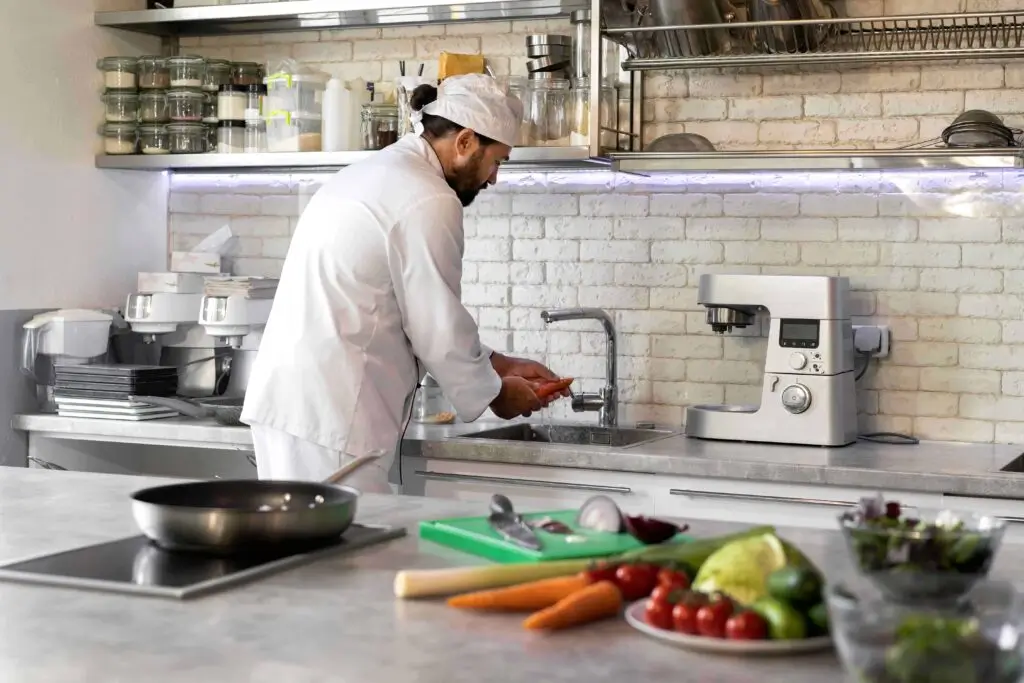
Effective waste management is a cornerstone of food safety and hygiene in any commercial kitchen. Food waste, if not handled correctly, can quickly become a source of contamination, attract pests, and create unpleasant working conditions. To maintain a clean and compliant environment, commercial kitchens must implement robust waste management strategies that go beyond simply taking out the trash.
Start by segregating food waste from other types of waste, using clearly labeled bins for recyclables, compostables, and general refuse. This not only helps cut food waste sent to landfills but also supports compliance with local health and safety regulations. Proper storage of waste—away from food preparation areas and in sealed containers—minimizes the risk of cross contamination and foodborne illnesses.
Pest Control and Management: Designing Out Unwanted Guests
Pest control is a non-negotiable aspect of kitchen hygiene and food safety. In commercial kitchens, even a small lapse can invite rodents, insects, or other pests, leading to food contamination and potential violations of food safety regulations. The best defense is a proactive approach that combines smart kitchen design with vigilant operational practices.
Seal all possible entry points, such as gaps around doors, windows, and utility lines, to prevent pests from gaining access. Store food in sealed, food-grade containers and keep all food preparation and storage areas free from crumbs and spills. Regular cleaning routines and immediate waste removal are essential to eliminate attractants.
Regular Inspections, Fire Safety, and Emergency Exits
Kitchen hygiene design must also integrate wider health and safety elements.
- Regular Inspections: Routine checks ensure equipment, refrigeration units, and storage areas are functioning correctly.
- Fire Safety: Install fire extinguishers, proper use signage, and ensure emergency exits remain clear.
- Hot Water Access: Every washing area should maintain reliable hot water supply for sanitization.
These measures protect not just food safety, but also staff and customer safety in emergencies.
Investing in Kitchen Design for Food Safety and Hygiene
Yes, food hygiene investments cost more upfront: epoxy floors are pricier than tile, hands-free sinks cost more than manual ones. But the ROI is clear: reduced cleaning labor, fewer food safety risks, lower turnover, and protection against catastrophic food poisoning events. In the food industry, one outbreak can undo years of hard work.
A kitchen designed to exceed local health requirements is not a luxury—it’s a defense system for your food business. By focusing on hygiene practices, food storage, kitchen layout, proper ventilation, and staff training, you build resilience into your restaurant. The result is a commercial kitchen that is efficient, compliant, and trusted. Discover how proper ventilation supports efficiency and hygiene in our Commercial Kitchen Ventilation in Singapore guide.