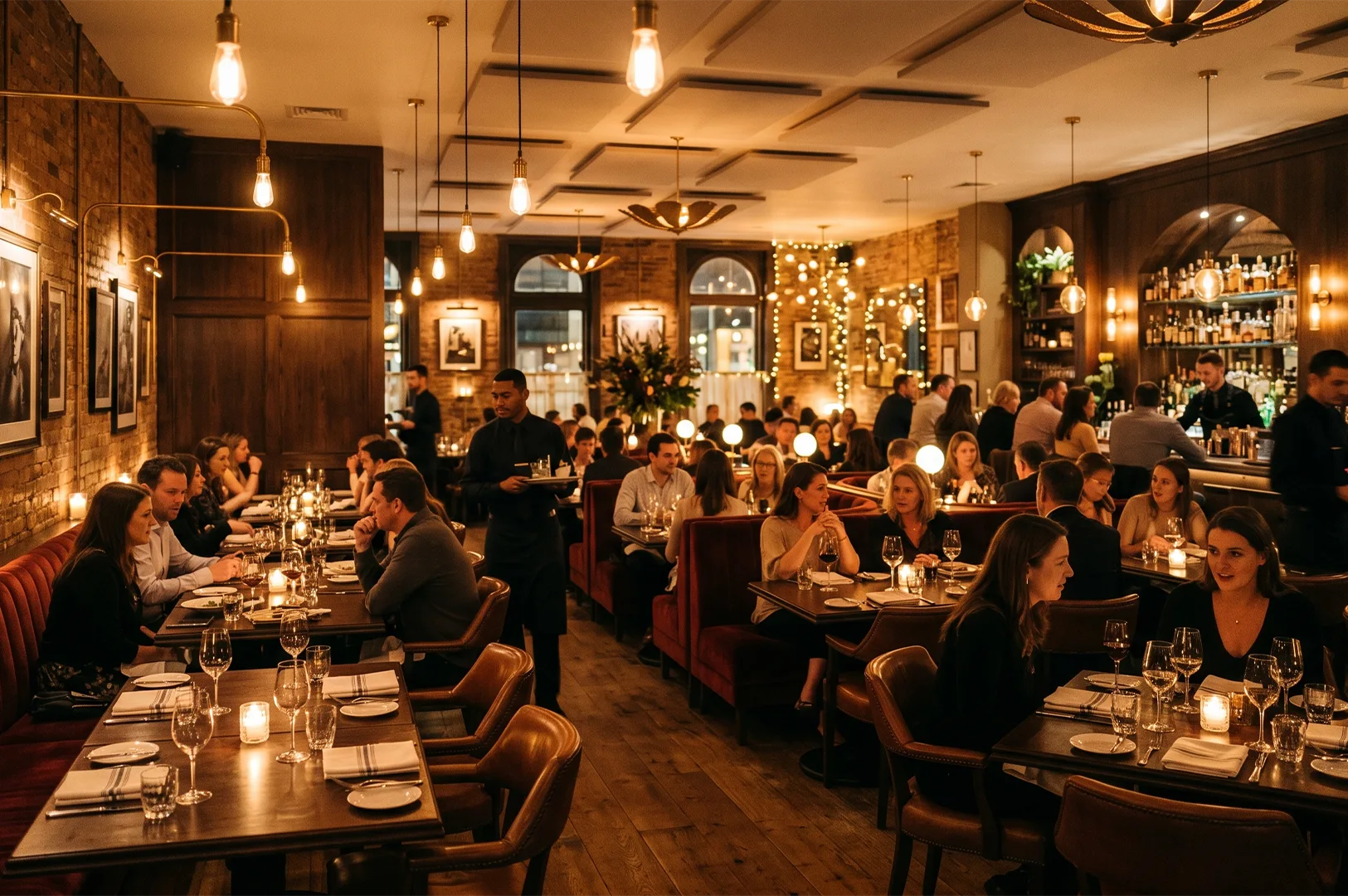

Guests may not consciously notice the details that make a restaurant feel right, but they sense them immediately.
Lighting angles soften the room and highlight the food.
Tables are spaced to prevent awkward proximity.
Acoustics allow conversation without raising voices. Entrances and circulation guide guests naturally into the space.
These elements rarely appear in photos. They do not make headlines. Yet they shape how comfortable, relaxed, and satisfied diners feel.
A subtle pendant light can transform an evening. Chairs placed with intention prevent stress during service. Wall panels or plants absorb excess noise. The right sequence of tables ensures flow without congestion.
Designers consider movement, sightlines, and sensory perception with the same rigor as colors and finishes.
A well-designed dining room functions almost invisibly.
Guests leave with a sense of comfort, unaware of the careful thought behind every choice.
Even kitchen-to-dining paths influence perception. Plates arrive without interruption. Staff movement is quiet and efficient. Guests experience ease, even if they do not see the work that supports it.
These invisible details are what make repeat visits natural.
They define the intangible quality of a restaurant: why people linger, feel at home, and return.
The most successful renovations blend aesthetics and function seamlessly. They balance human behavior, comfort, and operational needs to create intuitive spaces.
For a deeper dive into subtle design decisions, see The Quiet Details That Make a Restaurant Feel Right (Even If You Never Notice Them).