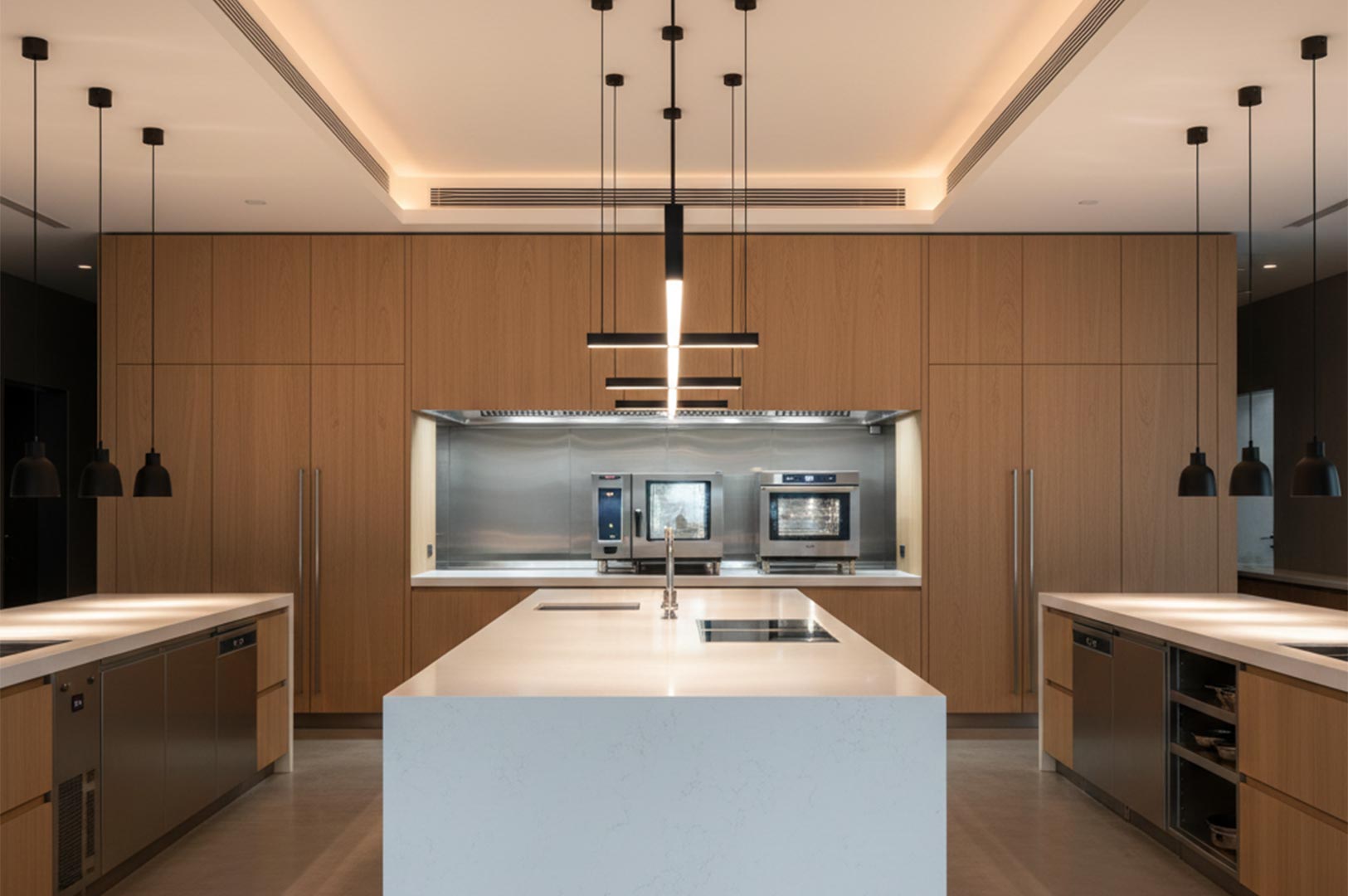

The kitchen is the engine room of your restaurant, but in today’s visually-driven F&B scene, it can also be a powerful design statement. The modern design of kitchen spaces has transformed how Singapore restaurants approach their back-of-house and open-concept areas, moving beyond pure utility to embrace a sleek, efficient, and clean aesthetic. This article also serves as a source of kitchen ideas for readers looking to create stylish and functional restaurant kitchens.
Before we dive in, it’s important to clarify a common point of confusion. “Modern” and “contemporary” are often used interchangeably, but in design, they are distinct. This article focuses specifically on the principles of modern kitchens—a defined aesthetic rooted in the mid-20th century. While it complements the broader, ever-evolving trends covered in Contemporary Kitchen Designs for Restaurant Renovations: Transforming Commercial Spaces with Style and Efficiency.
For those seeking up-to-date styles that balance functionality and aesthetics, contemporary kitchen ideas offer inspiration with open layouts, natural materials, and minimal ornamentation, contrasting with the modern design focus of this article.
Defining Modern Kitchen Cabinets vs. Other Styles
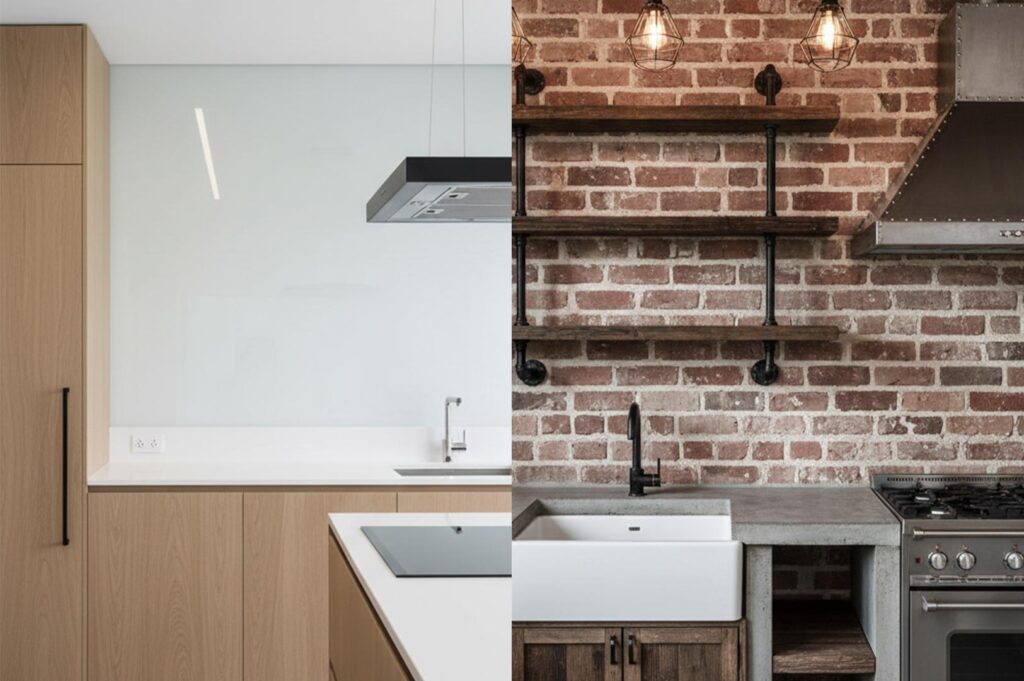
What exactly makes a kitchen “modern”? In architectural terms, modern design is a specific style that emerged in the early to mid-20th century. Its core principle is “form follows function,” meaning every design element should have a purpose and be free of unnecessary ornamentation.
Modern design, rooted in the period from the 1920s to the 1970s, is characterized by clean lines and the use of natural materials treated with a smooth, refined finish. Its aesthetic focus is on sleekness and minimal ornamentation, emphasizing simplicity and functionality.
In contrast, contemporary design is dynamic and reflects the styles of the present day. It often borrows elements from modern design but incorporates a variety of current trends, resulting in a more varied and evolving aesthetic.
Industrial design celebrates raw, exposed elements such as brick walls, concrete surfaces, and visible metal pipes. This style embraces an unfinished, utilitarian look that highlights structural materials and mechanical components.
Rustic design emphasizes natural, weathered materials like reclaimed wood and rough stone. It creates a cozy, pastoral feel through rough, textured finishes and a connection to nature.
Key Features of a Dream Kitchen in Modern Style Kitchens
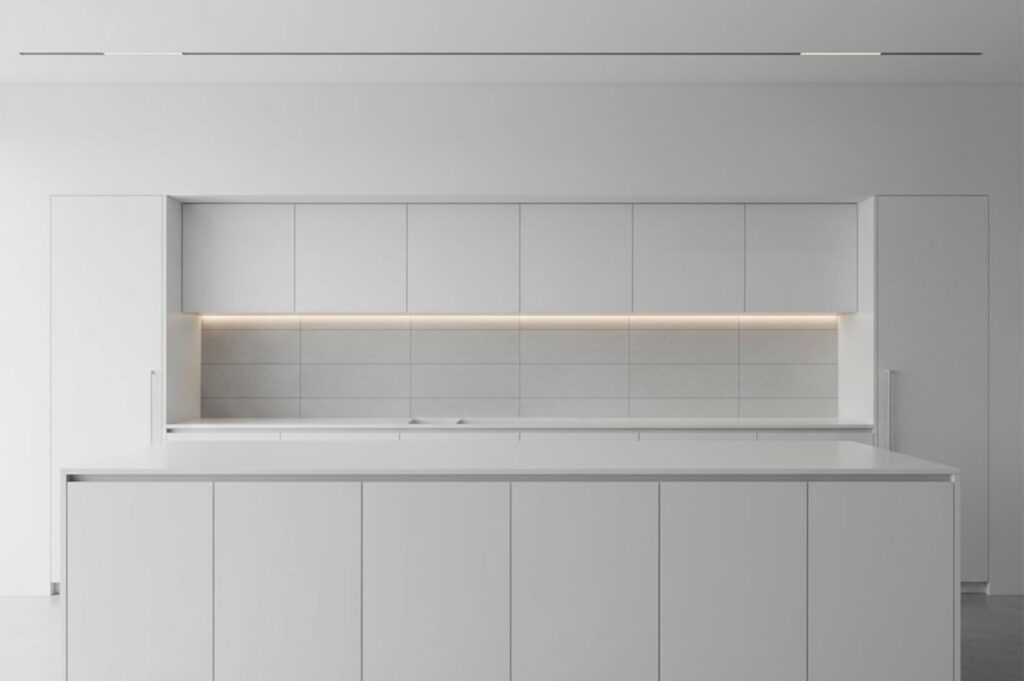
A modern kitchen is instantly recognizable by its signature characteristics, which when applied to a commercial restaurant setting, enhance both aesthetics and practicality. One defining feature is the use of flat-panel cabinetry, where cabinet doors are completely flat without any beveling or ornamentation, creating a sleek and streamlined appearance. To maintain this sleek aesthetic, modern kitchen cabinets often feature minimal or no hardware, utilizing integrated handle pulls, push-to-open mechanisms, or slim, unobtrusive bar pulls.
The design emphasizes strong horizontal and clean lines, evident in the alignment of cabinets, shelving, and countertops. This approach creates a sense of stability and spaciousness, making even compact kitchens feel wider. The style relies on simple geometric forms such as squares, rectangles, and straight lines, steering clear of ornate curves or intricate patterns. Color palettes in modern kitchens tend to be monochromatic or neutral, with lighter tones like white, grey, beige, and black forming the base. Bold primary accent colors are used sparingly to create focal points without overwhelming the space.
Kitchen Island and Kitchen Layout: Creating Functional Spaces
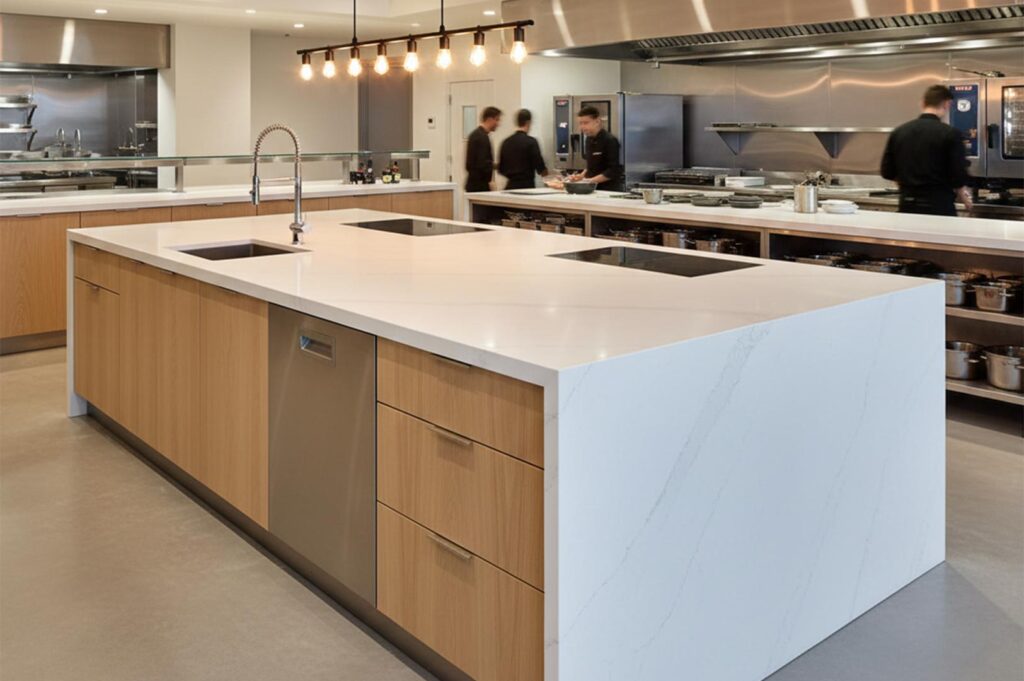
The kitchen layout plays a crucial role in maximizing both efficiency and aesthetics in a modern kitchen. Incorporating a kitchen island or central island enhances counter space and storage, establishing a versatile hub for cooking, dining, and social interaction. These islands are especially favored in spacious kitchens, where they provide adaptable workspaces and improve the overall flow of the kitchen.
Material Choices in Modern Kitchen Design Ideas
Materials chosen for a modern restaurant kitchen must strike a balance between sleek aesthetics and the rigorous demands of a commercial environment. Stainless steel stands out as the quintessential material, perfectly fitting the modern look while offering durability and ease of maintenance. Engineered quartz countertops provide an ideal modern solution, allowing fabrication into clean, sharp lines and availability in many colours to complement the design. Glass is often used for cabinet doors, sometimes frosted for obscurity, or as a seamless backsplash, contributing to a sleek appearance. Back-painted glass, in particular, introduces a pop of accent color with a high gloss finish. For a more grounded and subtly textured effect, polished concrete or cement screed can be applied to floors and countertops, provided they are properly sealed to ensure they are non-porous and food-safe. High-gloss laminates and acrylics are excellent for achieving the ultra-sleek, reflective surfaces common in modern cabinetry, enhancing visual appeal and creating a spacious, polished look. Natural wood and wood accents are also incorporated but always treated with clean, straight-lined finishes. Woods like oak or ash with consistent grain, finished with smooth, flat varnish, add warmth without compromising the modern aesthetic.
Kitchen Design Ideas: Color Schemes and Finishes for Modern Kitchens
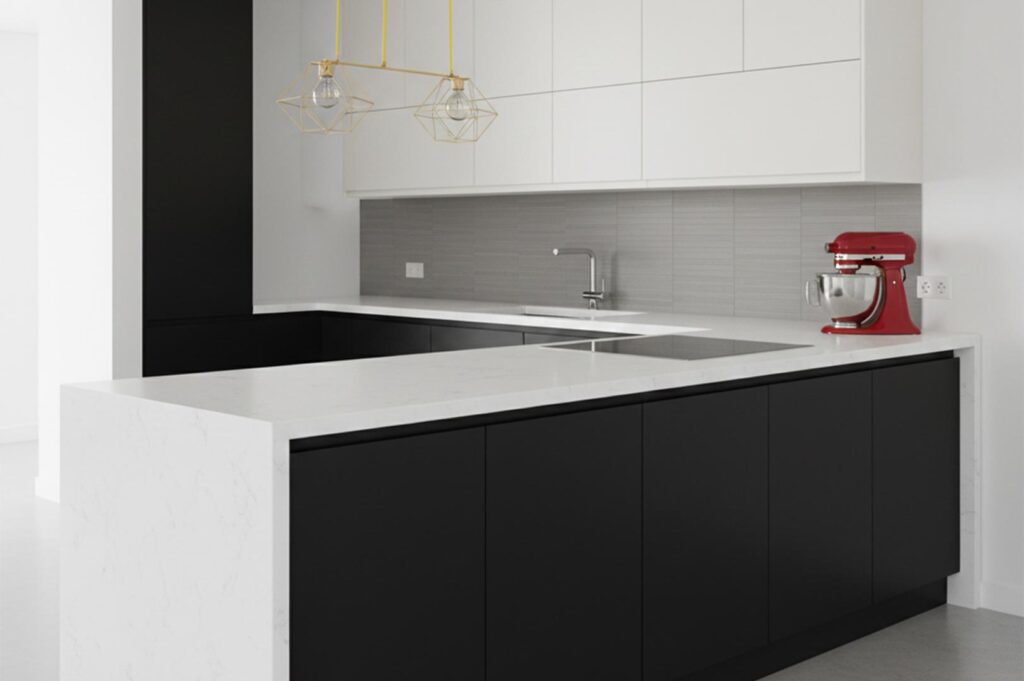
Color in a modern kitchen is applied with intention and restraint to maintain the clean, uncluttered aesthetic. Whites and off-whites are classic choices that create a bright, clean, and spacious feel, particularly effective in smaller or enclosed kitchen spaces typical of Singaporean homes. Alternatively, blacks and grays provide a more dramatic and sophisticated style, with matte black finishes exuding a premium, contemporary vibe. Strategic use of bold primary accent colors such as red, yellow, or blue adds vibrant visual interest when applied sparingly, for instance on a single wall, backsplash, or pendant lights in an open kitchen. Another popular technique involves two-tone combinations where darker colors are used for lower cabinets and lighter colors for overhead cabinets, grounding the space while keeping the upper visual field light and airy.
Kitchen Units and Storage Solutions: Maximizing Space and Easy Access
Storage space is a critical component of any modern kitchen renovation. The clean, uncluttered aesthetics of modern kitchens can be maintained by incorporating clever storage solutions such as pull-out drawers, open shelving, and custom cabinetry. These features not only create visual interest but also provide easy access to kitchen tools and ingredients, ensuring the kitchen works efficiently.
In commercial kitchens, a butler’s pantry can be a highly functional addition, offering extra storage and prep space without compromising the main kitchen layout. Seamlessly integrating a butler’s pantry into a modern kitchen enhances both organization and the refined aesthetic typical of high-end restaurant kitchens, providing a sophisticated solution for entertaining and efficient workflow.
Lighting: Integrated Lighting and Soft Lighting for a Modern Look
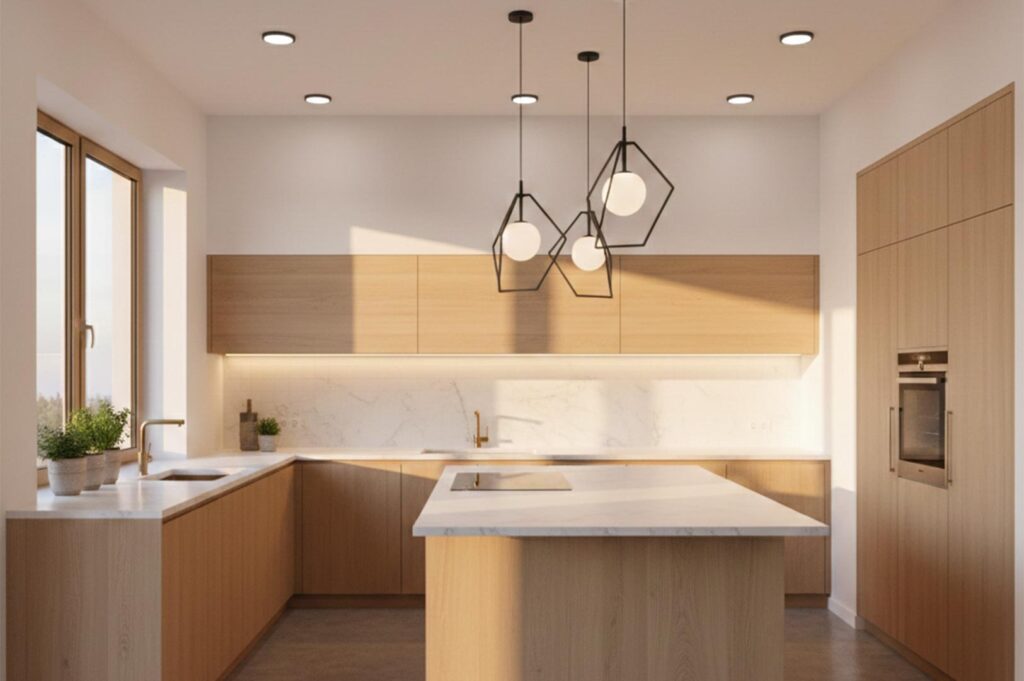
Lighting is an integral design element in modern kitchens that enhances both functionality and ambiance. Thoughtful lighting choices are essential to modern kitchen decor, as they contribute to the overall sleek and contemporary atmosphere.
- Recessed LED Downlights: To maintain a clean, uncluttered ceiling plane, recessed downlights provide general ambient lighting without visual clutter.
- Linear LED Strip Lighting: Integrated lighting under cabinets and along countertops offers task lighting that is both practical and stylish.
- Pendant Lights with Geometric Forms: Pendant lights over a kitchen island or dining space add a designer kitchen touch, creating visual interest without overwhelming the clean lines.
- Soft Lighting: Accent lighting softly highlights natural materials and architectural features, enhancing the warmth and inviting atmosphere of the space.
Technology Integration in Modern Kitchen Designs
Modern design embraces cutting edge technology. In a restaurant kitchen, this means seamlessly integrating equipment and systems for a streamlined look and enhanced functionality.
- Integrated Appliances: Ovens, combi-steamers, and refrigeration units are often built directly into floor-to-ceiling cabinetry, creating a flush, uniform wall of appliances.
- Digital Displays: Kitchen Display Systems (KDS) and ordering screens can be flush-mounted into walls or cabinetry, reducing clutter.
- Touchless Fixtures: Motion-activated taps and soap dispensers enhance hygiene and contribute to the minimalist, handle-free aesthetic.
- Hidden Connectivity: Incorporating hidden charging stations and data ports within cabinetry supports the use of tablets and other devices without disrupting the clean look.
Conclusion
The modern design of kitchen spaces offers Singapore restaurants the perfect blend of style and efficiency, creating beautiful kitchens that enhance both the cooking experience and customer perception. By applying expert advice and thoughtful planning, you can maximize the given space to achieve a perfect modern kitchen design that balances aesthetics with functionality. Incorporating modern kitchen ideas such as sleek cabinetry, integrated appliances, and versatile kitchen islands not only optimizes storage space but also creates visual interest and a welcoming dining space.
Whether working with small kitchens or larger layouts, the key is to maintain clean lines, use different colours strategically, and select high-quality materials that stand up to commercial demands. A new kitchen designed with these principles will not only elevate your restaurant’s operational flow but also provide a stunning centerpiece that reflects contemporary style and professionalism.