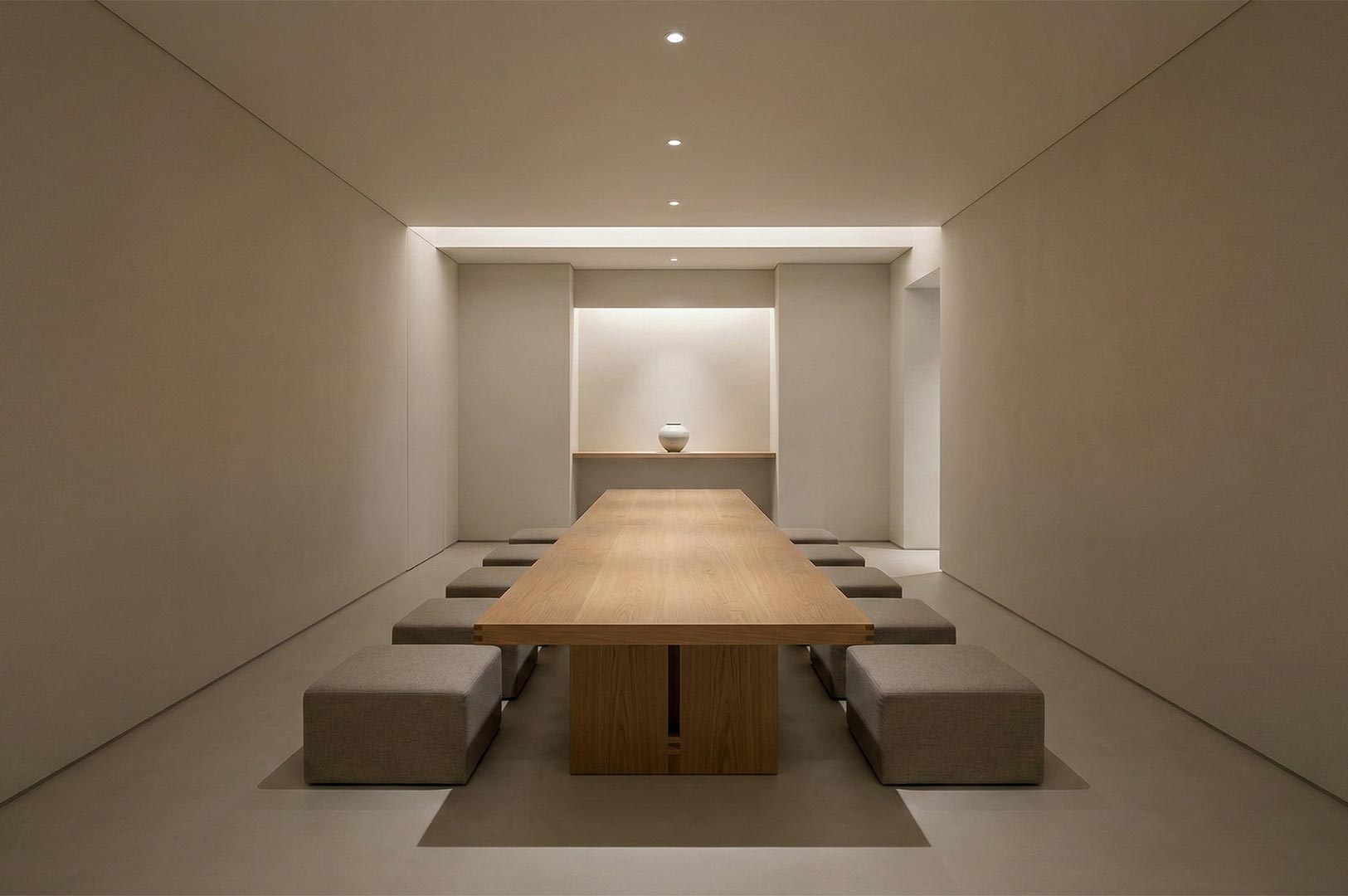

In Singapore, modern interiors are often automatically read as “fusion.” For operators, this common misinterpretation matters greatly because it shapes guest expectations on what to order, the duration of their stay, and whether they view the experience as a focused session or a casual tea time visit.
Tea Room by Ki-setsu serves as a perfect example of balancing modern design with respect for traditional Chinese tea. Drawing inspiration from tea culture rooted deeply in China, the space is deliberately crafted not just for aesthetics but as an operational tool to preserve the integrity of the tea ritual and provide guests with a premium, immersive experience.
Visitors can explore the nuances of traditional tea service in a comfortable modern setting, allowing them to fully enjoy the moment. Many guests have found that this thoughtful design enhances their appreciation of the tea, making each visit a memorable journey into authentic tea culture.
Tea Room Positioning: Modern Space, No Fusion Assumptions
A “modern” renovation is a spatial decision: finishes, joinery, lighting, workflow. “Fusion” is a product decision: menu direction and cultural reinterpretation. When operators blend these two ideas, the room gets built to support the wrong behaviour.
Tea Room by Ki-setsu avoids that through constraint. The space is not configured for walk-in volume or a teahouse-style throughput model. It is configured for controlled conversation, a paced course, and focused taste. That is the commercial point: the environment filters behaviour before the first sip.
If an operator wants the same clarity, the renovation brief should explicitly state what the concept will opt out of. Examples include café-style browsing, open seating spillover, and promotional clutter. Those choices can drive short-term traffic, but they also dilute the price logic needed for a small-capacity model to run sustainably.
Traditional Chinese Tea Is a Product Discipline, Not a Design Theme
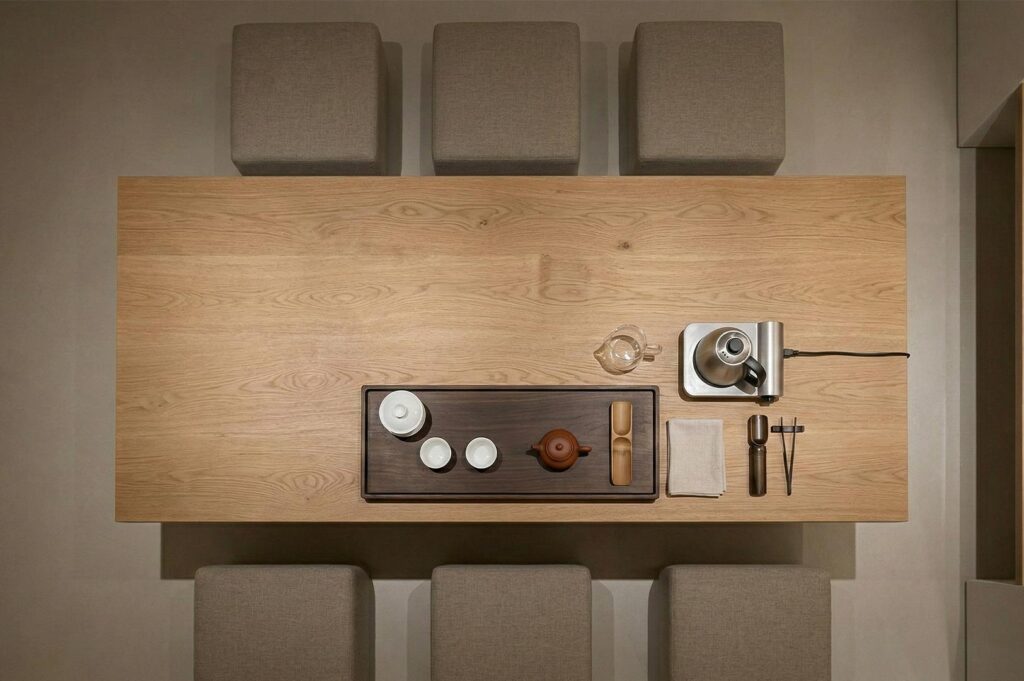
Design should not “perform” tradition. It should protect the method. With traditional Chinese tea, the product depends on controlled water, timing, and a quiet environment that supports appreciation.
Traditional Chinese Tea Requires Pacing Control, Not Volume
A tea session is not one beverage. It is sequencing: rinsing, steeping, pouring, adjusting. That requires a stable table setup and minimal interruption. This is why Tea Room by Ki-setsu centres the room around a single rectangular table: one platform where the host can stage tools, manage tea leaves, and keep the experience consistent for every person at the table.
Commercially, this also addresses predictability. With a defined cap of guests, session-led scheduling, and controlled duration, operators can plan staffing and resets more reliably than in a walk-in model. It is a different revenue equation, but it can be viable when the environment supports premium delivery.
Premium Chinese Tea Needs Premium Infrastructure (Not Premium Décor)
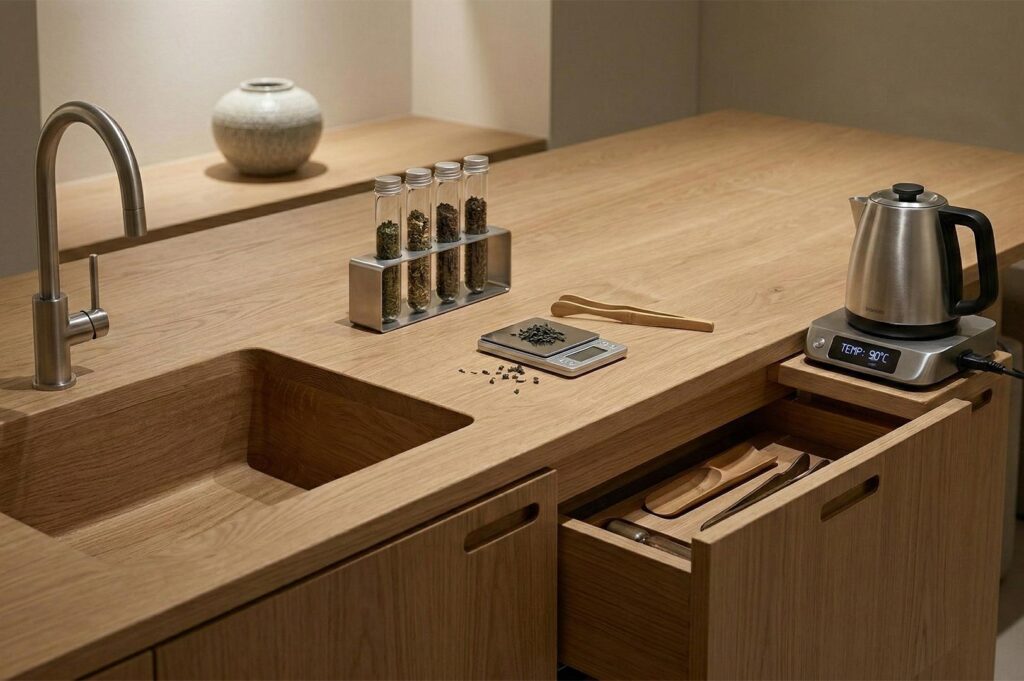
“Premium” is frequently treated as a finish package. In practice, premium chinese tea depends more on repeatable workflow: storage, water handling, and reset speed with no visible disruption.
Premium Chinese Tea: Storage, Water, and Reset Zones
The counter and sink in Tea Room by Ki-setsu reads as built-in operational infrastructure, not a decorative pantry. A dedicated sink enables hot-water management, quick rinses, and clean resets between sessions. This keeps the table uncluttered and reduces service noise.
The timber cabinetry also indicates an intentional storage strategy. Tools can be put away, surfaces stay clean, and the room avoids the “equipment on display” look that undermines premium positioning. For operators, this is ROI-related: in a low-seat model, the room must look consistent across every booking, including late-day sessions when fatigue increases.
Retail Discipline: Enable Guests to Buy Tea Without Turning Into a Shop
A session-led concept can support retail, but retail must not control the room. Guests who want to buy tea should be able to do so without the space turning into a store.
The practical approach is guided selection. You can hold a wide array of varieties, but you do not need to show everything. After tasting, the guest can decide what is worth a purchase. The operator can then offer a discreet pathway to buy, rather than pushing sales during the session.
This supports repeat behaviour. Guests return because the experience was controlled and the tea was delivered correctly, not because the room looked like a showroom.
Chinese Tea Service Flow: Rectangular Table, Single-Group Control
A private tea room succeeds or fails based on flow. With chinese tea, the table is the operating platform and the room must support the host’s movements without crossing the guest experience.
Chinese Tea is Table-First: The Table is the Operating Platform
The rectangular table in the centre does three things operationally:
- Service staging: The host can place tea tools, a tea set, and cups in a predictable layout.
- Reach control: Pouring lines and hand movements stay consistent, improving service accuracy.
- Behaviour control: Seating is defined by the table, which prevents extra chairs being added “just for one more.”
This is also why the surrounding floor space matters. A clear perimeter allows the host to move, reset, and retrieve items without breaking attention or stepping into the guest zone.
Seating Decisions Are Commercial Decisions (Chairs, Dwell Time, Comfort)
A session-led concept requires dwell time. That means the chair is not a styling choice; it is a commercial support item. Upholstered seating reduces fatigue and supports longer stays, whether the group is a pair of friends, a family booking, or small meetings.
This is also where operators should be careful with positioning language. A calm room supports modern relaxation, but the promise must be operationally backed by comfort, temperature stability, and low visual clutter—not by lifestyle copy.
Privacy as a Design Spec: Fully Enclosed Tea Room With a Door at Tea Room by Ki-setsu
At Tea Room by Ki-setsu, privacy is more than just a concept: it is a fundamental design principle. The establishment features a fully enclosed tea room with a door, creating an environment tailored for focused and uninterrupted tea sessions. This design ensures:
- Noise control: The enclosed space reduces corridor noise, fostering a calm atmosphere ideal for appreciating premium Chinese tea.
- Interruption control: With no walk-in browsing or mid-pour disruptions, guests can fully immerse themselves in the traditional tea experience.
- Sightline control: The enclosed room maintains a contained, intimate setting, distinct from public or casual tea spaces.
This design supports Tea Room by Ki-setsu’s session-based model, where guests book and commit to a carefully curated tea experience. The door signals a transition into a dedicated space (more akin to a private dining room than a casual café) reinforcing the establishment’s commitment to delivering a premium, authentic tea ritual. For Tea Room by Ki-setsu, privacy is not just marketed; it is built into the very fabric of the guest experience.
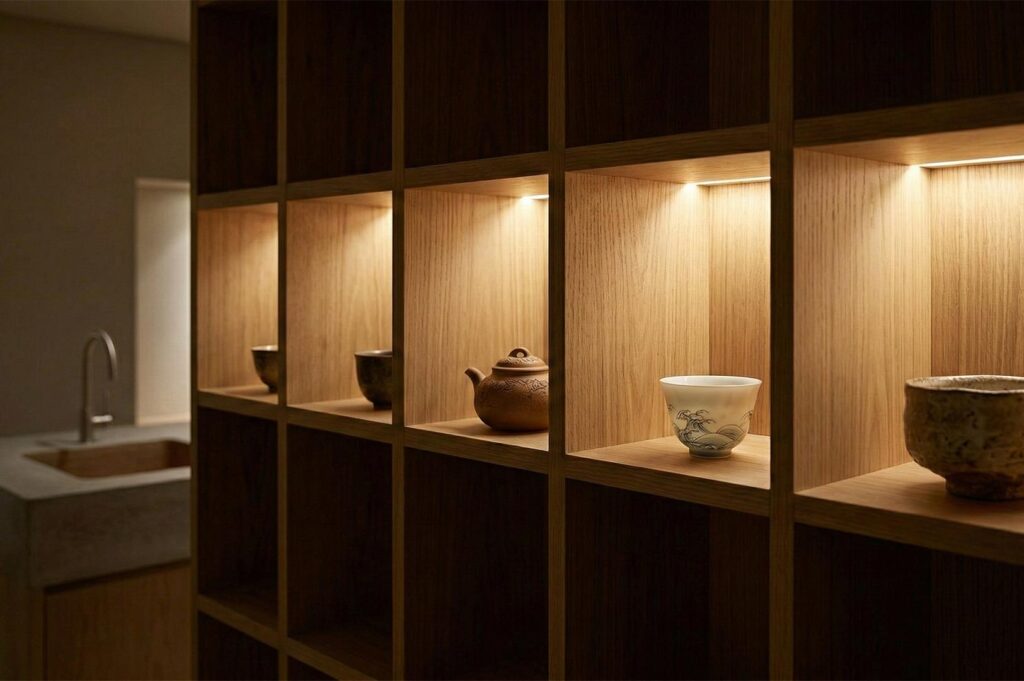
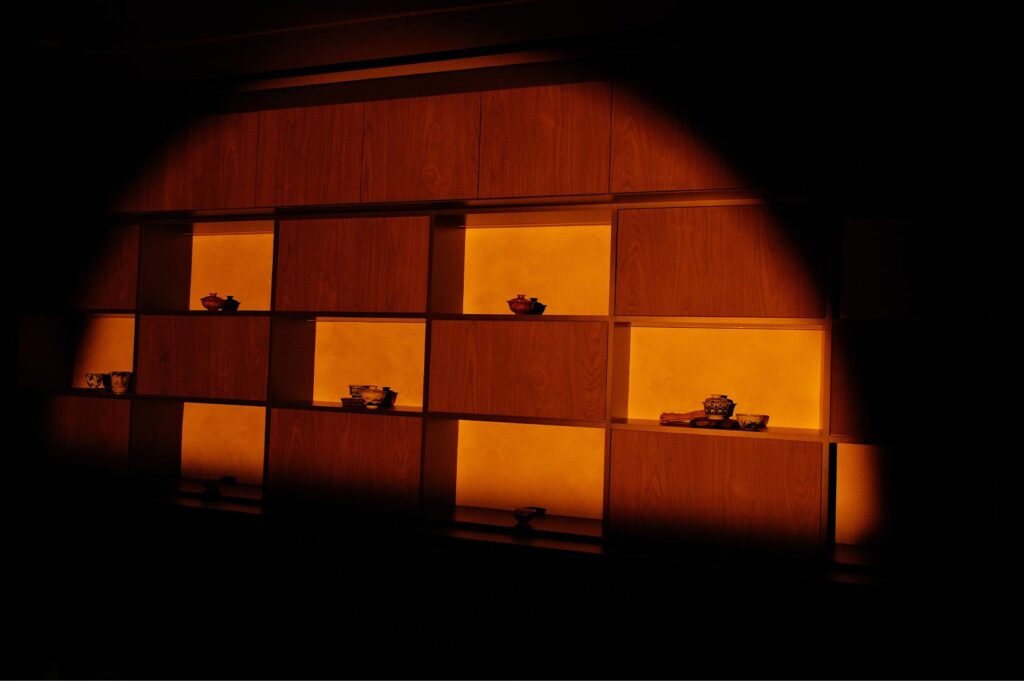
Display Without Retail Pressure: LED Niches for Tea Ware at Tea Room by Ki-setsu
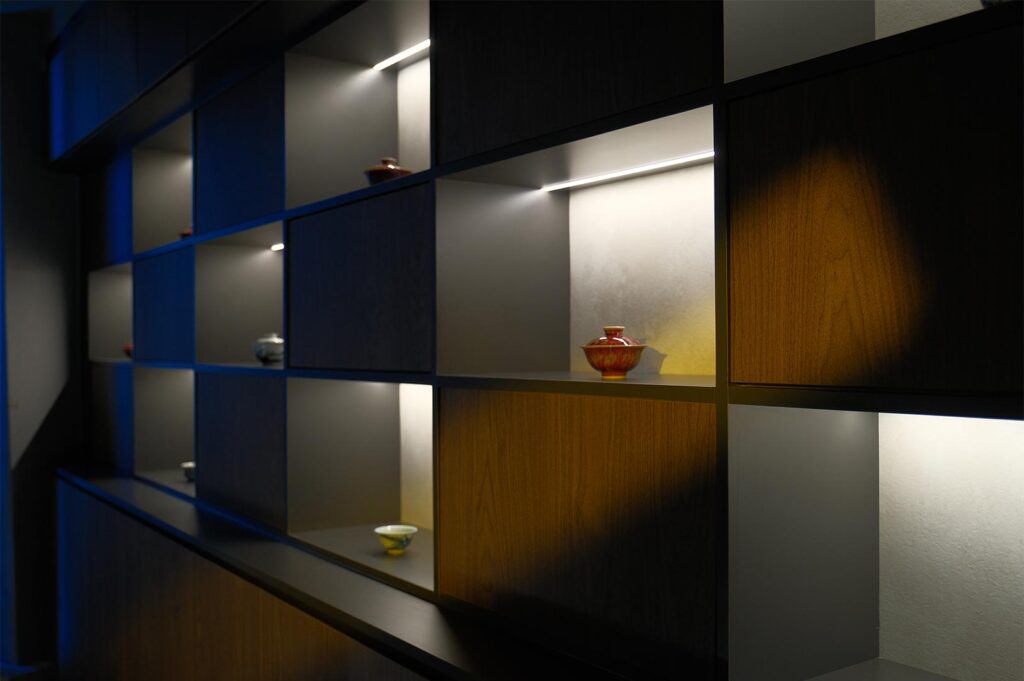
At Tea Room by Ki-setsu, the open cupboard with LED backlit niches exemplifies a carefully controlled display approach. The subtle lighting casts a moody spotlight on each piece, creating a warm white backdrop that elegantly separates the teaware from the timber grid, making every cup and pot stand out with clarity.
This display is not designed as a retail wall but as a statement of credibility:
- Teaware is presented as functional art, emphasizing craftsmanship rather than inventory.
- The restrained design discourages browsing behaviors that could disrupt the flow of the tea session.
- The joinery seamlessly combines storage and presentation, facilitating clean and efficient resets between sessions.
Through this thoughtful curation, Tea Room by Ki-setsu celebrates heritage without resorting to thematic décor. The story of the tea and its culture is conveyed through the objects themselves and the disciplined presentation, reflecting the operator’s genuine passion for the craft without relying on overt marketing or excessive props.
Beach Road Operators: Implementing a Private Tea Room Model in Busy, High-Footfall Areas
Operating a tea room on Beach Road comes with unique challenges due to the area’s heavy pedestrian traffic and varied customer expectations. Many operators might feel pressured to prioritize quick service and high volume to capitalize on foot traffic. However, delivering an authentic private tea room experience requires a different strategy: one centered on deliberate bookings, paced tea sessions, and attentive, personalized service.
Managing Customer Expectations in High-Traffic Locations
High foot traffic often creates an expectation for fast, casual tea visits, which conflicts with the immersive and focused nature of traditional Chinese tea service. To preserve the integrity of a private tea room, operators must emphasize clear scheduling, privacy, and a tranquil environment rather than relying solely on storefront appeal or walk-in volume. This approach ensures guests can fully enjoy the premium Chinese tea experience without distractions.
Authenticity Rooted in Tea Selection and Presentation, Not Just Location
While iconic areas such as Chinatown and landmarks like the Buddha Tooth Relic Temple are synonymous with Chinese heritage, true authenticity in tea culture stems from the careful selection, brewing, and presentation of tea. A modern, thoughtfully designed tea room can offer a genuine traditional Chinese tea experience regardless of its physical location on Beach Road or elsewhere.
Tea Room by Ki-setsu: A Passionate Example of Tradition in a Contemporary Urban Setting
Situated in Orchard Plaza, Tea Room by Ki-setsu is a prime example of how a private tea room can flourish in a bustling urban environment. The space prioritizes privacy, controlled guest flow, and a serene atmosphere, enabling guests to immerse themselves in the ritual of premium Chinese tea without interruption. This model proves that with strategic planning, focused design, and a commitment to tradition, tea rooms can provide an authentic cultural experience even amidst the busiest city scenes.
Modern Spaces, Ancient Rituals: Rethinking Cultural Design in F&B
Tea Room by Ki-setsu represents a perfect harmony between modern design and traditional Chinese tea culture. Its thoughtful renovation choices reduce friction and protect the ancient tea brewing method. The space is carefully crafted to support Chinese tea through table-first flow, controlled display of tea ware, fully enclosed privacy, and dedicated service infrastructure that ensures a clean and consistent session.
For operators aiming to create a similar premium tea room experience, it is highly recommended to document these design and operational constraints early in the process. By doing so, the room can maintain tradition as the commercial heart of the concept: making it repeatable, defensible, and easy for the right guests to discover, immerse themselves in, and feel at home in Singapore’s vibrant tea scene. This approach not only enhances guest appreciation but also supports sustainable business success in a competitive market.
For more useful renovation guide, visit our website.