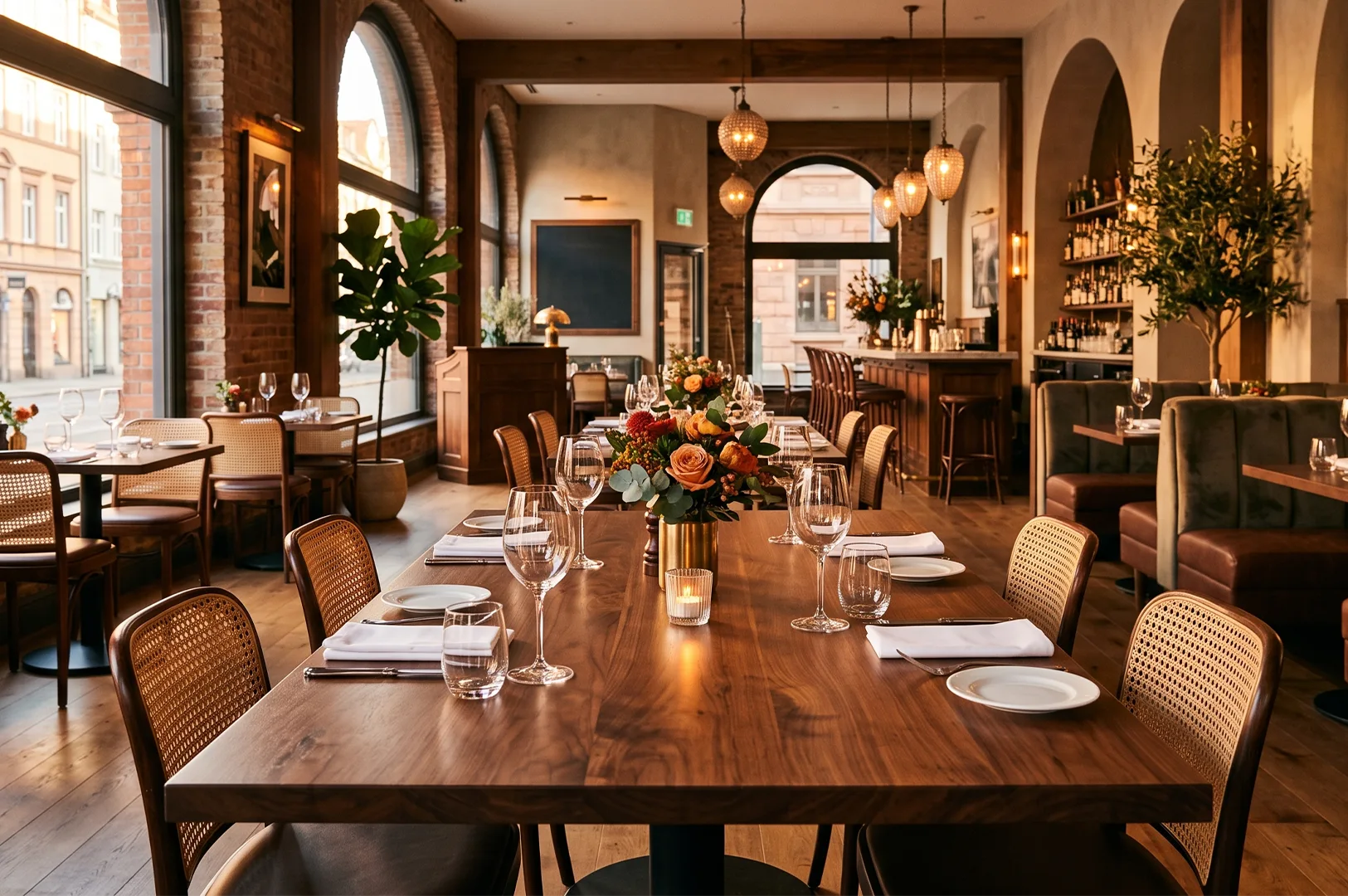

Why Furniture Placement Defines Dining Stories
Tables are more than furniture.
They are anchors of experience.
The moment a guest sits, table placement begins to influence comfort and conversation.
A table near the entrance may feel exposed.
A booth tucked in a corner offers privacy.
Even subtle shifts in alignment change the rhythm of the room.
Spacing is crucial.
Guests subconsciously gauge distance and comfort.
Staff movement must remain unhindered.
Sightlines and access to exits affect perception.
Tables also interact with lighting and acoustics.
A well-lit table invites guests to linger.
Sound absorption ensures conversation flows naturally.
Small adjustments create significant impact.
A table slightly angled toward a window encourages longer stays.
Corner placements can inspire repeat visits.
Renovation that considers table placement improves service efficiency and guest comfort simultaneously.
A well-laid-out room feels alive, intuitive, and effortless.
For more on spatial planning and furniture in restaurants, see Singapore Dining Tables: The Perfect Centerpiece for Your Restaurant Space.