Edge Buffet at Pan Pacific Singapore: How Renovation Created a More Theatrical Buffet Experience
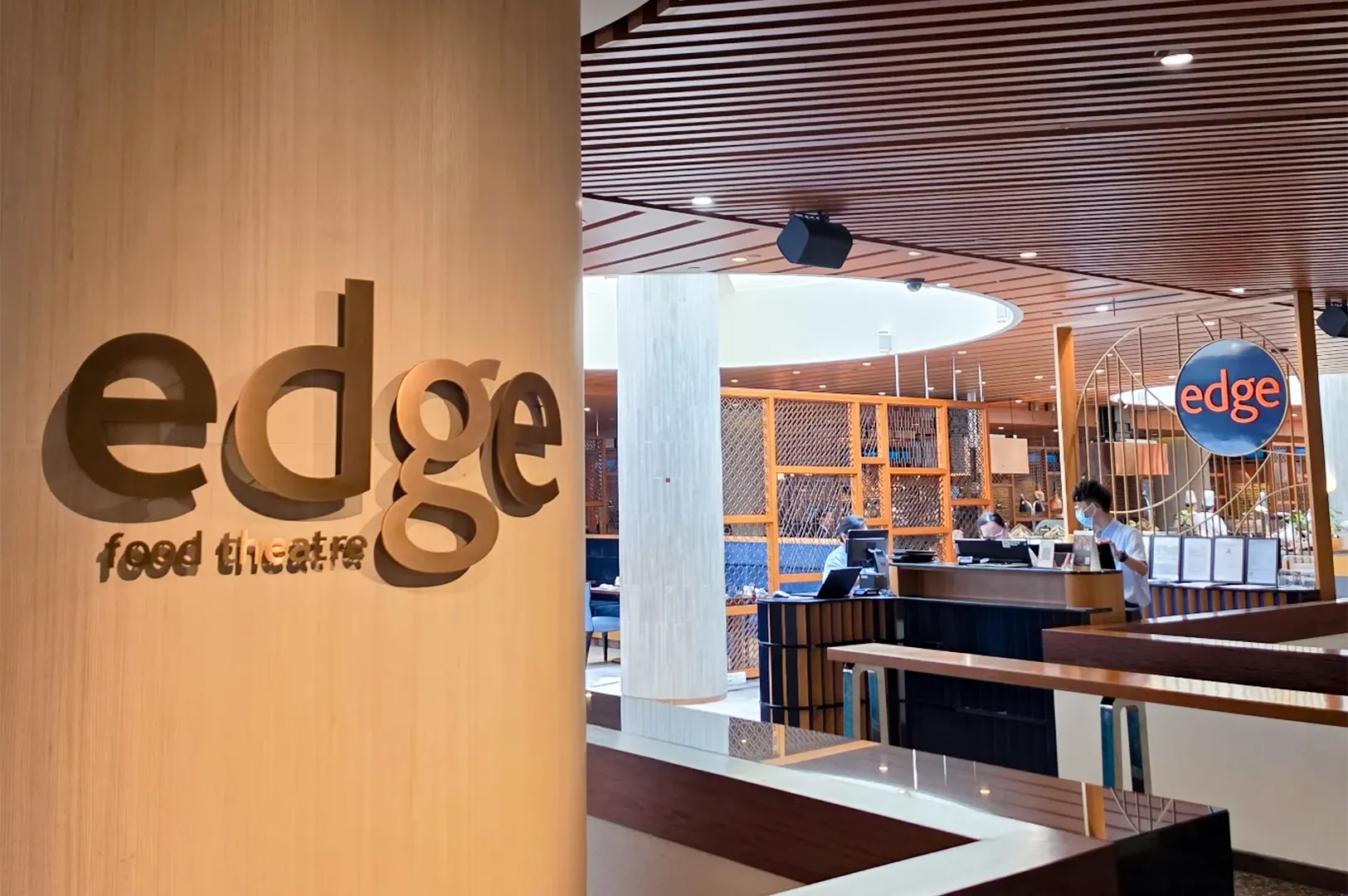
A buffet restaurant can offer an impressive selection and still feel ordinary. Edge buffet took a different approach when it was created during the major transformation of Pan Pacific Singapore in 2012. Rather than simply adding another place to eat, the renovation introduced a dining concept built around open kitchens, visible preparation and interaction.
More than a decade later, that idea still shapes the dining experience. Edge remains a place where guests can discover food from around the world, watch chefs work and build a meal according to their own choices. Its international and Asian fusion cuisine spans more than 100 premium dishes, with live food theatres and signature options such as Singapore Laksa and Grilled Half Spatchcock Chicken.
Edge Buffet Restaurant: Essential Details Before You Visit
Located on Level 3 of Pan Pacific Singapore, Edge is a substantial restaurant designed for everything from family meals to celebratory dinners. The restaurant accommodates up to 330 guests in a spacious setting, with a classy atmosphere and moderate noise levels.
| Detail | Information |
|---|---|
| Location | Pan Pacific Singapore, 7 Raffles Boulevard |
| Level | Level 3 |
| Weekday lunch | 12pm–2:30pm |
| Dinner | 6pm–10pm |
| Weekend brunch | Selected Saturday and Sunday services |
| Format | International buffet |
| Atmosphere | Open kitchens and interactive dining |
Published prices can vary according to the service period and promotion. Prices quoted may be in Singapore dollars, and current rates should be checked directly with the hotel because service charges and prevailing goods and services tax apply. Selected promotions may offer a discount. Eatigo, for example, advertises 50% off regular food items subject to its offer conditions.
At the listed discounted rates, weekday dinner is SGD 54.00 and weekend dinner is SGD 59.00. Festive weekday lunch is listed at SGD 39.00 per adult, while festive dinner from Sunday to Thursday is SGD 118.00 per adult before applicable discounts. Children’s buffet prices are generally half the adult price in the listed offers; confirm the current rate and age conditions before booking.
Pan Pacific: The Renovation That Created Edge
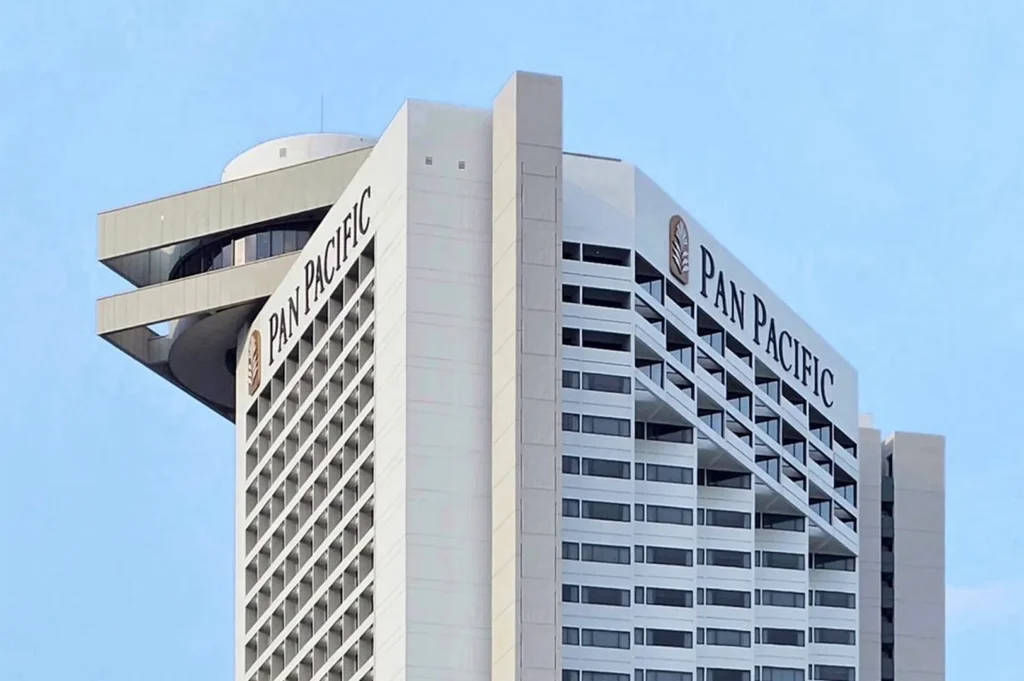
The most interesting thing about Edge is that it was essentially born from renovation. In 2012, Pan Pacific Singapore underwent a five-month, multimillion-dollar transformation involving guestrooms, public spaces and food-and-beverage outlets. Wilson Associates’ Blueplate Studios worked on the restaurant interiors, while Ong & Ong Architects handled the wider architectural work.
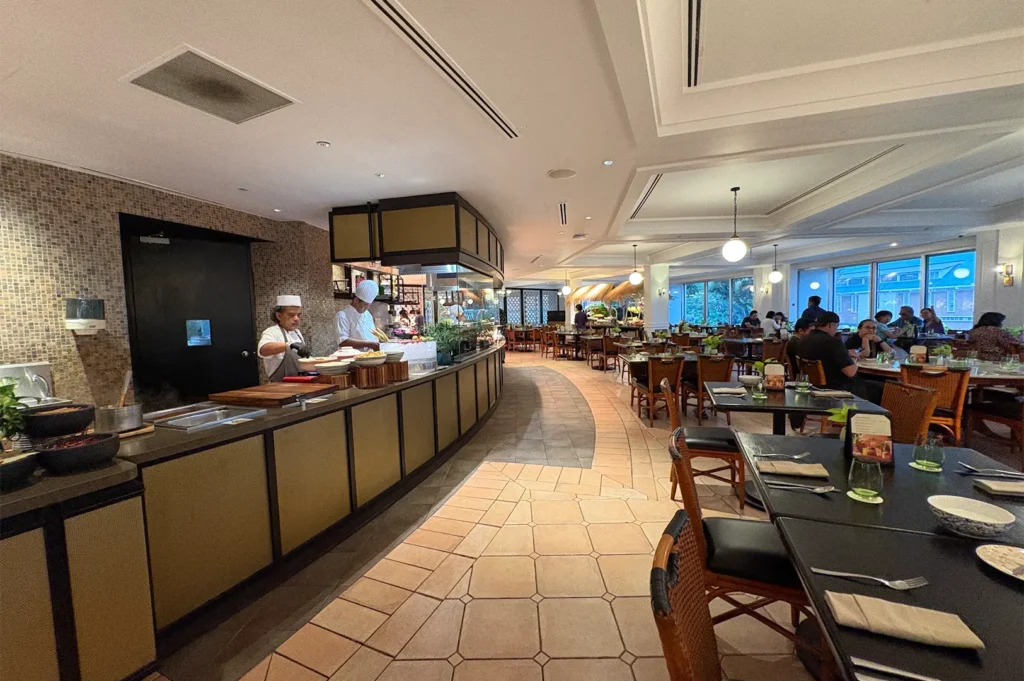
The renovation introduced Edge as a new 330-seat restaurant rather than merely updating an existing buffet. The concept was designed around seven open kitchens and an interactive approach to food. The project therefore responded to a bigger question: how could a hotel buffet become an experience rather than simply a place where food was displayed?
From Conventional Buffet to Theatrical Dining Experience
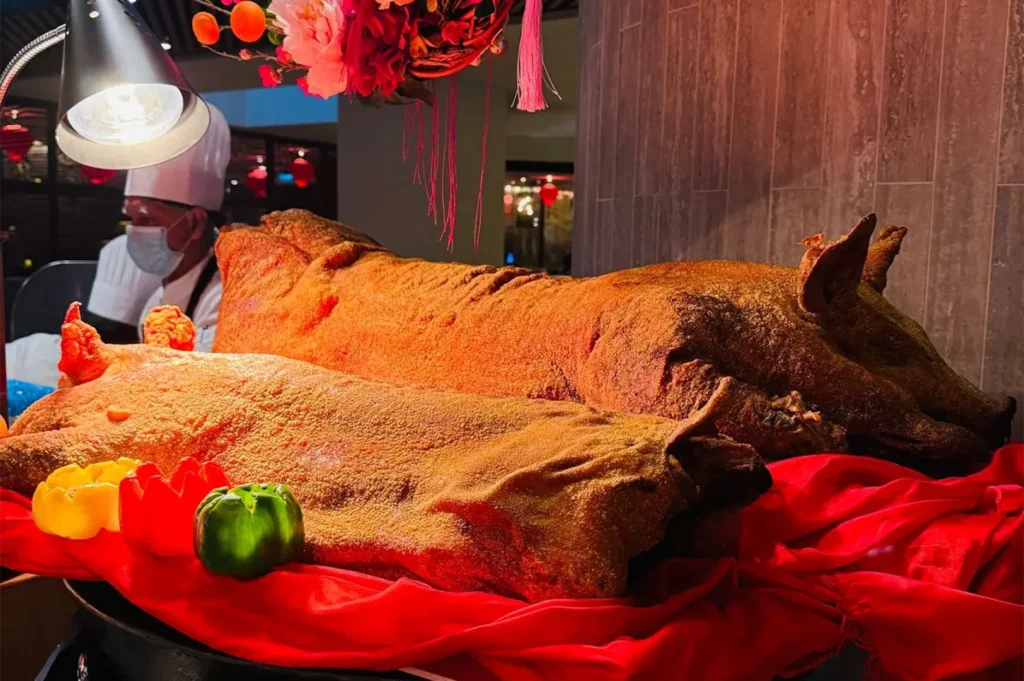
Before Edge existed, the hotel had established dining outlets, but the renovation created something more ambitious.
The new restaurant was designed around:
- Seven open kitchens
- Asian and international cuisines
- Visible food preparation
- Natural materials inspired by the Pacific region
- A layout that encouraged guests to explore
This became the foundation of Edge’s theatrical dining experience. Guests do not simply approach a buffet counter. They move between stations, watch chefs prepare food and make choices according to their appetite. The process becomes part of the attraction. Edge’s seafood selection can include oysters and scallops, alongside other fresh options that vary by service.
Seven Kitchens Changed the Way Guests Eat
The seven kitchens remain the strongest feature of the concept. Different areas focus on different styles of cooking, allowing guests to move between Singaporean, Chinese, Japanese, Indian, Thai, Malay and Western selections.
The design uses wood, bamboo, rattan, riverstone and sandstone to give the restaurant a more natural character. These materials help soften the scale of a large buffet restaurant and prevent it from feeling like a conventional hotel dining hall. The chefs are equally important. Their work is visible, and guests can interact with them while food is prepared. This creates a more personal relationship between the kitchen and the table.
Fresh Food and Buffet Highlights
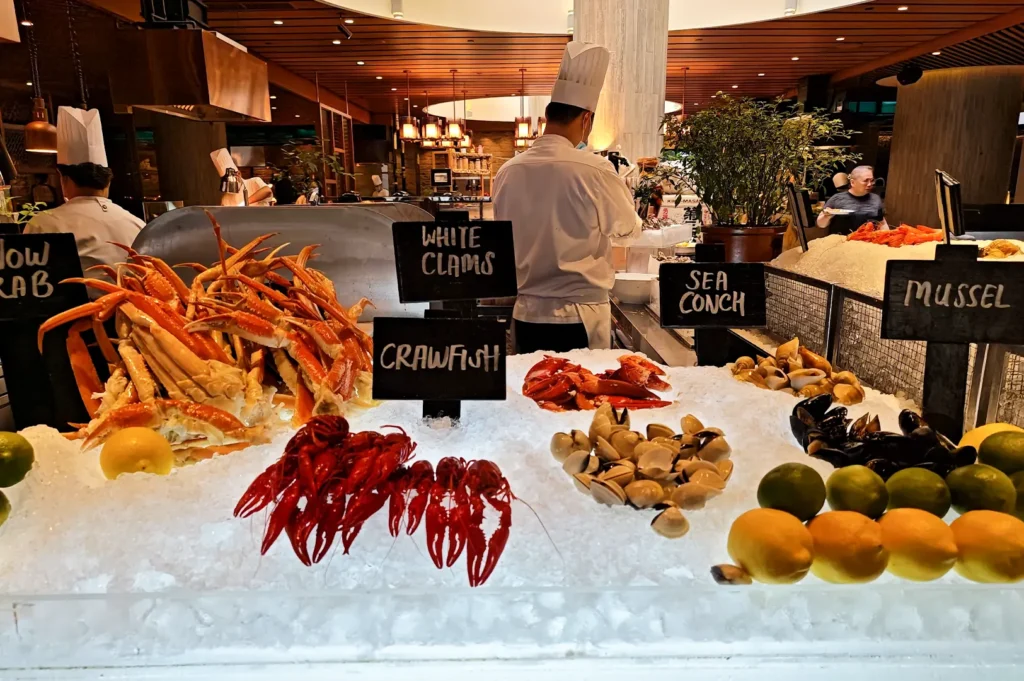
The food remains the reason many guests visit, but the renovation changes how it is encountered. Depending on the dining period, the buffet spread can include fresh seafood, sashimi, prawns, scallops, crab, chilli crab, laksa, noodles, grilled meats, Indian dishes, cold cuts, cured salmon and desserts. Signature dishes such as Singapore Laksa and Grilled Half Spatchcock Chicken add familiar highlights to the international and Asian fusion selection.
The selection allows diners to create their own feast. One person might begin with Japanese seafood, while another chooses local dishes or Western preparations. For a family, this flexibility is particularly useful. Adults can explore new flavours while kids and a child can choose familiar favourites. It is also a nice place for groups because everyone has easier choices without having to agree on one cuisine.
A Renovated Space Designed for Discovery
The physical arrangement is important because a large selection can easily become overwhelming. By distributing the food across different kitchens, Edge encourages guests to discover the restaurant gradually. In buffet design more broadly, perimeter-based stations can direct guests in a single- or dual-file flow, preserve central space for movement and reduce congestion. Modular arrangements also allow stations to be adapted for different events and dining needs.
That makes the meal feel more like a journey. The approach also makes service more visible. Helpful and attentive staff can guide guests, while chefs prepare dishes directly in front of them. This warm, attentive service creates a more active atmosphere than a traditional buffet.
Drinks, Cocktails and the Complete Experience
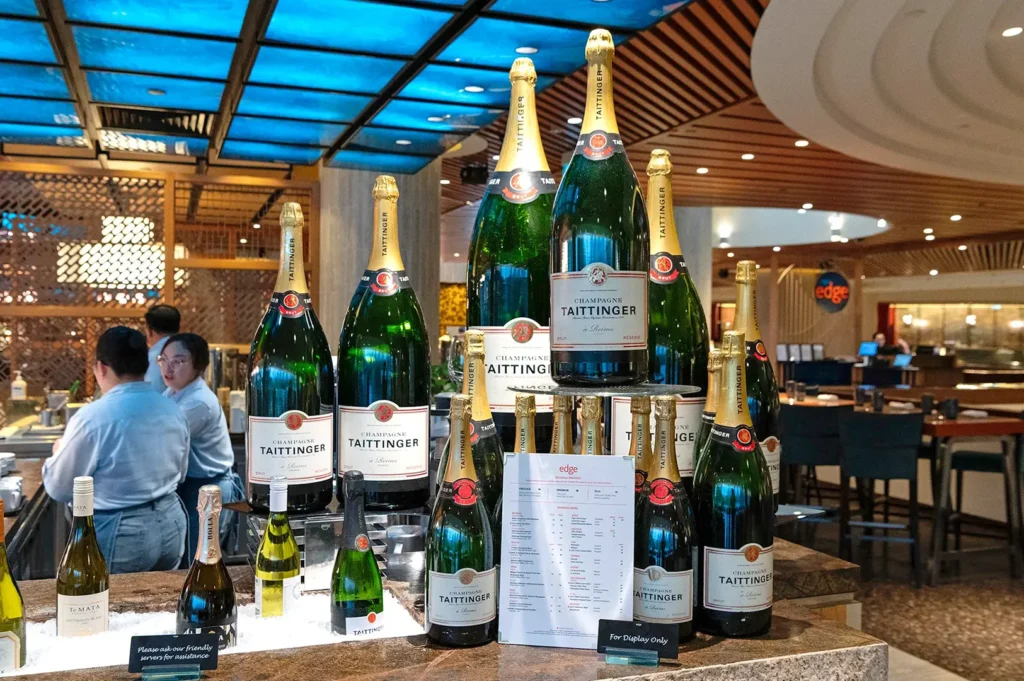
The beverage programme can further change the experience. Selected packages may include cocktails, house spirits, Tiger Beer and chilled juices, while some offers combine beverages with the buffet. Guests should check the current promotion, prices and terms before booking.
For those choosing a drinks package, the difference between a standard buffet and a bottomless package can be significant. The package details should therefore be read carefully before purchase. The restaurant can also be a place to enjoy a longer dinner rather than simply a quick buffet meal.
Some packages combine the buffet with free flow beverages, including chilled juices, soft drinks, house spirits or Tiger Beer. A bottomless package may therefore cost more than the food-only option. Check what is included, the last order time and the terms before placing an order. Promotions may be subject to availability and other conditions, so view the offer details in the booking app or on the relevant website. Guests can also check the restaurant’s official channels, including Facebook, for updates.
Pan Pacific’s Later Transformation
Pan Pacific Singapore underwent another major refurbishment in 2023, but Edge was not replaced by a completely new buffet concept.
That continuity is telling. The core idea introduced during the original renovation, seven kitchens, visible cooking and a broad international selection, remains relevant. The hotel has continued to develop around Edge rather than abandoning the concept.
For me, this is one of the clearest signs that the original renovation worked. It was not simply designed around a temporary trend.
What the Renovation Actually Improved
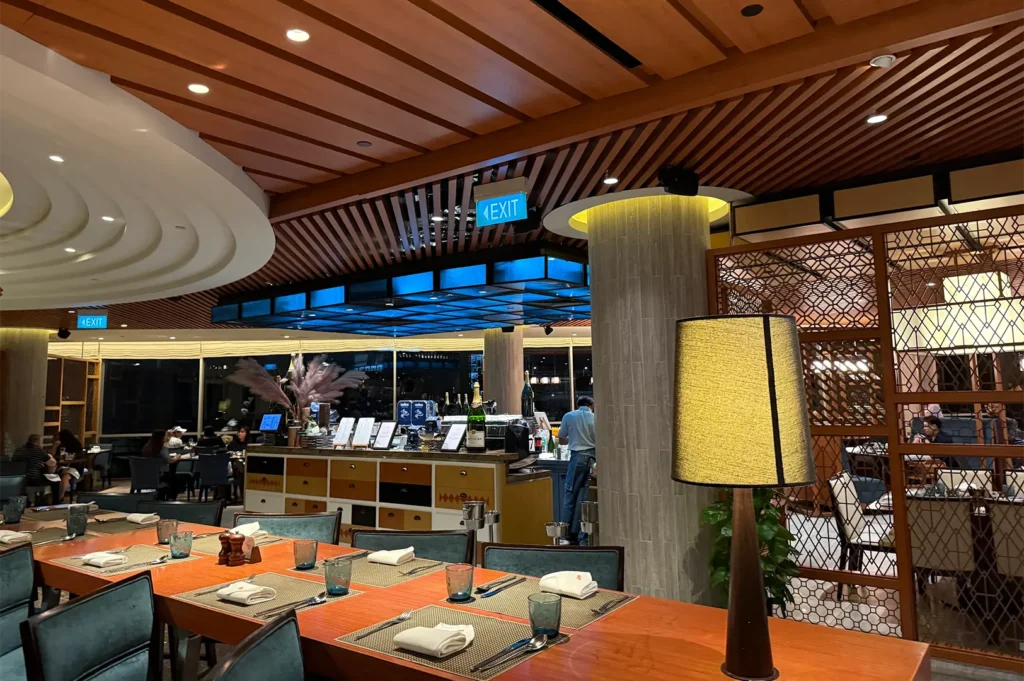
The transformation can be understood through four changes:
- Interaction: Guests can watch master chefs prepare dishes.
- Choice: The seven kitchens make the extensive selection easier to explore.
- Atmosphere: Natural materials and visible cooking create energy throughout the restaurant.
- Flexibility: The space works for couples, families, business meals and larger celebrations.
The renovation also made the restaurant feel more experiential. Instead of sitting at a table and waiting for food, guests become active participants in their own dining journey. The layout and station organization can support smoother flow, easier access and a comfortable balance between dining and movement.
Edge is one example of how thoughtful design can redefine a buffet experience; discover more buffet Singapore transformations here to see how other dining spaces have evolved through renovation.
A Buffet That Still Feels Relevant
Edge’s longevity is perhaps its strongest review point. The restaurant was created during a major hotel transformation in 2012, yet the basic concept continues to work. Guests still come to discover food, watch preparation and enjoy the freedom of a broad buffet.
There is also a practical advantage to the format. Guests can set their own pace, choose smaller portions, return for favourites and spend time with the people around their table. The restaurant’s service helps complete that experience. When staff are helpful and attentive, a large buffet feels easier to navigate.
Why Edge’s Renovation Still Matters
The most meaningful restaurant renovations do not necessarily produce the most dramatic visual transformation. Sometimes they change what guests can do within a space. That is what happened at Edge.
The renovation that created the restaurant transformed the buffet from a conventional food display into an interactive experience. Guests could see chefs working, move between cuisines and discover new dishes while enjoying a meal in a large but carefully organised environment.
For me, that remains Edge’s strongest quality. It is not simply a restaurant with an extensive buffet. It is a restaurant designed around discovery. And that is why the renovation of Pan Pacific Singapore continues to matter: it gave Edge a concept that has remained distinctive long after the original refurbishment ended.