

I will never forget the sinking feeling I had during one of my earliest restaurant projects in Tiong Bahru. We were three weeks away from opening, the kitchen equipment was scheduled to arrive, and I walked onto the site to find… nothing. No workers, no finished flooring, and certainly no kitchen exhaust system. I had already paid a massive deposit, but the main contractor had vanished.
I made this mistake once: I assumed that because we had a friendly verbal understanding and a basic invoice, everything would be fine. I had no idea what to do when a breach of agreement singapore actually happened. I sent angry text messages (which, honestly, did absolutely nothing), panicked about the lost capital, and spent weeks trying to untangle a legal mess I didn’t understand.
In my experience, most business owners over-complicate the design of their restaurant but completely under-prepare for the legal realities of construction. When you are pouring your life savings into a commercial space, you need more than good intentions. You need to know exactly how to handle it when someone is in breach of contract.
Here is my honest, step-by-step guide to protecting yourself and your business.
Understanding How a Breach of Contract Occurs Under Contract Law
Before you can fight a battle, you need to understand the terrain. Many people worry that any slight delay means they can immediately fire their contractor and demand their money back. Here’s the deal: not every breach justifies blowing up the project.
Under Singapore contract law, a valid contract arises when parties agree to the terms (preferably in writing). The parties must be clearly identified to determine responsibilities and legal recourse. A breach of contract occurs when one party fails to perform an obligation arising from the contract without a lawful excuse. This means a legally binding agreement fails when the defaulting party does not fulfill a specific contractual obligation, establishing a breach. To prove breach of contract, it must be shown that a valid contract exists, the defaulting party failed to perform a contractual obligation, and there was no lawful excuse. Breaches are commonly categorized as actual breach or anticipatory breach.
Contract law also distinguishes breach severity: minor breach, material breach, and fundamental breach describe the breach’s impact on the contract’s purpose. For example, installing the wrong hinge brand is a minor breach—you may seek monetary damages but cannot terminate the contract. Failing to install the commercial exhaust, preventing your operating license, is a material breach—a fundamental breach going to the heart of the agreement. Whether breach justifies termination depends on the type of term breached and the seriousness of the breach in all the circumstances.
Common Types of Contract Breaches (and How to Spot Them)
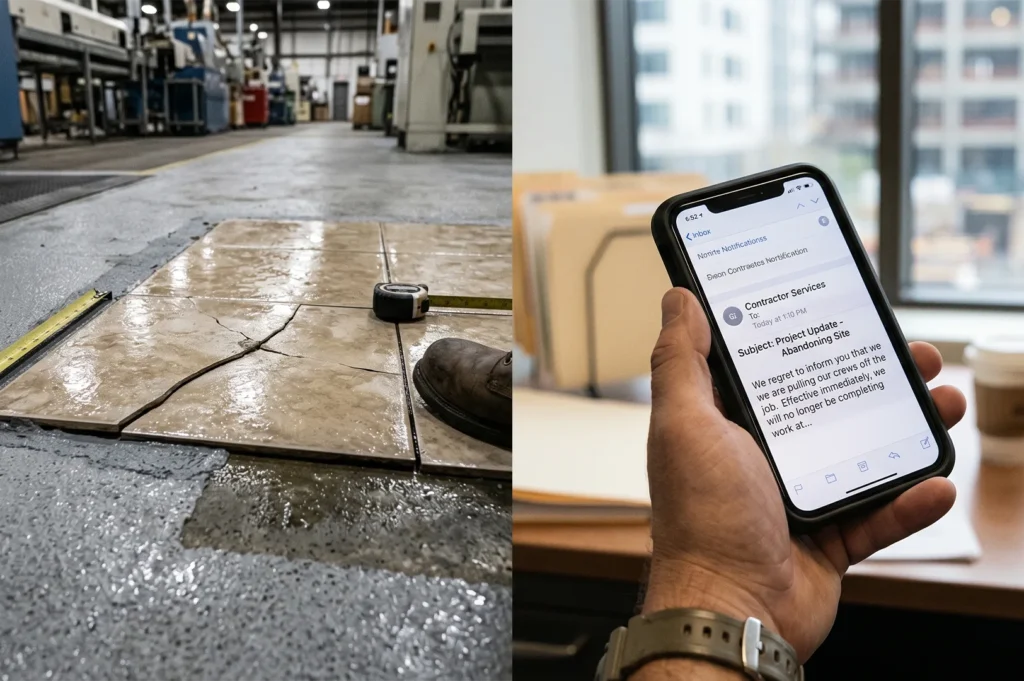
I’ve found that the most common contractual disputes fall into a few predictable categories. Recognizing them early is your best defense.
In some cases, widespread trade usage can help interpret or fill gaps in contractual terms, especially in the restaurant renovation industry.
When an Actual Breach Occurs vs. Anticipatory Breach
An actual breach occurs when the deadline passes and the work simply isn’t done, or it’s done terribly. For example, your contract terms state the flooring must be anti-slip commercial grade, but they install cheap, slippery residential tiles.
An anticipatory breach is slightly different. This is when the contractor tells you in advance that they will not be able to finish the job. If a contractor emails you saying, “We have too many projects and cannot return to your site,” that is an anticipatory breach. You don’t have to wait for the final deadline to take legal action; you can act immediately to mitigate your party’s loss.
My Tips:
Always document an anticipatory breach in writing. If they tell you over the phone they are quitting, follow up with an email saying, “As per our phone call today, you stated you are abandoning the site…” This creates a paper trail for future court proceedings.
The Legal Realities: Contract Termination and Your Contract Obligation
If a serious breach happens, what are your legal remedies? The most common remedy people jump to is contract termination. If the breach is severe enough to justify termination—known as repudiation—termination discharges both parties from their future obligations under the contract, though the innocent party retains the right to claim damages for losses incurred up to that point.
However, you must be incredibly careful here. If you terminate the agreement over a minor delay, the contractor could turn around and sue you for wrongful termination. I’d suggest always obtaining independent legal advice before locking a contractor out.
If you do terminate, you still have a contract obligation to take reasonable steps to mitigate your losses. You cannot just leave the site empty for six months, rack up rental costs, and expect the breaching party to pay for all of it. You must exercise reasonable precaution to find a replacement contractor quickly.
Other remedies under singapore law include:
- Damages (Monetary Compensation): The defaulting party pays you the amount needed to fix the mistake.
- Specific Performance: A court orders the contractor to finish the job. (This is a discretionary remedy and is rare in construction, as courts don’t want to supervise a hostile working relationship).
- Prohibitory Injunction: A court order stopping the contractor from doing something specific.
If a further breach occurs after initial remedies are sought, the innocent party may be entitled to pursue additional legal action, such as seeking injunctive relief or termination. Additionally, parties may release themselves from obligations through a subsequent contract, which can act as a formal or informal discharge from the original agreement.
Step-by-Step: Managing a Contract Dispute Over Contract Terms
When you realize a contractor is failing their contractual obligations, do not just send emotional WhatsApp messages. Follow these practical steps.
1. Review the Contract Terms Carefully
Pull out your legally binding agreement. Does it have an express term regarding delays? Is there a price adjustment clause? You need to know exactly what the contract entitles you to do.
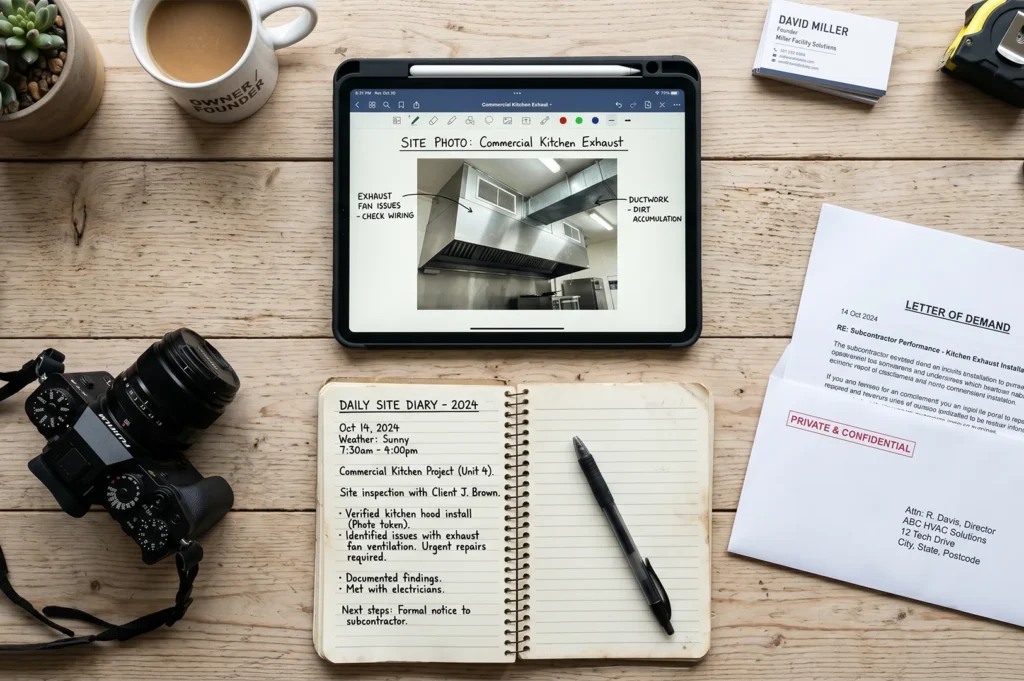
2. Document the Alleged Breach
Take clear, date-stamped photographs of the defective works or the empty site. I always tell owners to keep a daily site diary. If the alleged breach is poor quality, hire an independent third-party inspector to write a report.
3. Issue a Formal Letter of Demand (LOD)
This is where you formally notify the other party. State the specific breached obligation, reference the exact clause in the contract, and give them a strict deadline to rectify the issue.
4. Mitigate Your Losses
If they don’t fix it, start getting quotes from other contractors to finish the non performance. Keep every single receipt.
Using Alternative Dispute Resolution for an Alleged Breach
Many business owners fret about the astronomical costs of a lawsuit. “If the contractor did a bad job, I automatically win a lawsuit, right?” Not necessarily, and even if you do, legal proceedings can cost tens of thousands of dollars.
I prefer alternative dispute resolution (ADR), specifically mediation. It is usually faster, cheaper, and private. You and the defaulting party sit down with a neutral mediator to hash out a compromise. Often, a contractor facing financial difficulties will agree to a partial refund or agree to pay damages without you having to go to the High Court.
If your claim is under SGD 20,000 (or up to $30,000 if both parties involved agree), you can take the contract dispute to the Small Claims Tribunals. It is a fantastic, accessible avenue for clear-cut contractual disputes where you don’t need to hire expensive lawyers.
Remedies for Breach of Contract: Your Legal Options
When renovation plans go awry due to a contractor’s breach, Singapore contract law offers key remedies to protect restaurant owners.
Monetary Compensation (Damages)
The most common remedy is monetary compensation, designed to put the aggrieved party in the position they would have been if no breach occurred. Compensation covers actual losses, from minor defects like the wrong pendant light to more serious material breaches.
Contract Termination
For serious breaches threatening your project—such as a non-functioning kitchen—contract termination allows you to end the agreement and seek damages for additional costs incurred hiring another contractor.
Specific Performance
If monetary damages are inadequate, courts may order specific performance, compelling the defaulting party to fulfill their contractual obligations. This remedy is rare in construction due to courts’ reluctance to oversee ongoing projects.
Prohibitory Injunction
Courts can also grant injunctions to prevent the breaching party from worsening the situation, such as removing fixtures or causing further disruption.
Choosing the Right Remedy
The appropriate remedy depends on the breach’s severity and the contract’s unique circumstances. Minor breaches usually warrant compensation, while material breaches may justify termination and further legal action.
Understanding these remedies under Singapore law empowers you to seek adequate remedy and protect your investment when facing a breach of agreement.
Common Mistakes to Avoid When Managing Contractual Disputes
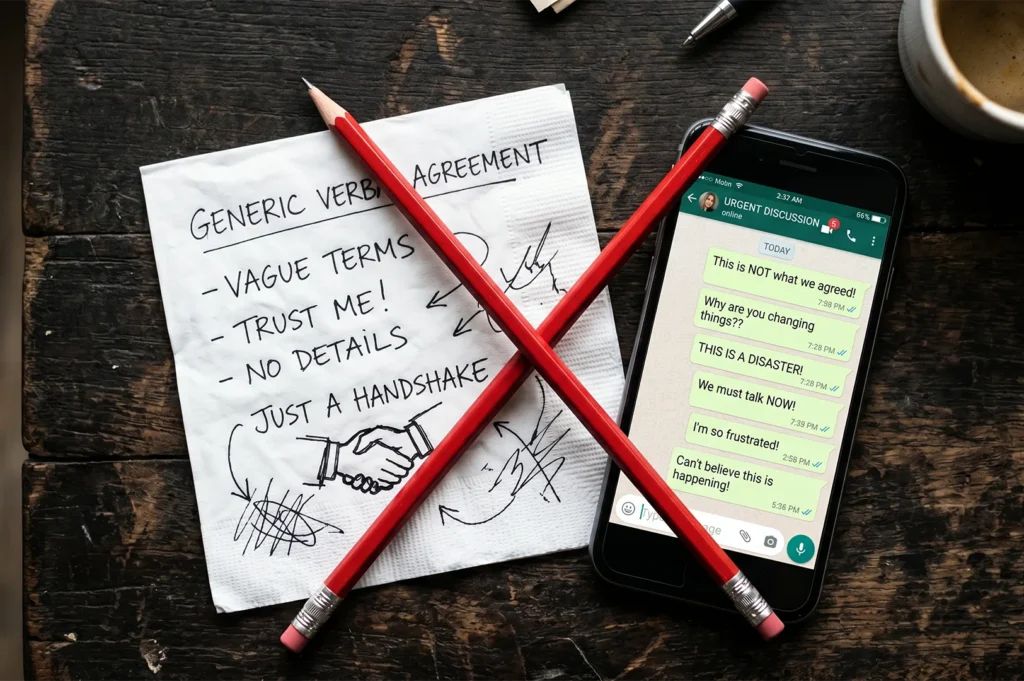
I see the same errors repeated across the industry. Here is what to avoid:
- Relying on Verbal Agreements: Personal agreements or gentlemen’s handshakes are a nightmare for contractual interpretation. If it isn’t in a written contract, a reasonable person (or judge) will have a hard time enforcing it.
- Withholding All Payments Unfairly: If you withhold a $50,000 payment over a $500 paint defect, you might be the one committing a more serious violation. Only hold back funds proportionate to the defective work.
- Ignoring Notice Periods: Many contracts require you to give the contractor 7 or 14 days to fix a mistake before you can terminate. If you don’t follow this rule, your termination is invalid.
Pro Tip:
When drafting your initial contract, always include Liquidated Damages (LD) clauses. This specifies exactly how much the contractor must pay you (e.g., $500 per day) for every day they are late. It removes the need to prove your exact financial loss in court later.
Preventing Future Breaches in Restaurant Renovations
Build Clear and Comprehensive Contracts
The best way to avoid disputes is to start with a clear, written contract that captures your vision, timelines, payment schedules, and specific obligations of the contracting parties. Clarity reduces ambiguity and sets expectations upfront.
Maintain Open Communication
Regular check-ins help keep everyone aligned and turn potential problems into manageable challenges. Consistent communication fosters understanding and cooperation throughout the renovation.
Anticipate Challenges with Risk Assessment
Identify potential risks like supply chain delays or regulatory changes early. Incorporate price adjustment clauses and contingency plans into the contract to handle these issues fairly, respecting social or commercial considerations.
Treat Contract Management as Relationship Management
View the contract as a living document that evolves with your project. Regularly review terms to accommodate scope changes and ensure all parties understand their roles and responsibilities.
By focusing on clear communication, thorough oversight, and mutual understanding, you minimize the chance of breach of agreement singapore. This approach protects your investment and helps complete your restaurant renovation on time and to the highest standards.
FAQ: Addressing Your Biggest Fears About Legal Action
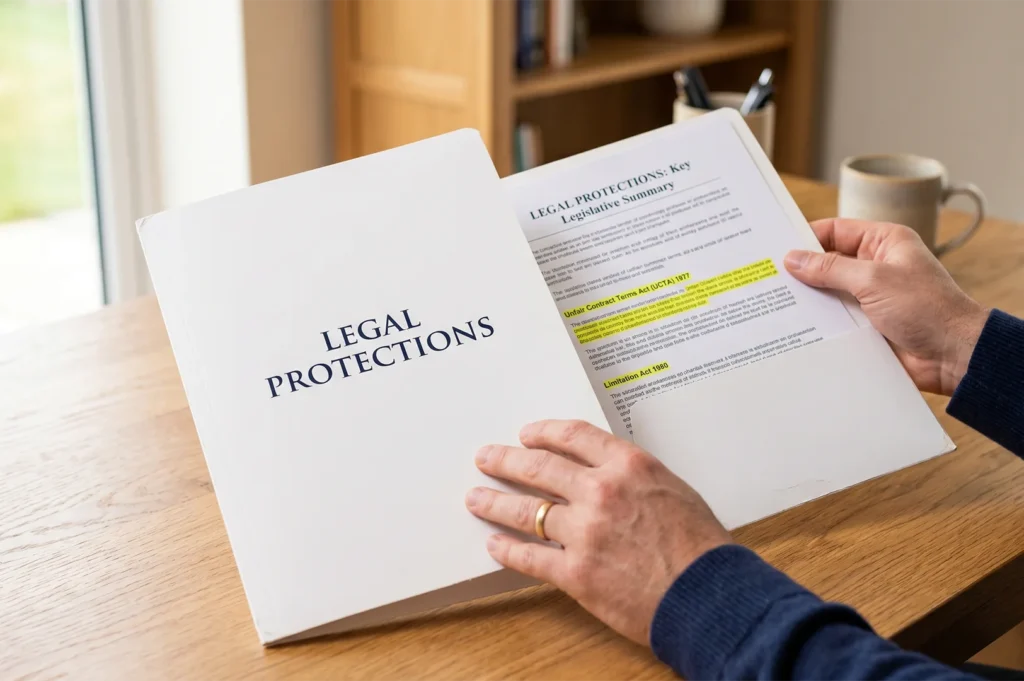
“What if I signed a bad contract? Do I have any rights?”
Even if your contract heavily favors the builder, the Unfair Contract Terms Act provides some protection against entirely unreasonable clauses. However, you are still bound by most commercial terms you signed. Always have a lawyer review it before you sign.
“How long do I have to file legal claims?”
Generally, under the Limitation Act, you have 6 years from the date the breach occurred to bring court proceedings. But practically speaking, you need to act immediately while evidence is fresh and the contractor’s company is still solvent.
“Can I sue if the supplier delivers late?”
If you bought directly from the supplier, yes. If the main contractor bought from the supplier, it depends on whether your contract included specific provisions under the Contract Rights of Third Parties Act.
Protecting Your Vision
Building a restaurant in Singapore is a massive undertaking. Dealing with a contractual breach is exhausting, and it tests your patience and your wallet. But by understanding your legal rights, documenting everything meticulously, and opting for clear communication over emotional reactions, you can navigate these disasters.
Don’t let the fear of a dispute stop you from holding your partners accountable. Draft a bulletproof contract, monitor your site closely, and remember that you have the right to demand the quality you paid for. Your restaurant deserves nothing less.