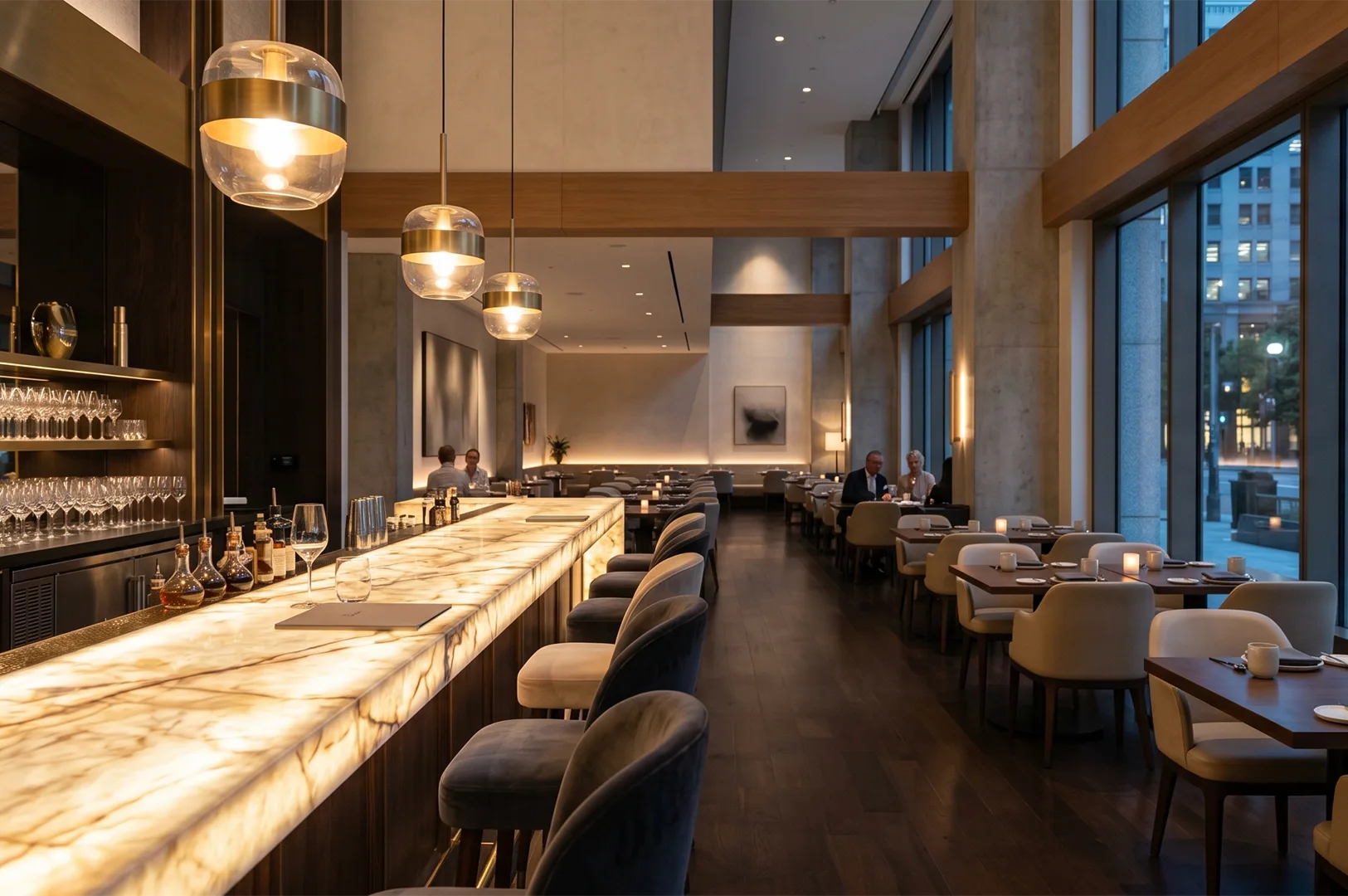

Here’s a lesson I learned the hard way: I blew half of a client’s renovation budget on a stunning, imported Italian marble counter for a tiny 60-square-meter café in Tiong Bahru. I thought that slapping high-end materials into the room would automatically give it a modern luxury interior.
I was completely wrong.
Once the space was finished, it looked cluttered, cold, and surprisingly cheap. The harsh, bright white lighting reflected off the marble, casting terrible shadows on the guests, and the tables were crammed so closely together that you could hear the person next to you chewing. That was the day I learned a very expensive lesson: opulence and expensive materials do not automatically equal a luxury interior.
In my experience, most restaurant owners over-complicate how to achieve a premium aesthetic. They assume they need to spend $300 to $600+ per square foot to create a sophisticated vibe. But I’ve found that true modern luxury is actually about restraint, spacing, and lighting. Successful modern luxury interiors are the result of thoughtful ideas and the harmonious combination of design elements, where every choice contributes to a cohesive and inviting atmosphere.
Here is my step-by-step guide to crafting spaces that feel incredibly expensive, without actually draining your bank account, and to designing spaces with open and fluid layouts that maximize natural light and private room dining connectivity.
Introduction to Modern Luxury Interior Design and Luxury Interior Design
Luxury interior design transcends mere opulence—it’s the delicate choreography of creating spaces that make us pause, breathe deeper, and feel genuinely at home. When we step into a thoughtfully designed modern luxury interior, what strikes us first isn’t just the high-end materials or sophisticated furniture, but how everything seems to whisper a story of refined living. Modern luxury design has evolved into something more nuanced: spaces that don’t just dazzle but actually work for the people who inhabit them, reflecting not just wealth but genuine lifestyle and personal narrative.
Interior designers become the translators in this process, their trained eyes selecting natural stone that invites touch, incorporating geometric forms that guide the eye naturally through a room, layering textures that create that ineffable sense of warmth and depth we crave. The result? A luxury interior that doesn’t just look expensive—it feels like it belongs to you, like it understands how you move through your day, embodying that rare quality of modern luxury homes where sophistication and comfort become indistinguishable.
Redefining Modern Luxury: It Is About Restraint and Understated Elegance
When people hear “modern luxury,” they often picture excessive gold trim, heavy velvet drapes, and chandeliers. But a modern take on luxury design leans heavily into understated elegance. It is about creating calm, uncluttered spaces that allow the guests to breathe.
I think the biggest shift in aesthetic today is that comfort is the ultimate luxury. Whether you are designing functional spaces for a casual brunch spot or a fine dining project, your goal is to evoke a sense of timeless elegance. Modern luxury interior design allows your personal style to shine through subtle, curated choices, reflecting individual tastes and artistic expression. This means leaning into clean lines, a neutral palette, and geometric forms rather than over-the-top decor.
The ‘less is more‘ philosophy is central to modern luxury, emphasizing high-end materials and clean lines instead of ostentatious displays.
The Key Elements of Space Planning: Treating Your Restaurant Like a Living Space
If you cram too many tables into a room, no amount of bespoke furniture will save your modern luxury interior design.
In Singapore, where space is notoriously tight and rent is astronomical, the temptation is to maximize every inch for seating. I strongly suggest you resist this urge. I prefer to treat a restaurant floor plan almost like a luxury living space. The same principles used to transform a house into a personalized, luxurious home—such as thoughtful space planning, architectural elements, and decor choices—can also elevate a restaurant interior. You need clear circulation paths.
If a waiter has to squeeze past a chair to serve a meal, the elegance is instantly destroyed. Keep a minimum of 800–900mm of space between tables. I know this hurts when you calculate potential revenue, but I promise you: generous spacing is one of the most cost-effective ways to signal to a guest that they are in a premium environment.
Sharing my Knowledge: Ceiling height plays a key role in how luxurious a space feels. If your ceiling is low, use vertical lines—like floor-to-ceiling wood slats or tall, narrow mirrors—to draw the eye upward. It instantly adds dimension and makes the room feel grander.
A well-planned color palette can transform a standard unit into a cohesive, luxurious environment, influencing how each area feels and how smoothly different spaces flow into one another.
Material Selection in Modern Luxury Design and Luxury Interior Design: Smart vs. Expensive
Many people worry that they have to buy solid wood and natural stone to get that high-end look. Here’s the deal: you don’t. You just need to know how to choose materials strategically. Modern luxury architecture emphasizes the thoughtful selection of materials and structural elements to create expansive, light-filled spaces that enhance both aesthetics and lifestyle.
Instead of covering the entire restaurant in expensive finishes, create a focal point. Use one stunning slab of quartz (which is more durable and eco friendly materials than marble) for the bar top, and pair it with a tight palette of neutral tones for the walls.
Sustainability has become a cornerstone of luxury interior design, with eco-friendly materials like reclaimed wood and recycled metals preferred for their minimal environmental impact. When crafting spaces, I often use high-quality laminates with natural textures instead of solid wood veneers for high-traffic areas. They survive the heavy wear and tear of a commercial environment while still bringing the warmth and beauty of the natural world indoors. Modern luxury interior design emphasizes the use of renewable resources and non-toxic finishes in both furniture and building materials to enhance indoor environments while minimizing environmental impact.
Incorporating innovative materials such as durable bamboo flooring and hypoallergenic cork also supports environmentally sustainable practices within modern luxury homes.
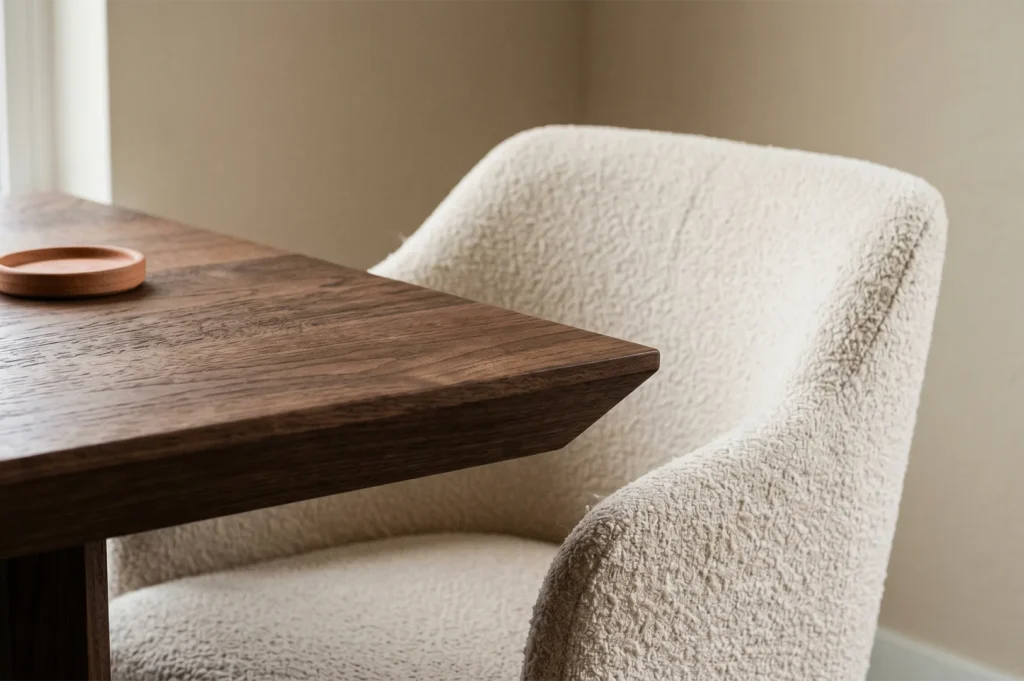
Mix these harder surfaces with soft textiles on your seating to add depth. High-end materials like marble, granite, quartz, walnut, and oak are popular choices for adding luxury and durability to modern luxury interiors.
Feature Walls and Focal Points in Modern Luxury Interior Design
A common mistake I see in interior design is over-decorating. Restaurant owners will put art on every wall, add a neon sign, and then throw in a heavily patterned tile floor. It is sensory overload. Well-designed interiors focus on integrating a few key elements to create a cohesive and luxurious environment.
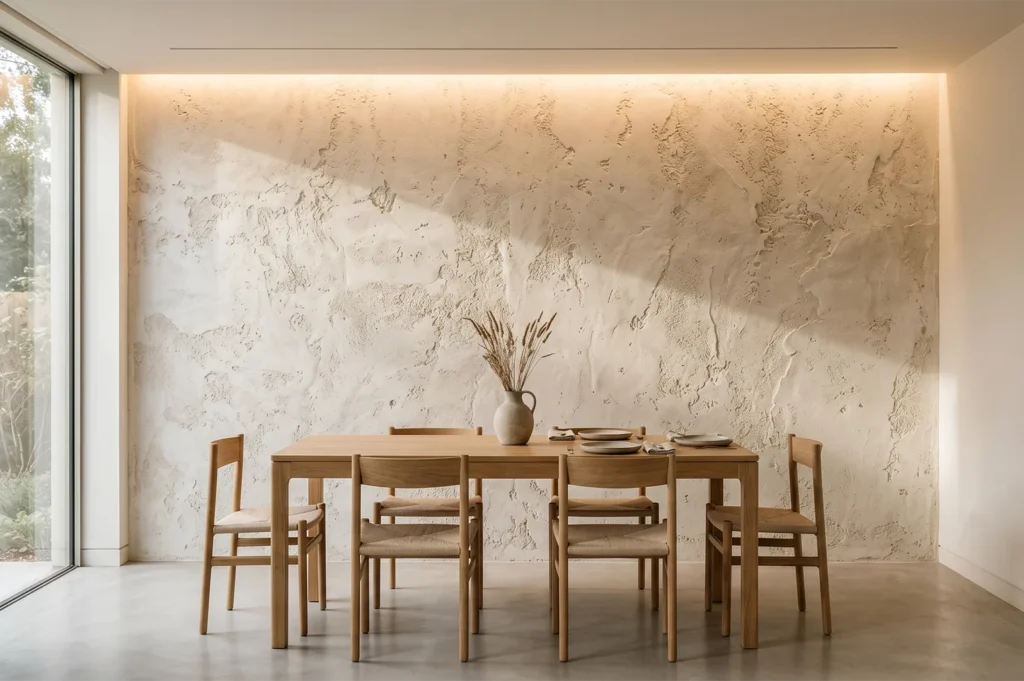
Instead, I’d suggest focusing your budget on one or two feature walls. For example, in a recent mid-tier dining project I worked on, we kept the walls a smooth, warm beige (a hallmark of modern luxury homes) and installed a single, beautifully textured plaster wall illuminated by soft, indirect lighting.
Texture is a key component of modern luxury interior design, and layering natural textures like wood, stone, and rattan with smoother or glossier finishes adds dimension and balance to luxury interiors. It cost a fraction of what custom carpentry would have, yet it became the most photographed spot in the restaurant.
Modern Luxury Interior Design Trends: Crafting Spaces That Blend Nature and Technology
Today’s luxury spaces tell a story of mindful living—one where comfort, sustainability, and smart functionality weave together into something that feels effortlessly refined. We notice how interior designers are reaching for eco friendly materials and seamlessly integrated automated systems, creating homes that respond to our needs while honoring the environment. There’s something magnetic about the way outdoor spaces dissolve boundaries, inviting natural light to flood through spaces and expand our sense of home beyond four walls—the kind of openness that makes us breathe deeper. The textures that catch our eye speak their own language: warm wood grain under fingertips, the cool solidity of natural stone, bespoke furniture pieces that feel like they’ve always belonged. Feature walls emerge as focal points, adding layers of warmth and personality that make each room feel distinctly yours. What draws us in, though, is the restraint—those clean lines and uncluttered spaces create a backdrop of understated elegance, while carefully chosen neutral palette ensures every space feels both thoroughly modern and genuinely welcoming.
Executing Your Modern Luxury Design: Details Matter in Crafting Spaces
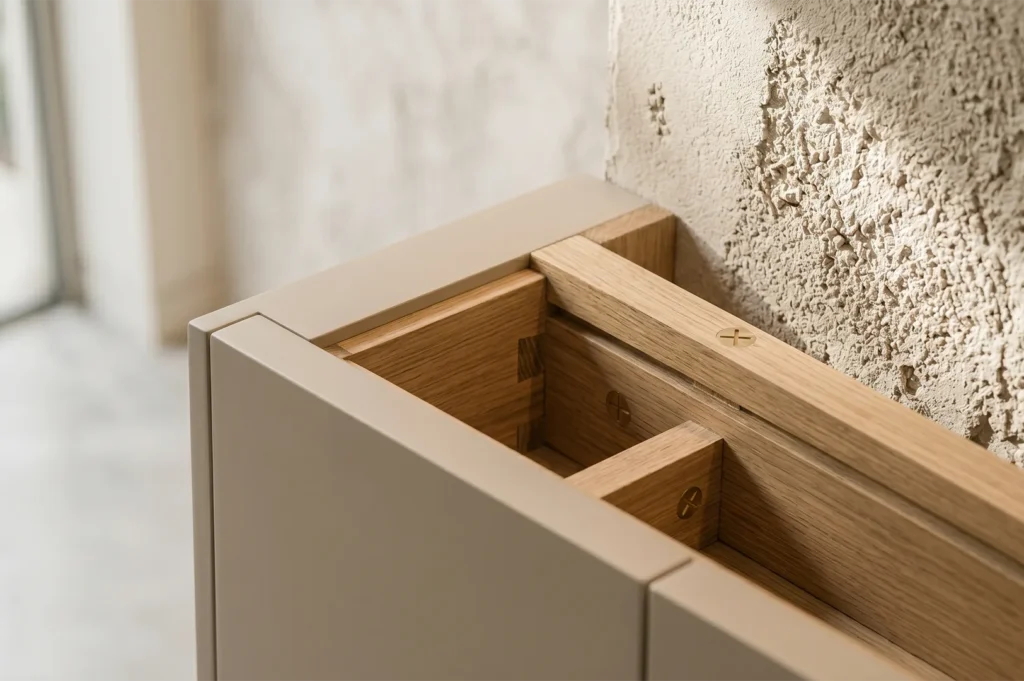
The difference between a cheap build and a premium build often comes down to the final 5% of the execution. Quality is in the details.
I am fanatic about straight, aligned carpentry lines and hidden joints. If I can see the screws on your bespoke furniture, the illusion of luxury is broken. Spend a little extra to ensure you have smooth paint finishes without patchiness, and always opt for soft-close mechanisms on your drawers and doors. The sound of a cabinet slamming shut in a quiet dining room completely ruins the vibe.
Also, be realistic about maintenance. Automated systems for lighting and climate control can simplify life for your staff, ensuring the mood is always perfect without them having to fiddle with switches. Choose materials that are easy to wipe down; a stained luxury fabric quickly turns into an eyesore.
FAQ: Your Biggest Fears About Building a Luxury Interior
“Do I need to hire an interior designer, or can I manage it myself?”
While you can manage it yourself, I highly recommend hiring an expert for a luxury project. Good designers understand how to balance the aesthetic with crucial operational needs, like SCDF fire safety regulations and kitchen workflows. Expect to spend 8–15% of your total budget on design fees, but they will save you from making costly structural mistakes.
“How long will this take?”
In Singapore, always buffer your timeline. A standard timeline is 3–6 weeks for design, 2–4 weeks for permits, and 6–12 weeks for the actual renovation. Expect to spend more time waiting on custom glass or bespoke lighting fixtures. Add a 20% time buffer for inevitable delays.
“What if my contractor gives me a super low quote?”
Run. A ridiculously low quote usually means they are cutting corners on skilled labor, which is expensive in Singapore. Precision work—which is the hallmark of modern luxury—costs money. If they don’t provide detailed drawings before construction, you are walking into a trap.
Final Thoughts on Your Modern Luxury Interior and Luxury Design Journey
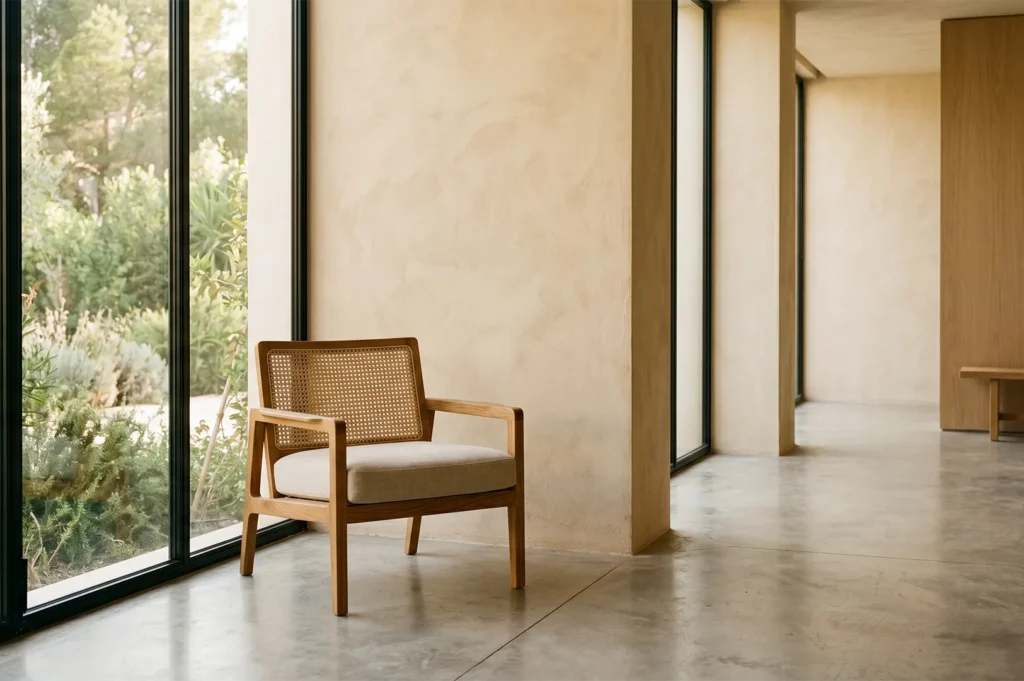
Creating a modern luxury interior is not about throwing cash at a space until it looks expensive. It is about making intentional, disciplined choices that prioritize the guest’s comfort and emotional experience. By focusing on exceptional lighting, generous spacing, and a restrained, natural palette, you can build a restaurant that feels effortlessly premium.
Take your time in the planning phase, stick to your budget by using materials cleverly, and remember that sometimes, the most luxurious thing you can put in a room is empty space.
If you’re interested in exploring a different approach to luxury interiors that embraces tradition, check out our article: Tea Room Design That Stays Traditional: Modern Does Not Mean Fusion. This piece delves into how modern luxury can honor classic aesthetics without blending styles, creating spaces that feel timeless and authentic.