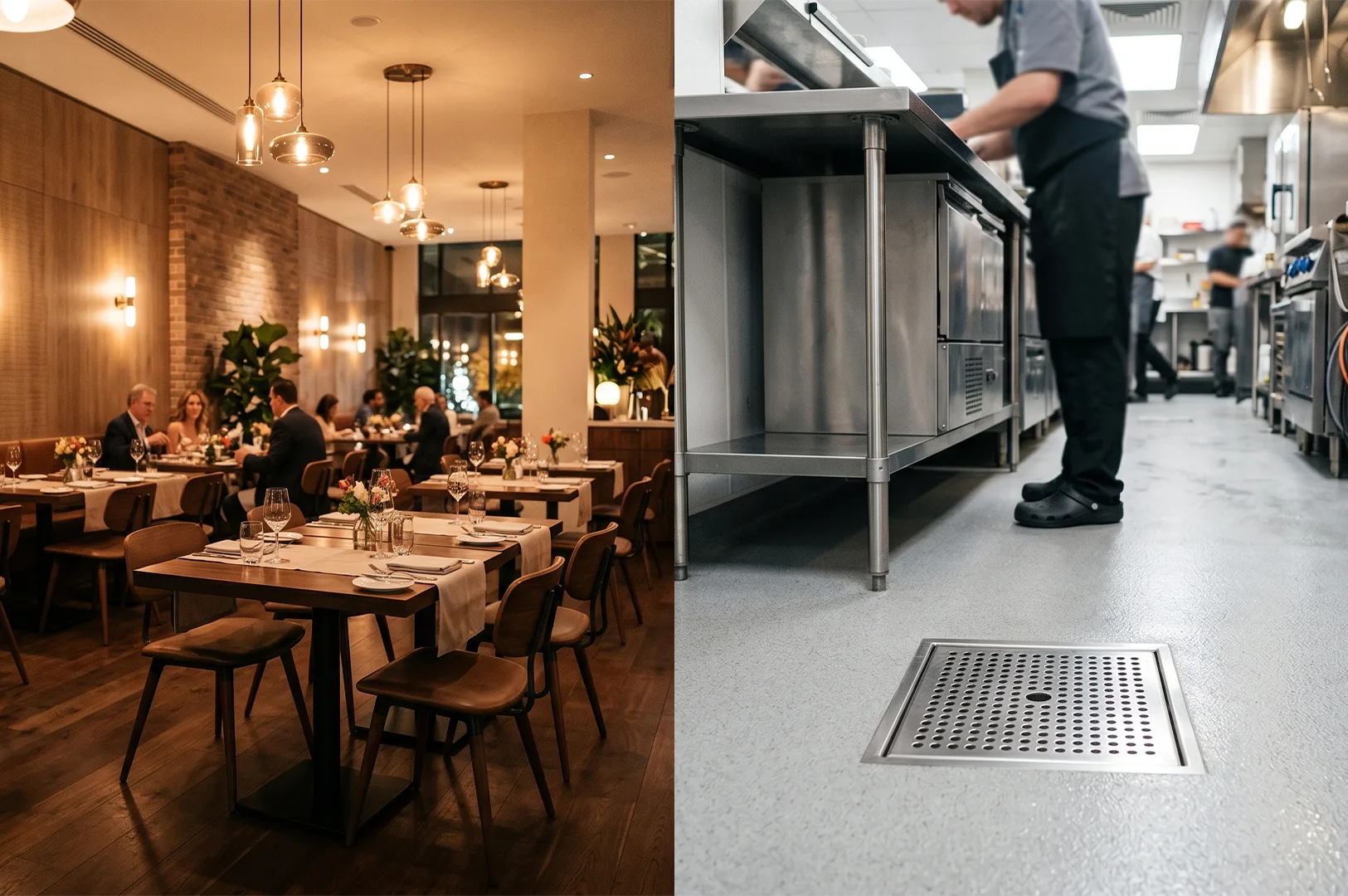

Every restaurant renovation has a few decisions that no one will praise.
No guest will walk in and admire the upgraded drainage. No one will take a photo of better storage. No customer will write a glowing review about the placement of a service counter or the sensible choice of durable flooring.
And yet, these are often the decisions that save the restaurant later.
Renovation has a glamorous side.
People love the mood board, the lighting samples, the wall finishes, the first render of the dining room. These are the parts that feel exciting because they are easy to imagine. They promise transformation.
But the harder choices usually happen elsewhere.
They happen when the owner has to decide between a statement feature and better kitchen equipment. Between decorative finishes and stronger ventilation. Between squeezing in more seats and giving staff enough room to work properly.
These choices do not sparkle.
They matter.
The difficult truth is that restaurant renovation budgets rarely stretch comfortably across every dream. Money has to be assigned with care. Some ideas need to wait. Some details need to be simplified. Some practical upgrades need to take priority over the parts guests will immediately notice.
That can feel disappointing.
Especially for founders who have imagined the look of their restaurant for a long time. It is natural to want the space to feel special. It is natural to want guests to walk in and feel impressed.
But a restaurant is not only a first impression.
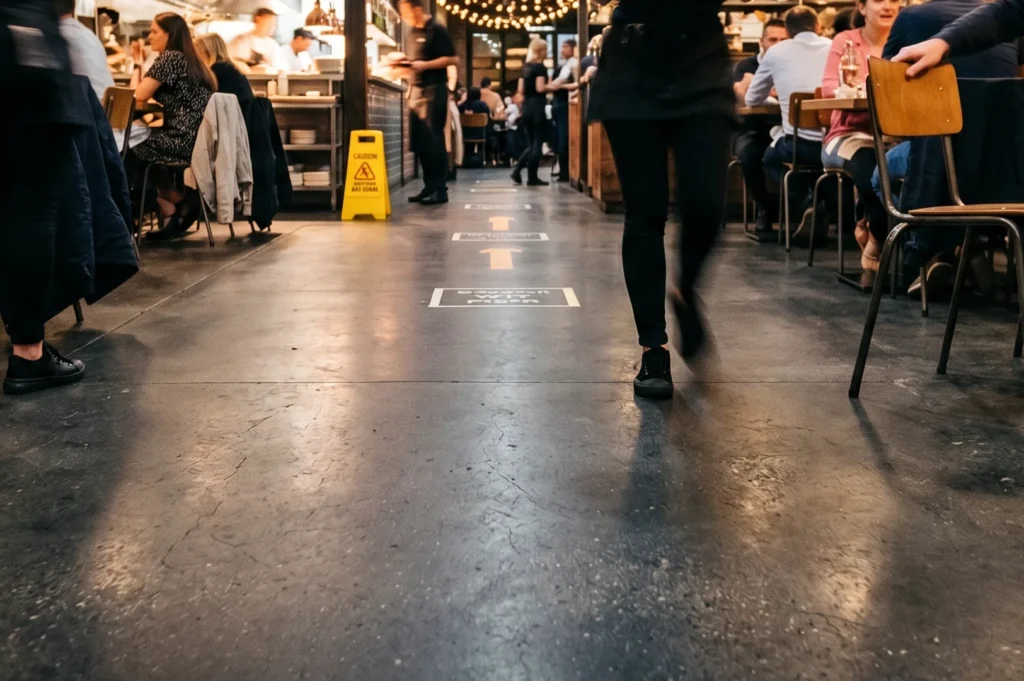
It is a daily operation.
The floor must survive spills, dragging chairs, heavy foot traffic, and cleaning routines. The kitchen must support long hours. The storage must make sense when suppliers arrive. The lighting must work for lunch, dinner, photography, and staff closing duties.
A renovation choice that no one claps for may become the reason the restaurant operates smoothly two years later.
This is where maturity enters the renovation process.
The best owners learn to ask a different kind of question.
Not, “Will people notice this?”
But, “Will this help the restaurant last?”
That question changes the budget conversation. It shifts attention from surface impact to long-term value. It makes room for practical investments that protect the team, the service, and the guest experience.
Sometimes the strongest design move is restraint.
Choosing fewer decorative gestures so the essentials can be done properly. Choosing materials that age well instead of materials that only photograph well. Choosing comfort, durability, and workflow over novelty.
These decisions may not produce immediate applause.
But they produce steadiness.
And steadiness is one of the most underrated qualities in a restaurant.
Guests return to places that feel cared for. Staff stay longer in spaces that do not exhaust them unnecessarily. Owners sleep better when the restaurant is not constantly fighting against poor planning.
A good renovation is not only the art of adding beauty.
It is the discipline of choosing what deserves investment.
The quiet choices matter because they hold the restaurant together after the excitement fades. They support the evenings when the room is full, the kitchen is busy, and no one has time to admire the design.
That is when the real renovation reveals itself.
Not in the photo.
In the service.
For a smarter way to plan spending, read Restaurant Renovation Budget Allocation Guide: Where to Invest and Where to Save.