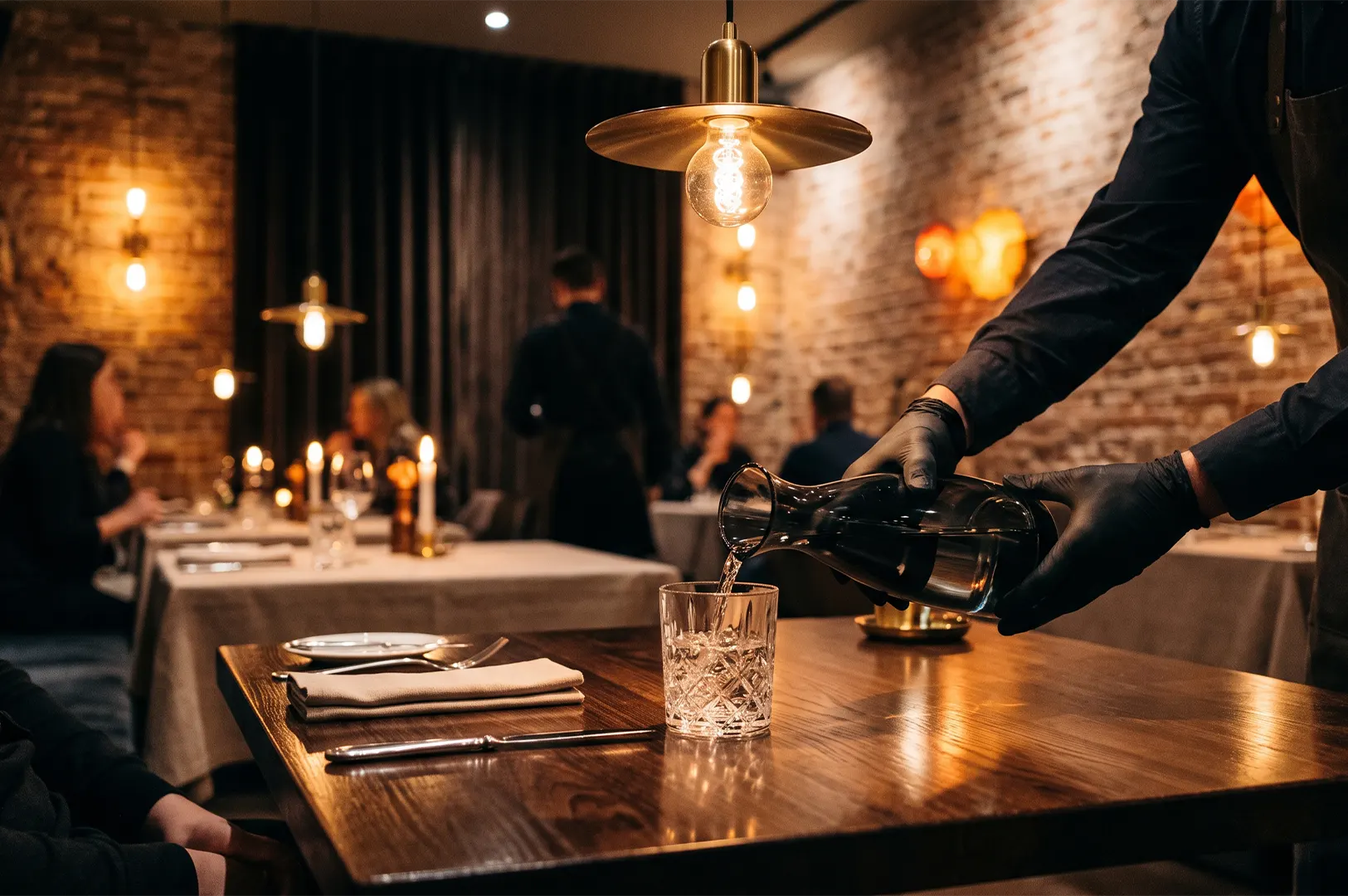

Why Evening Atmosphere Depends on More Than Lighting
A restaurant changes when the sun goes down.
The same space that feels bright and energetic during the day can become intimate and memorable at night.
This transformation does not happen by accident.
It is created through careful design decisions.
Lighting plays an important role.
But it is not the only factor.
The way materials reflect sound.
The distance between tables.
The balance between openness and privacy.
Every detail contributes to the feeling of the room.
A restaurant designed for evening dining needs a different rhythm.
Guests often arrive looking for more than a meal.
They are looking for an experience.
A comfortable environment where conversations can continue.
A space that feels warm without feeling crowded.
A setting that encourages them to stay.
Lighting helps create this atmosphere, but placement matters.
Too bright and the restaurant loses intimacy.
Too dim and comfort disappears.
The balance creates emotion.
Materials also influence the mood.
Wood, fabric, stone, and textured surfaces change how light moves through the room and how sound behaves.
Together, these elements create a restaurant’s personality.
The most memorable spaces understand that atmosphere is not one single feature.
It is the combination of many quiet decisions working together.
Guests may remember the food first.
But they remember the feeling of the place too.
For more insight into creating memorable dining environments, explore Restaurant Lighting Design Guide: Creating the Right Ambience.