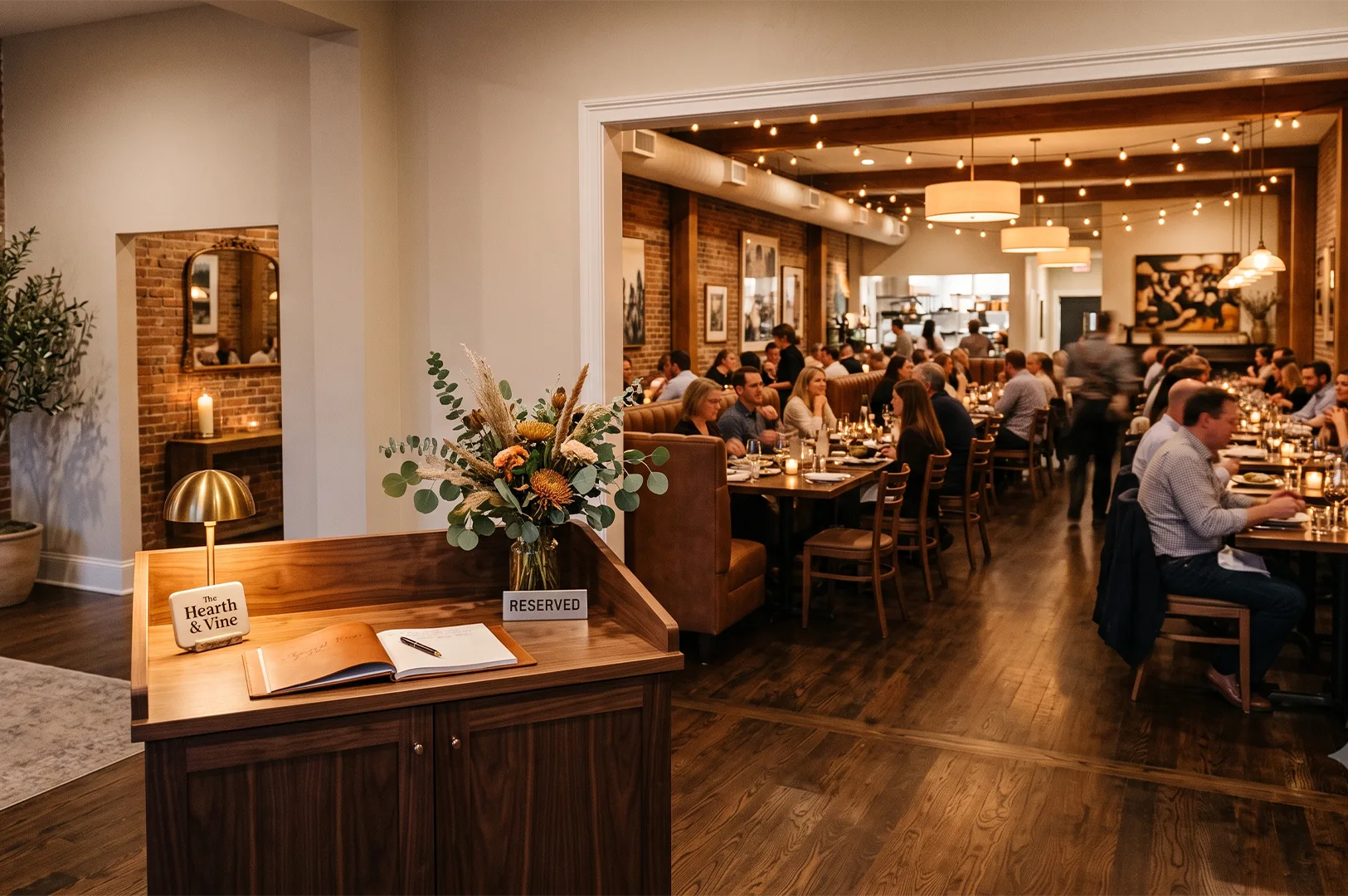

How Movement Shapes the Guest Experience
The way guests move through a restaurant rarely attracts attention.
Yet it defines every dining experience.
From arrival to departure, circulation shapes comfort and efficiency.
A narrow entrance can create immediate tension.
A well-designed foyer allows guests to pause and orient naturally.
Table placement is critical.
Too close and guests feel crowded.
Too far apart and the space can feel empty.
Paths must accommodate staff and diners at the same time.
Sightlines, proximity to service stations, and access to exits influence ease and flow.
Back-of-house circulation is equally vital.
Kitchens, service stations, and storage areas should reduce unnecessary steps.
Every movement saved during service improves speed and reduces fatigue.
Small adjustments matter.
A repositioned server station or a cleared corner can transform the feel of the room.
Flow influences energy, ambiance, and guest satisfaction.
Renovations that prioritize movement create a dining experience that feels intuitive.
Guests linger naturally.
Service flows smoothly.
The restaurant operates effortlessly even during peak hours.
Movement is invisible but powerful.
It supports aesthetics, service, and comfort.
It defines why guests return without them knowing why.
For examples of thoughtful circulation in design, see Restaurant Entrance Flow Design: Creating Seamless Transitions From Street to Seat.