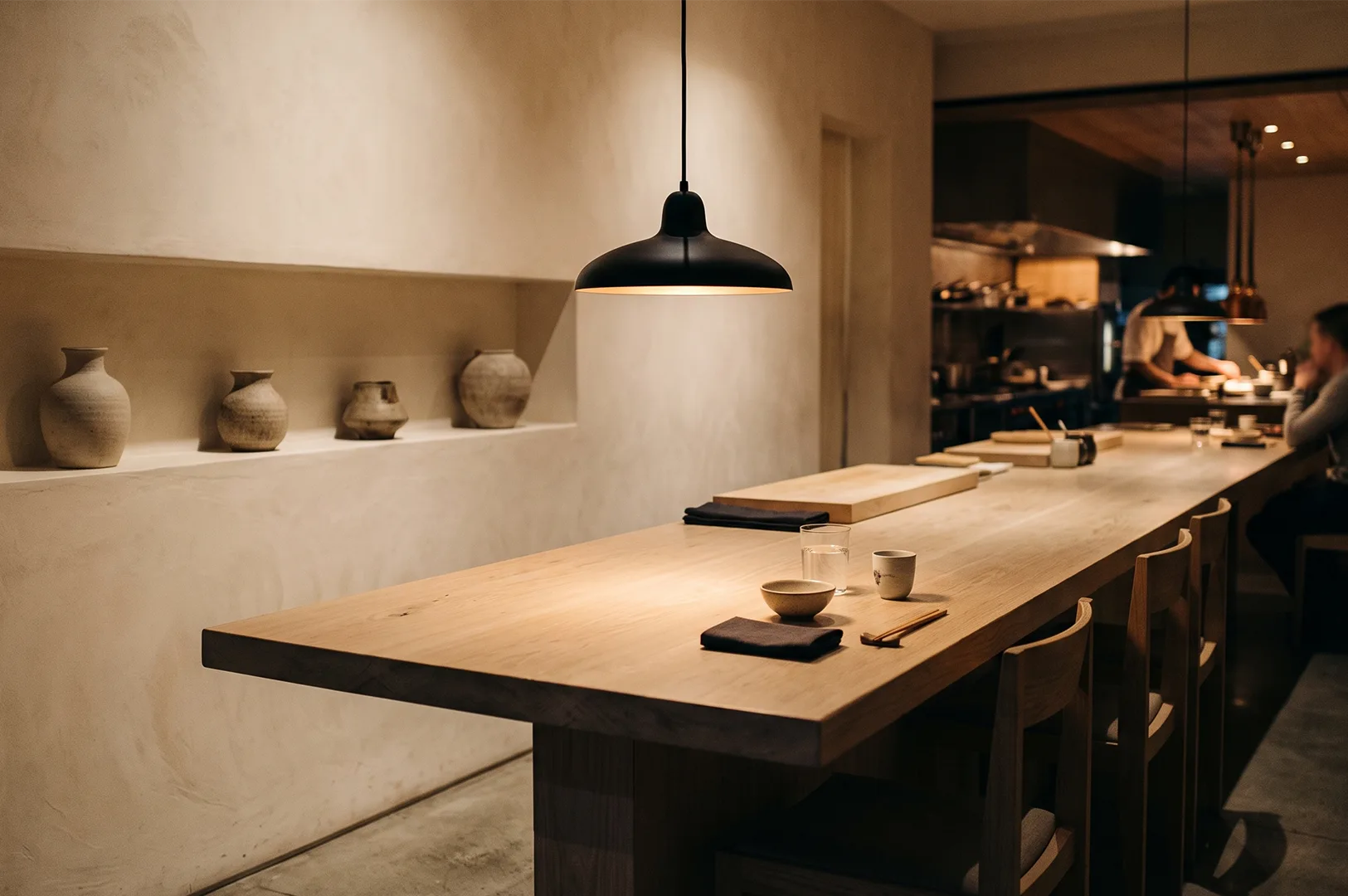

You can enter a restaurant in Singapore and feel as though you have already seen it somewhere else.
Perhaps it was in Tokyo.
Perhaps Melbourne.
Perhaps London, Copenhagen, or a carefully framed photograph saved months ago.
The walls are softly textured. The lighting is warm but restrained. The chairs curve gently around small tables. Pale timber meets brushed metal. A single pendant hangs above the counter. Somewhere nearby, an open shelf holds handmade ceramics in neutral colours.
The restaurant feels new.
It also feels strangely familiar.
This is one of the quiet effects of global restaurant design that we learned from Global Dining Trends.
Ideas now move between cities faster than the spaces themselves can be built. A dining room opens in Copenhagen, appears online, is saved by a designer in Singapore, presented to an owner, adapted by a contractor, and reappears months later in another form.
Nothing has been copied exactly.
Yet the visual language remains recognisable.
Restaurants around the world are increasingly speaking through the same materials, colours, and moods. Limewashed walls suggest warmth. Curved furniture suggests softness. Open kitchens suggest honesty. Dim lighting suggests intimacy. Visible imperfections suggest craft.
These choices are not meaningless.
They work because diners already understand them.
Before a menu is opened, the space communicates what kind of meal is about to happen. Pale wood and natural light may signal freshness. Dark stone and low lighting may suggest seriousness. Stainless steel and exposed preparation areas may promise energy, precision, and movement.
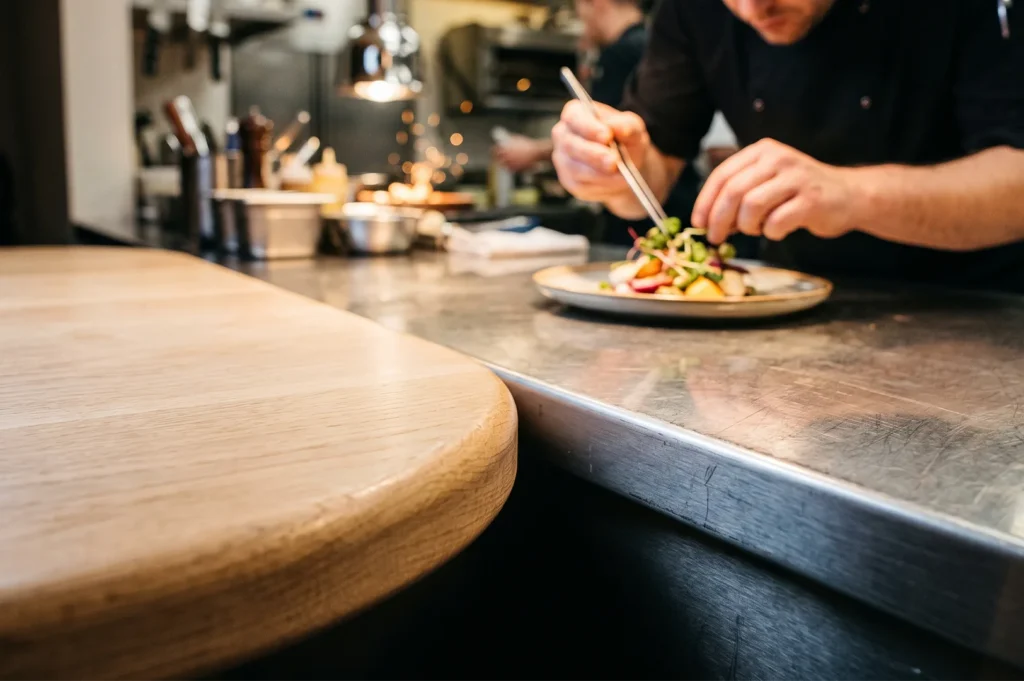
A shared design language helps guests feel comfortable.
It can also make places harder to remember.
The problem is not that restaurants take inspiration from one another. Restaurant design has always travelled. Materials, service styles, kitchen layouts, and decorative ideas have crossed borders for centuries.
The difference now is speed.
A trend can become global before anyone has had time to ask whether it belongs everywhere.
Does a softly lit dining room still work when guests need to read a detailed menu? Can delicate finishes survive Singapore’s humidity and cleaning routines? Does a narrow Scandinavian-style layout support large groups who prefer sharing dishes? Can an open kitchen remain calm when the menu produces smoke, heat, and constant movement?
These questions rarely appear in photographs.
They appear during service.
A design that feels effortless in one city may require constant correction in another. Materials behave differently. Customers move differently. Staff work differently. Even the length of a meal changes how a room needs to perform.
Global inspiration becomes valuable only when it survives local reality.
That may mean changing the lighting. Widening a walkway. Replacing a fragile surface. Creating space for larger tables. Adding storage where a photograph showed empty walls.
These changes can make the design look less pure.
They can also make the restaurant more honest.
The strongest dining spaces do not reject global influence. They absorb it slowly. They allow outside ideas to meet local habits, operational pressure, climate, culture, and the personality of the restaurant itself.
Familiarity is not always a weakness.
Sometimes it helps guests settle in.
But a restaurant becomes memorable when something in that familiar language begins to belong only to that place.
A material chosen because it ages well there.
A layout shaped around the way its guests gather.
A light level that suits the food rather than the photograph.
A room can speak a global language.
It should still have its own voice.
For a practical planning companion, read The Dangerous Beauty of a Restaurant That Looks Finished Too Soon.