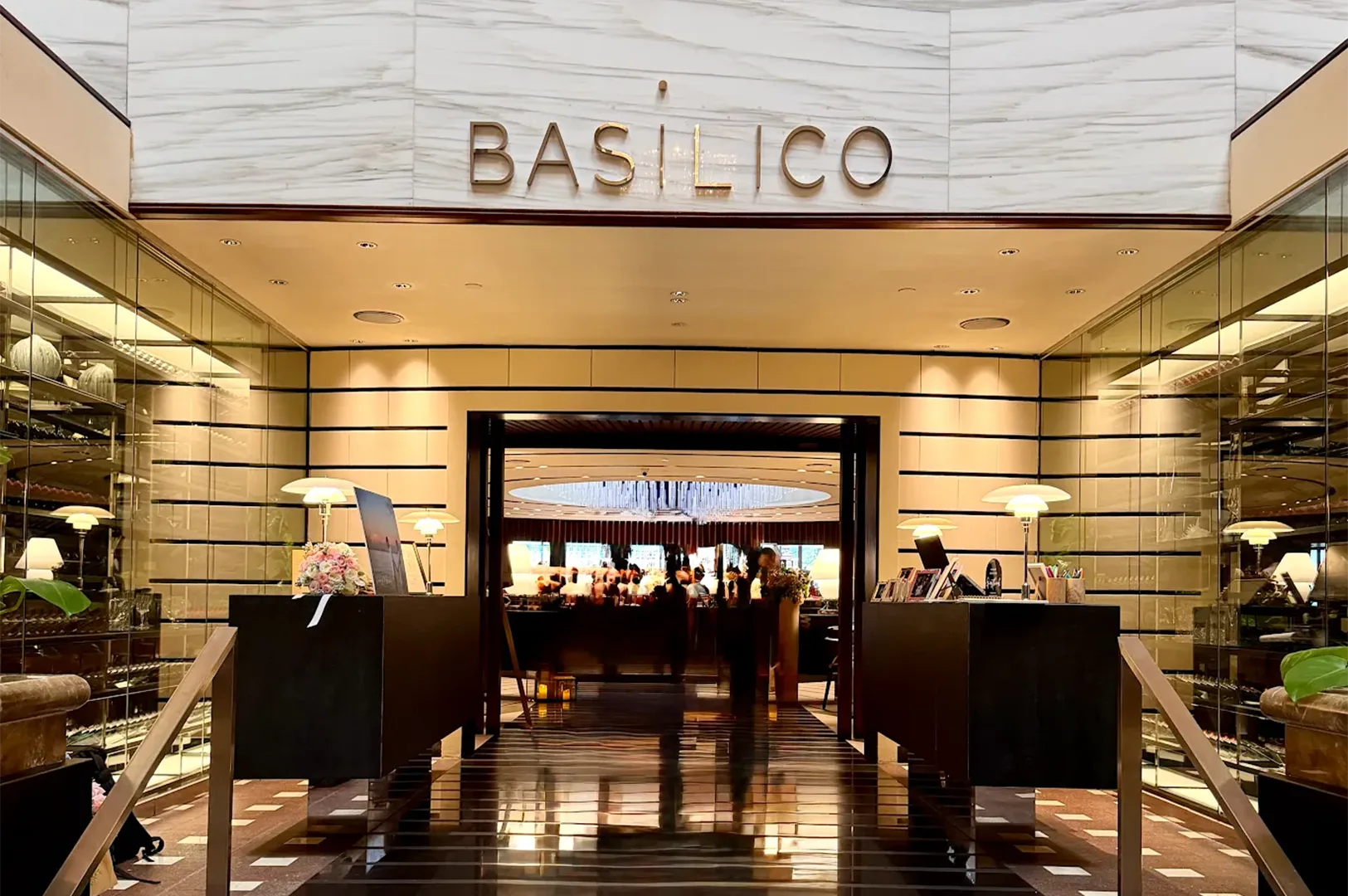

Great buffet design is not about putting more food on display. It is about making abundance feel calm, premium, and easy to enjoy.
That is why Basilico at 1 Cuscaden Road, Level 2, Singapore 249715 remains such a useful restaurant renovation case study. Many diners know it for Italian cuisine, the famous cheese room, fresh seafood, handmade pasta, roasted meats, tiramisu, cannoli, and gelato. But the deeper lesson is not only on the plate. It is in the room.
In my view, Basilico restaurant works because it understands something many buffets forget: customers do not experience food separately from space. They experience the buffet line, the lighting, the table, the acoustics, the staff movement, and the food as one continuous impression.
A good buffet feeds you. A great buffet guides you.
Basilico Singapore Shows That Buffet Design Shapes Appetite
The first thing I notice in any buffet is not the seafood. It is the circulation.
If guests are trapped between a seafood station and a dessert counter, the whole meal feels stressful before the first oyster reaches the plate. If the lighting is harsh, even premium Australian beef cuts or fresh seafood lose their appeal. If the dining tables are too close, diners become careful instead of relaxed.
Basilico Singapore succeeds because its buffet design feels more considered than the standard hotel buffet formula. It uses open buffet zones, warm Italian-inspired interiors, dedicated food stations, and comfortable seating to create a sense of generosity without chaos.
This matters because Italian cuisine is emotional food. Pasta, risotto, mozzarella, burrata, cold cuts, tomatoes, bread, roasted meats, and seasonal sweets all depend on warmth and appetite. They need a dining room that supports pleasure, not one that makes people feel they are competing for space.
For restaurant owners studying buffet singapore concepts and how renovation changes dining behavior, this broader design-focused guide gives useful context on how buffet spaces can become stronger hospitality experiences.
The Basilico Cheese Room Is Not Just Food — It Is Architecture
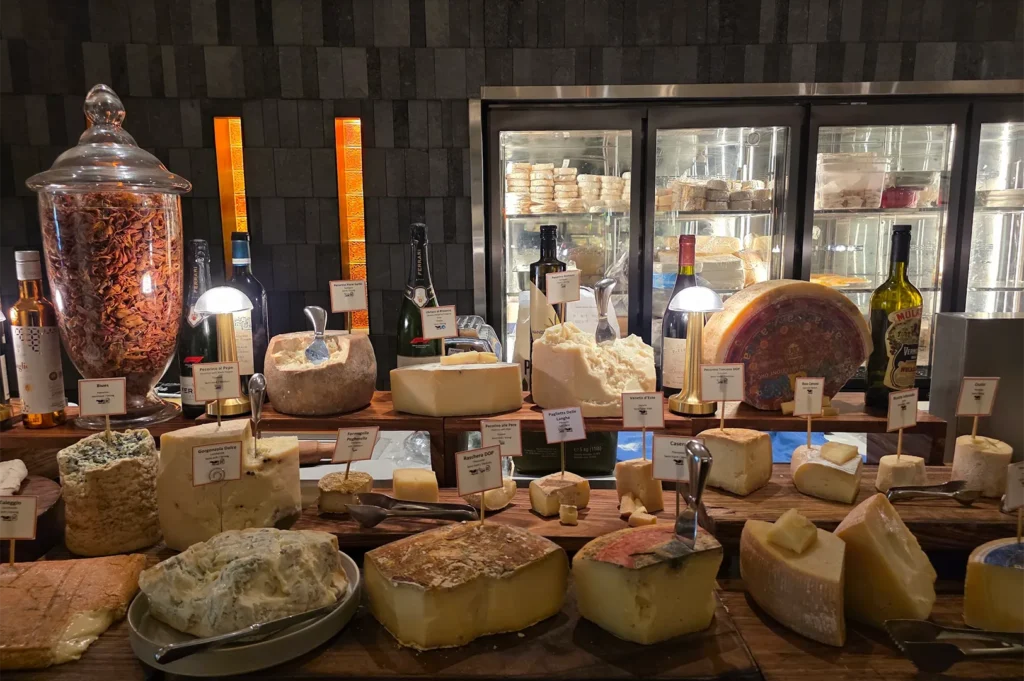
The cheese room is one of Basilico’s most memorable features, and I think that is because it works as both a menu highlight and a spatial destination.
Many buffets place cheeses on a shared counter beside salads or desserts. Basilico gives cheese its own moment. That simple renovation choice changes the customer’s perception. The cheeses feel curated, not added. The room creates discovery, pause, and a sense of occasion.
This is where design starts to influence menu performance.
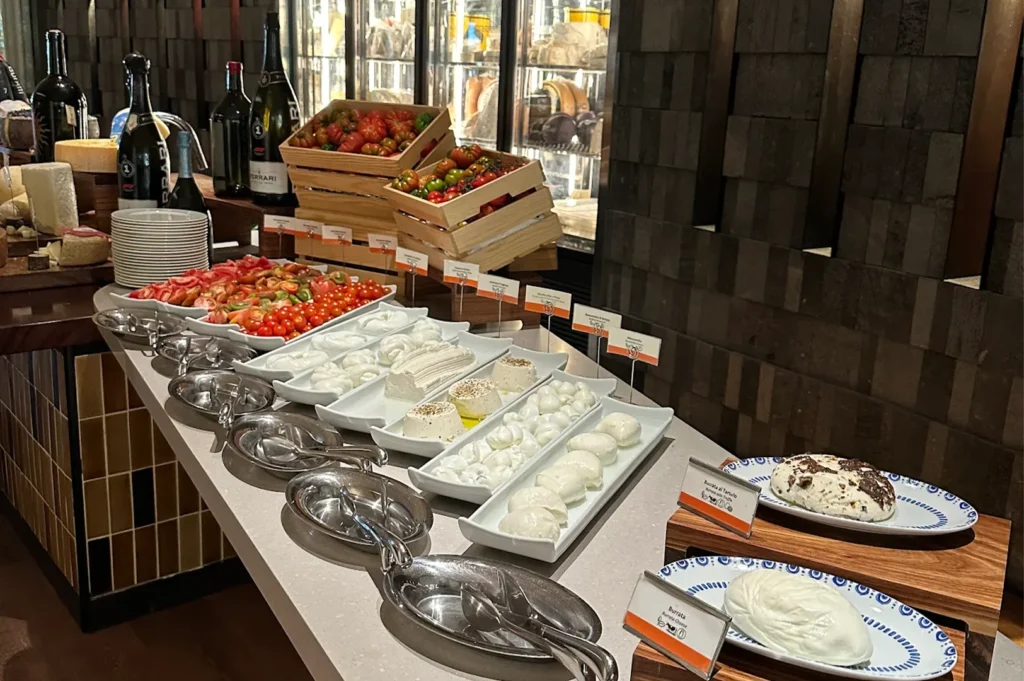
Imported Italian cheeses, a mozzarella and burrata bar, cold cuts, seasonal antipasti, and bread all become more valuable when they are presented with breathing room. The customer does not just take a slice of cheese. They enter a small world within the restaurant.
That kind of signature zone is powerful because guests remember it clearly. They tell friends, “You have to see the cheese room.” In restaurant terms, that is more than a food station. It is a marketing asset built through renovation.
The lesson for owners is simple: if you have one exceptional menu category, do not hide it in the main flow. Give it spatial importance.
Seafood, Lighting, and the Psychology of Freshness at Basilico
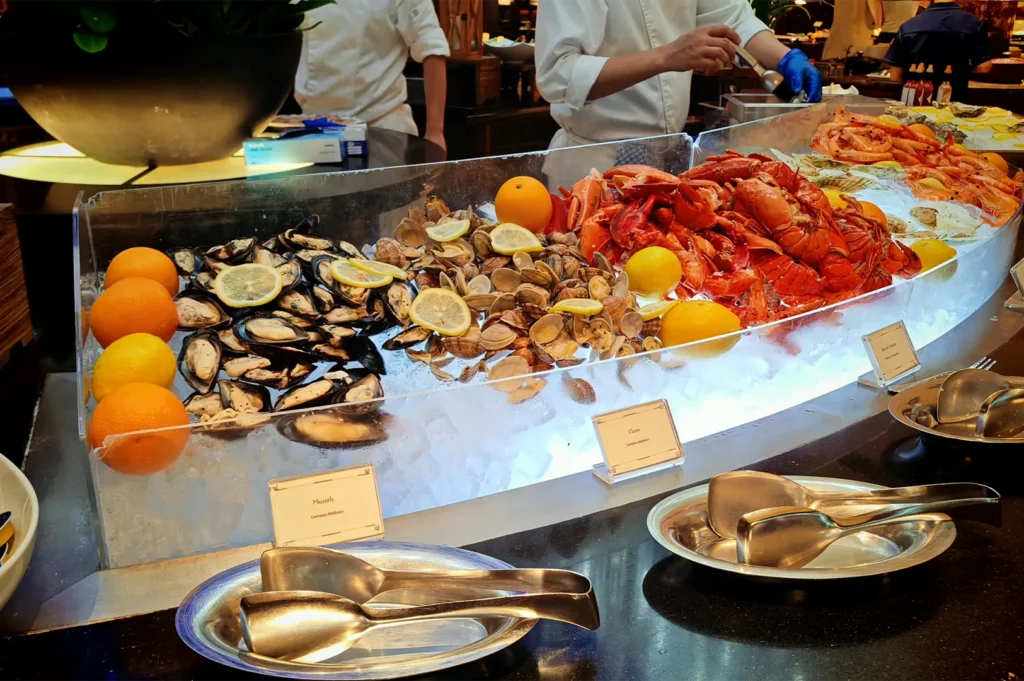
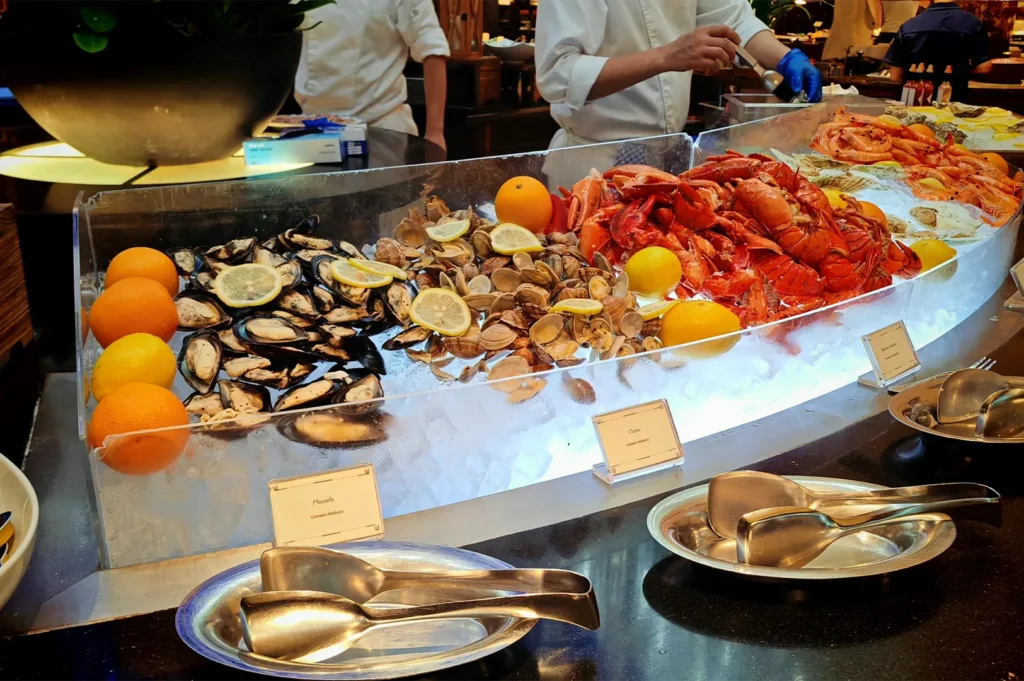
Fresh seafood is one of the strongest drivers of buffet satisfaction. At Basilico buffet, diners often look for oysters, crab, prawns, Boston lobster, and other seafood highlights before anything else.
But seafood is unforgiving from a design perspective. Poor lighting makes it look dull. Crowded counters make it feel less premium. Weak replenishment makes guests question freshness. Bad circulation creates frustration around the most popular station.
Basilico benefits from visibility and space. The seafood selection is easy to approach, and the presentation helps reinforce freshness before the customer even tastes anything. That is important because freshness is partly sensory and partly visual.
A chilled seafood station needs:
- Clear sightlines
- Focused lighting
- Clean counter detailing
- Easy access from more than one direction
- Fast replenishment paths for staff
- Enough surrounding space for guests to pause
When these elements work, the seafood feels more abundant and more trustworthy. When they fail, even good seafood can feel ordinary.
This is one reason restaurant renovation matters so much in buffet operations. The room either protects perceived quality or slowly erodes it.
Beef Tartare Prepared Fresh and the Value of Live Stations at Basilico
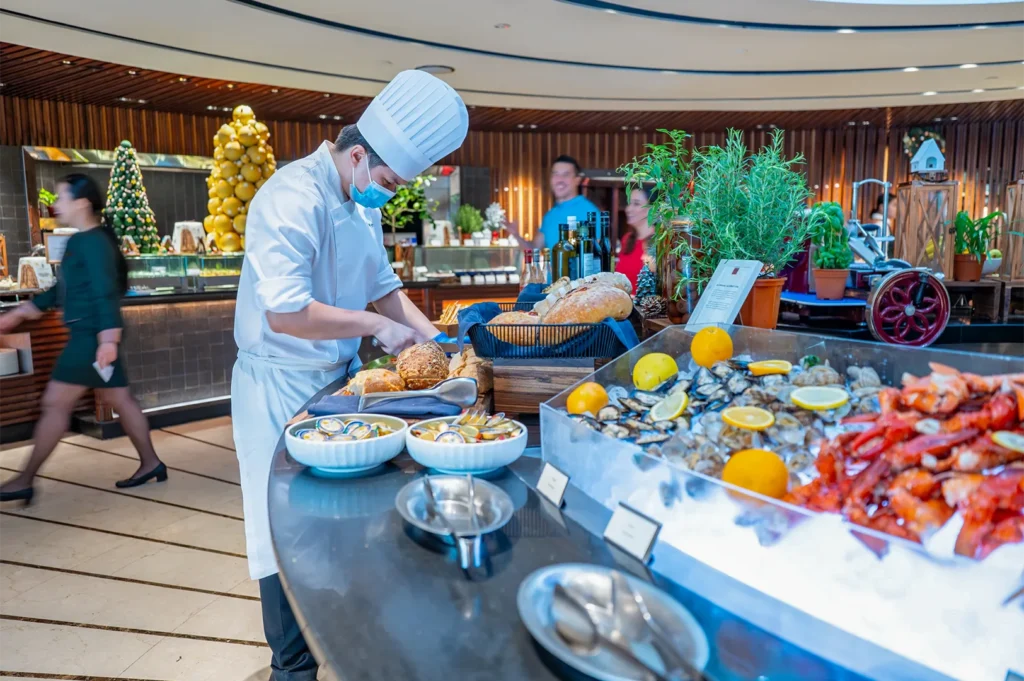
A buffet becomes more persuasive when guests see skill in motion.
Features such as beef tartare prepared fresh, handmade pasta, porcini risotto, grill selection, open flame grilling, or live cooking stations create a different emotional response from pre-filled trays. They show craft. They slow the guest down. They suggest that the food is being cared for in real time.
At Basilico, the open kitchen and live stations anchor the buffet to restaurant-quality cooking. Handmade pasta, porcini risotto, seafood pasta, roasted meats, wagyu lasagna, spiced chicken wings, pork ribs, and other Italian classics feel more deliberate when guests can see preparation, finishing, or replenishment happening nearby.
The point is not theatre for theatre’s sake. It is trust.
When customers see chefs working, they read the buffet differently. The pasta tastes less like “buffet pasta” and more like a dish prepared within a restaurant. The risotto feels less anonymous. The roasted meats feel more connected to the kitchen.
This is where regent hotel basilico built its strength over time: it made the buffet feel integrated with hospitality rather than separated into a self-service food hall.
For a very different example of how layout and light shape repeat visits in a smaller dining format, you can read more here.
Furniture Decides Whether Guests Stay for Dessert at Basilico
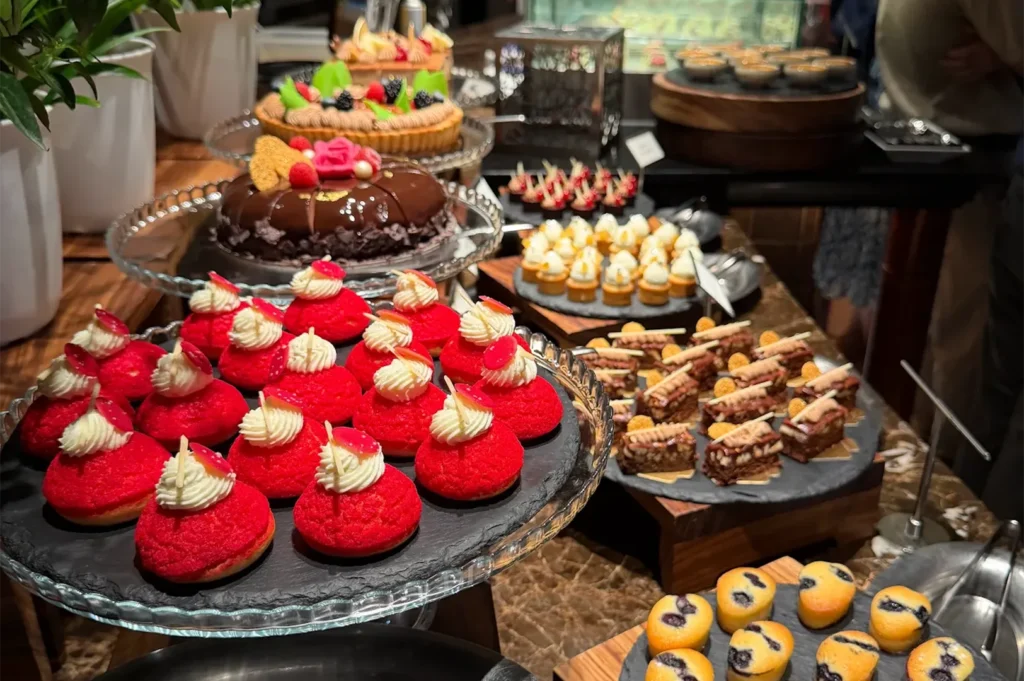
Buffet furniture has a harder job than most people realize.
At a normal restaurant, guests may order two or three dishes. At a buffet, they return to the table many times. Plates come and go. Glasses, cutlery, shared dishes, bread, cheese, desserts complete the meal, and coffee all need space. If the table is too small, the meal starts to feel messy.
Basilico’s dining room supports longer meals because it gives diners more comfort than many high-volume buffet restaurants. Larger tables, comfortable chairs, and flexible seating arrangements make the experience suitable for family gatherings, anniversaries, business meals, and hotel celebrations.
This directly affects spending perception.
A lunch buffet in this category may sit around $70 to $100+, dinner can range around $100 to $150+, and Sunday brunch or festive meals may climb higher, often $150+ depending on promotions and season. At those prices, guests expect more than variety. They expect ease.
Comfort makes premium pricing feel more acceptable. Discomfort makes even good food feel expensive.
This is why furniture should never be the last renovation decision. It shapes how long people stay, how much they enjoy the meal, and whether they consider the price worth paying.
Spring Feast and Regional Italian Traditions Shape the Basilico Experience
Buffets are not only everyday dining formats. In Singapore, they are often celebration spaces.
A spring feast or a Father’s Day lunch needs a restaurant that can handle emotional expectations. Guests want abundance, but they also want comfort. They want choice, but not confusion. They want a table designed for conversation, not just eating.
This is where Basilico’s hotel setting matters. Located within Conrad Singapore Orchard, formerly associated with Regent Singapore, the restaurant benefits from hotel arrival, parking access, Orchard Road proximity, taxi convenience, and a polished hospitality environment.
For celebrations, this makes the experience feel complete before guests even reach the buffet.
Seasonal Promotions and Festive Experiences
Seasonal promotions such as Father’s Day feature festa della papa, a hearty brunch experience with regional Italian traditions shaping a table defined by richness and abundance. Highlights include:
- Open flame grilling
- Grill selection
- Premium Australian beef cuts
- Pork ribs
- Spiced chicken wings
- Wagyu lasagna
- Porcini risotto
- Seasonal antipasti
- Seasonal sweets
The buffet features live stations that anchor the experience, from seafood and oysters shucked to order to beef tartare prepared fresh and slow-cooked comfort dishes.
Beyond the table, the celebration continues with thoughtful touches for Dad — featuring a curated raffle of Italian-inspired experiences and gifts.
Ideal Occasions at Basilico
The restaurant is well suited for:
- Family celebrations
- Anniversaries
- Corporate lunches
- Hotel staycations
- Sunday brunch
- Festive dining
- Diners coming for abundance with structure
It is less ideal for quick meals or budget-conscious diners. Basilico is not trying to be casual in that sense. It is built around occasion.
Acoustics Are the Hidden Measure of Luxury at Basilico
A buffet can be visually beautiful and still fail if it sounds wrong.
Noise builds quickly in buffet restaurants. Plates stack. Cutlery moves. Chairs scrape. Children talk. Servers clear tables. Guests walk back and forth. Live stations add kitchen sound. During weekends, festive seasons, and Sunday brunch, the energy can rise sharply.
Basilico often feels lively, but its spaciousness helps keep the room from becoming oppressive. That distinction matters.
Luxury is not silence. In a restaurant, luxury is controlled energy. You should feel life in the room without needing to raise your voice across the table.
For renovation planning, acoustics should be addressed through:
- Upholstered seating
- Ceiling treatment
- Soft furnishings where appropriate
- Thoughtful table spacing
- Timber or textured finishes
- Avoiding too many hard reflective surfaces
Many restaurant owners spend heavily on marble, brass, tiles, and dramatic lighting, then wonder why guests describe the space as noisy. The issue is not the crowd alone. It is how the room handles sound.
Final Thesis: Great Food Performs Better in Great Spaces at Basilico
Basilico shows why restaurant renovation should never be treated as surface decoration.
The food matters, of course. The cheese room, fresh seafood, handmade pasta, porcini risotto, roasted meats, tiramisu, cannoli, gelato, bread, antipasti, and Italian classics are central to the appeal. But the reason the experience feels premium is that the room helps the food perform.
Architecture guides appetite. Lighting improves perceived freshness. Furniture extends dwell time. Acoustics protect conversation. Circulation reduces stress. Signature zones create memory.
For restaurant owners, Basilico offers a clear lesson: great food needs great spaces because customers do not separate the dish from the room. They remember how the whole meal felt.
And when the space is designed well, the food has a better chance to be tasted at its highest potential.