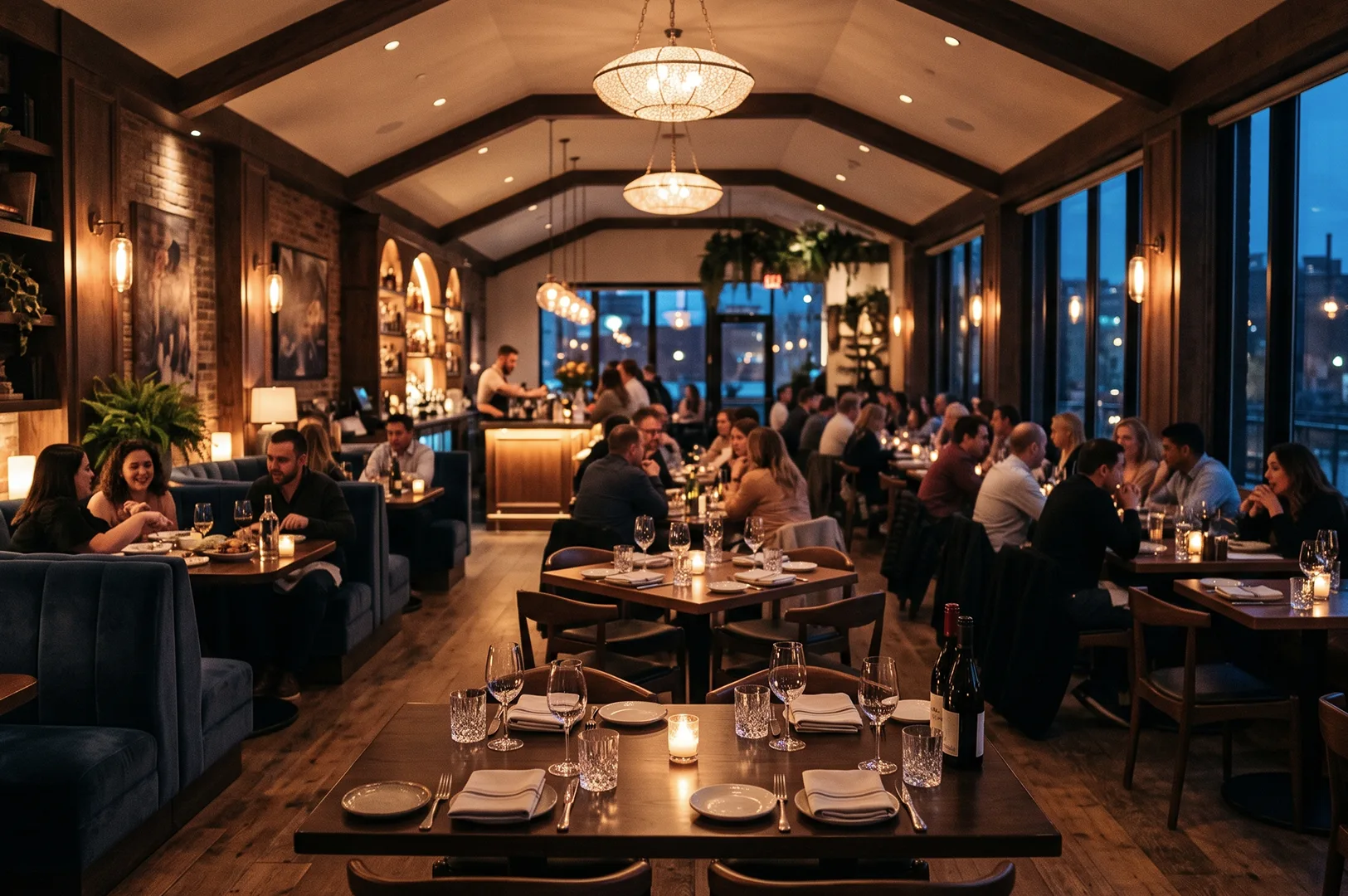

The Invisible Elements That Guests Carry Home
Guests rarely notice the details that make a restaurant feel right.
Yet these invisible elements shape every memory.
Lighting sets mood.
Warm, diffuse light invites guests to linger.
Harsh overhead lighting can feel cold or stressful.
Angles and intensity influence both atmosphere and how food looks.
Sound is equally important.
Hard surfaces reflect noise.
Panels, plants, and furnishings absorb sound.
Conversation flows naturally in spaces designed for acoustics.
Memory is formed through subtle cues.
Lighting, sound, and circulation create a coherent sensory experience.
A well-designed environment encourages comfort, lingering, and return visits.
Renovation amplifies these effects.
Adjustments to lighting placement, acoustics, and flow can transform a space without changing the aesthetic.
Guests leave remembering the feeling of the restaurant.
They may not notice the details consciously, but they sense ease, calm, and intention.
For insights into subtle design elements that shape perception, see The Quiet Details That Make a Restaurant Feel Right (Even If You Never Notice Them).