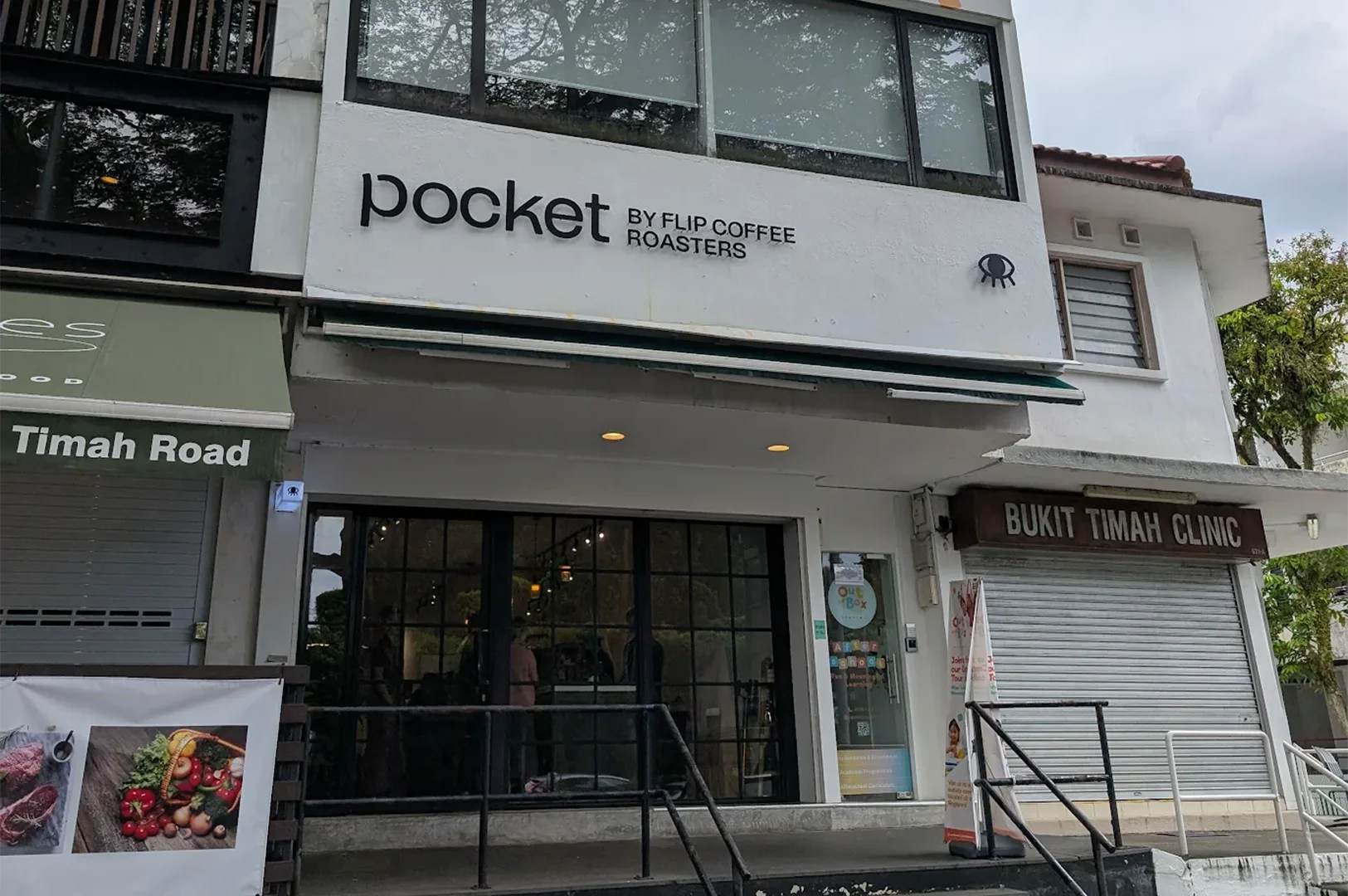

I helped plan a tiny coffee shop aiming to function like a full brunch cafe. We squeezed in communal tables, a pastry counter, retail shelves, a water station, and a photo corner. It looked charming on paper, but in reality, customers bumped into each other, queues blocked the entrance, and the barista struggled to reach the grinder.
That project taught me a key lesson: small spaces need their own logic—they aren’t just failed large spaces.
That’s why Pocket by Flip Coffee Roasters is so interesting. It embraces its compact size, focusing on specialty coffee and a smooth flow: order, watch, wait, sip, takeaway, return.
Many owners overfill small cafes with chairs, but Pocket by Flip Coffee Roasters proves a small cafe can feel premium when workflow, counter placement, lighting, and menu align.
If you plan a small cafe near Bukit Timah Road, Stevens, or Coronation Plaza, this case study is worth your attention.
Pocket by Flip Coffee Roasters and the Power of Compact Design on Bukit Timah
A compact cafe succeeds when it knows what it is not.
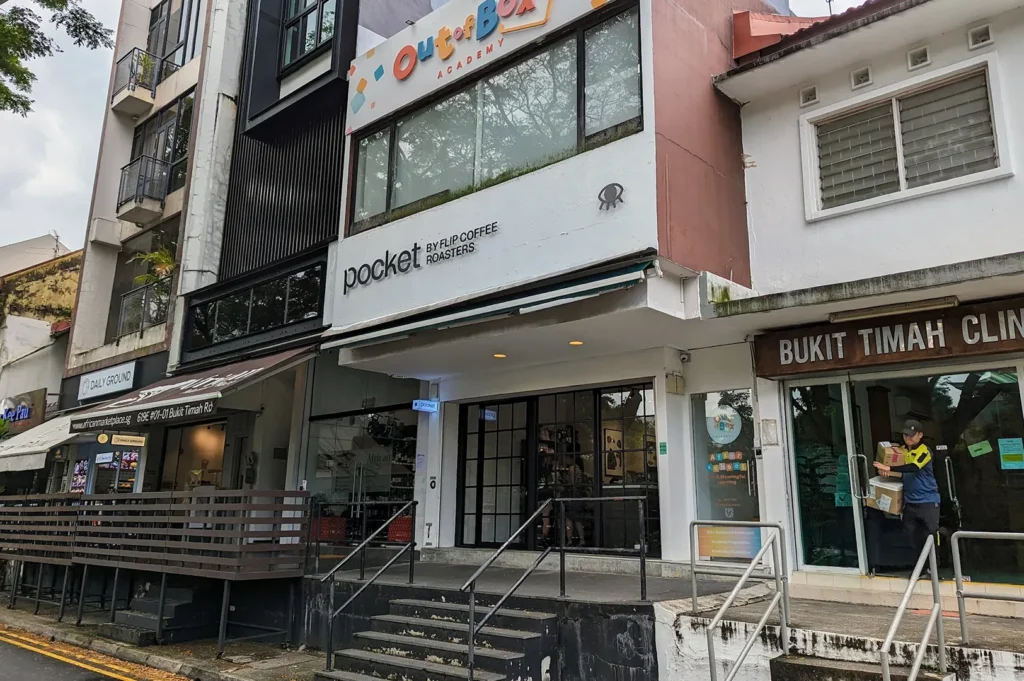
Pocket is not a long-lunch restaurant. It is not a laptop lounge. It is not a family brunch hall with prams, high chairs, and an all-day eggs menu stretching over three pages. It feels closer to a specialty focused micro cafe, where specialty coffee is the main character and everything else supports that.
Many small cafes fail by designing for an idealized fantasy: soft music, lingering customers, and full seats of quiet regulars. The reality is peak-hour orders, delivery riders, takeaway cups, wet umbrellas, stroller traffic, and customers standing in the wrong spots due to poor layout.
Pocket by Flip Coffee Roasters feels like it understands that reality. It offers plenty of charm and a cozy atmosphere along 619h Bukit Timah Road, where roadside parking is conveniently available for those who drive.
Flip Coffee Roasters: Why Workflow Should Come Before Decor in a Specialty Coffee Roastery
When I first tried designing a compact espresso bar, I obsessed over the wall color before I studied how the barista would move. Wrong order.
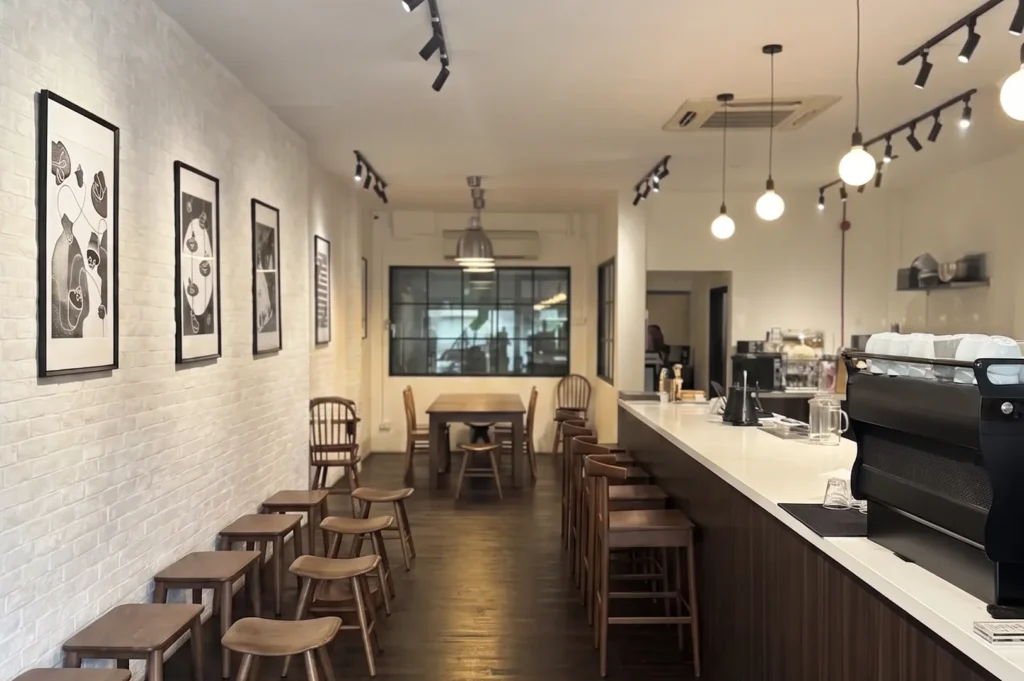
For Flip Coffee Roasters, the real design intelligence is not just in whether the cafe looks clean or modern. It is in how the counter works. In a small cafe, the counter is not furniture. It is the engine.
A good coffee counter must answer practical questions:
- Where does the customer enter?
- Where do they read the menu?
- Where do they order?
- Where do they wait?
- Where do they collect drinks?
- Where do takeaway customers stand without blocking dine-in guests?
- Can the barista reach the espresso machine, grinder, milk fridge, sink, and cups without wasted movement?
If even one of these points is badly planned, the whole cafe feels smaller than it is.
At Pocket by Flip Coffee, the open-counter idea helps create transparency. Customers can see coffee beans, brewing tools, cups, and barista movement. That matters in specialty coffee because visible craft increases trust. Watching someone prepare your white coffee, filter brew, or espresso makes the drink feel more considered.
The coffee beans they offer come from regions like Bolivia, Ecuador, and Honduras, known for their fruity taste profiles, which change monthly to keep the experience fresh and exciting.
Pocket by Flip Coffee and the Takeaway Culture Problem on Bukit Timah Road
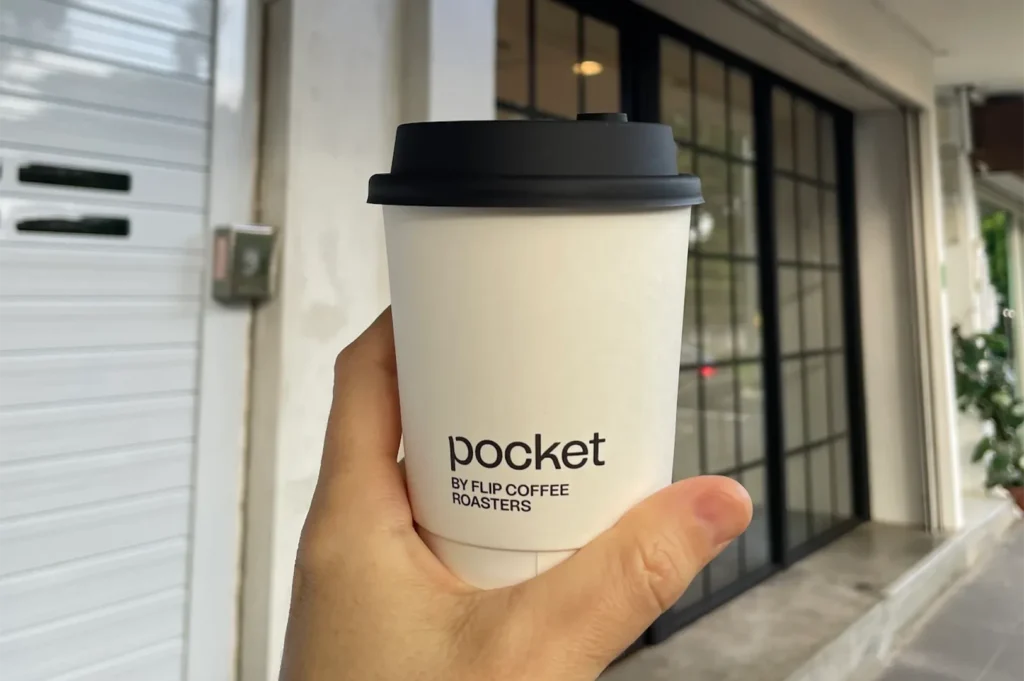
Singapore’s coffee culture has changed. More customers now want quality coffee without committing to a full sit-down meal. That is why takeaway-friendly design matters.
A cafe like Pocket by Flip Coffee Roasters needs to serve both quick coffee drinkers and those who want a short pause. This creates a tricky renovation challenge: takeaway customers move differently from seated customers.
Takeaway customers stand, hover, check their phones, ask about beans, collect cups, and leave. Dine-in customers want not to feel like they are sitting inside a queue.
If you mix these flows badly, the cafe feels chaotic even when it is not full.
For small cafe owners, I would suggest creating three clear zones:
- Decision zone: Where customers see the pocket by flip coffee roasters menu without blocking the entrance
- Transaction zone: Where they order and pay
- Waiting zone: Where they stand after ordering without interrupting the next customer
This sounds simple, but I’ve seen cafes spend $40,000 on finishes and forget to plan where five waiting customers will stand.
If you are comparing what makes a cafe in Singapore worth revisiting from a design point of view, this broader design round-up is useful because it shows how different cafes solve atmosphere, layout, and return visits in very different ways.
Reading the Pocket by Flip Coffee Roasters Menu Through a Renovation Lens
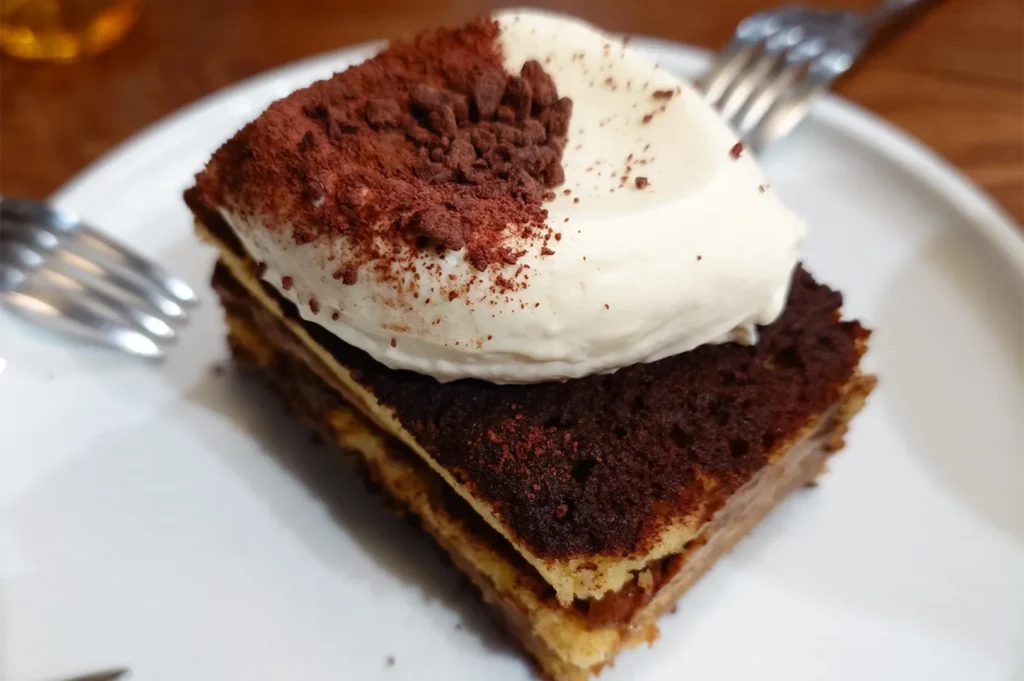
The pocket by flip coffee roasters menu is important because menu size directly affects renovation cost.
A focused coffee menu means you need less kitchen space, less exhaust planning, fewer prep counters, and less back-of-house storage. That lets you invest more in what customers actually see and feel: the coffee counter, lighting, seating edges, and materials.
For a cafe like this, customers usually come for:
- White coffee or flat white, often around SGD $5–$8
- Filter coffee, usually around SGD $7–$12 depending on coffee beans sourced from places like Ecuador with fruity flavours
- Espresso-based drinks
- Occasional pastries or toasties, often around SGD $4–$8
The toasties are a highlight and pair wonderfully with the coffee. The menu offers a Breakfast Toastie featuring homemade Italian sausage and scrambled eggs, perfect for a quick and tasty breakfast option that customers have consistently enjoyed. Alongside this, a Tomato Basil Cheese Toastie offers a simpler taste experience.
Realistically, expect to spend about SGD $10–$20 per person if you order coffee and a light bite.
The beauty of a restrained menu is that it supports operational clarity. You are not asking a tiny space to produce eggs benedict, pasta, waffles, grain bowls, and pour-overs at the same time. That restraint reduces stress for staff and creates a calmer customer experience.
I’ve found that the best compact cafes are honest about what they can do well. If your coffee is the hero, let the renovation frame the coffee.
Lighting, Openness, and Why Small Cafes Can Feel Expensive at Pocket by Flip Coffee
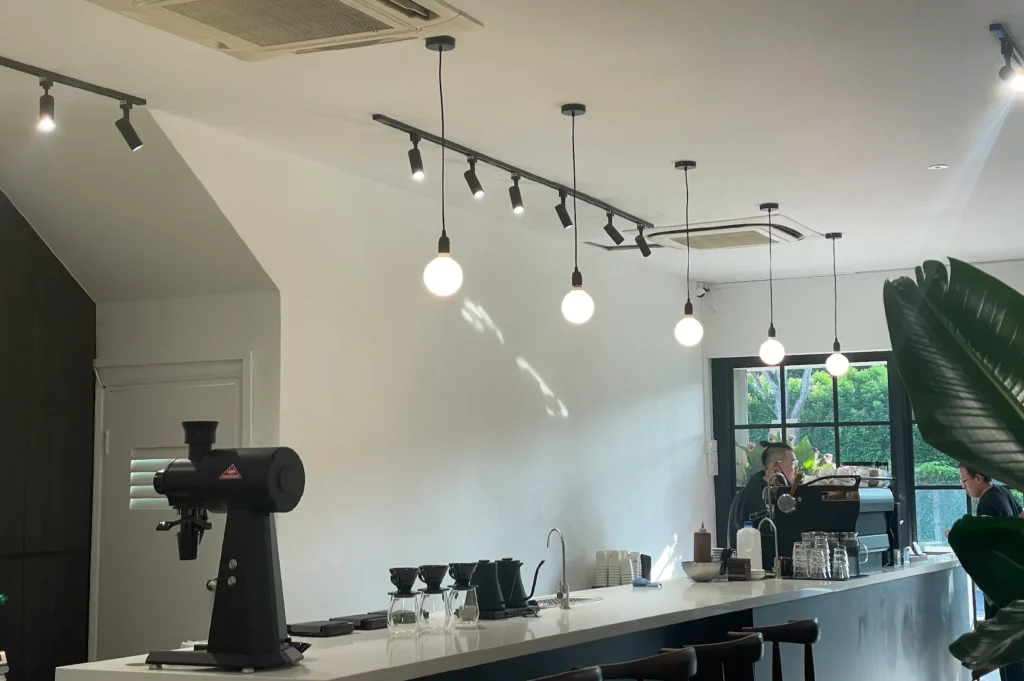
Lighting is one of the cheapest ways to make a compact cafe feel better.
Bad lighting makes a small room feel like a corridor. Good lighting makes it feel intentional.
For specialty coffee spaces, I prefer warm, soft lighting around 2700K to 3000K. It flatters skin tones, makes pastries look more appealing, and softens hard surfaces. You still need focused task lighting at the bar, especially near the espresso machine and brewing area, but the customer zone should not feel like a supermarket aisle.
Openness also matters. A small cafe does not need to expose everything, but it should reveal enough to make customers feel included. When people can see the baristas, coffee beans, and brewing process, the space feels more generous than its square footage.
This is similar to what I noticed in another minimalist coffee case study; you can read more here if you want to see how another compact coffee space uses restraint and workflow as part of its identity.
FAQ: Pocket by Flip Coffee RoastersIs Pocket by Flip Coffee Roasters good for long work sessions?
I would not treat it like a long laptop cafe. It is better for quality coffee, short catch-ups, and takeaway. If you need three hours with a laptop, choose a larger cafe with more seating.
Is a small cafe cheaper to renovate?
Not always. A small cafe can cost less overall, but the cost per square foot may be higher because every detail has to work harder. Custom carpentry, electrical work, plumbing, lighting, and storage can still add up quickly.
What should owners budget for a compact specialty coffee renovation?
For a small specialty coffee space in Singapore, I’d expect a practical range of SGD $80,000–$180,000 depending on condition, equipment, M&E works, carpentry, and finishes. A very lean setup may cost less, but if you want strong workflow and premium detailing, do not under-budget.
What is the biggest design priority?
Workflow. Always workflow. A beautiful cafe with poor movement will frustrate customers and exhaust staff.
Can a tiny cafe still become a destination?
Yes, if the product is strong and the space supports it. Pocket by Flip Coffee Roasters proves that compact does not have to mean forgettable.
Small Cafes Need Sharper Renovation Decisions at Pocket by Flip Coffee Roasters on Bukit Timah Road
Pocket by Flip Coffee Roasters is a helpful reminder that cafe renovation is not about making the loudest room. It is about making the right room.
A compact cafe can feel premium when the counter is placed well, the queue makes sense, the lighting feels warm, the menu is focused, and the customer understands how to move through the space without confusion.
In my opinion, that is the real lesson for cafe owners. Do not fight your small footprint. Shape it. Edit it. Respect it.
If you are planning a specialty coffee concept, start with your workflow, then your menu, then your lighting, then your materials. Leave out anything that does not support the customer rhythm.
Because sometimes the smallest cafes become the most memorable ones — not despite their size, but because they finally learned how to use it.