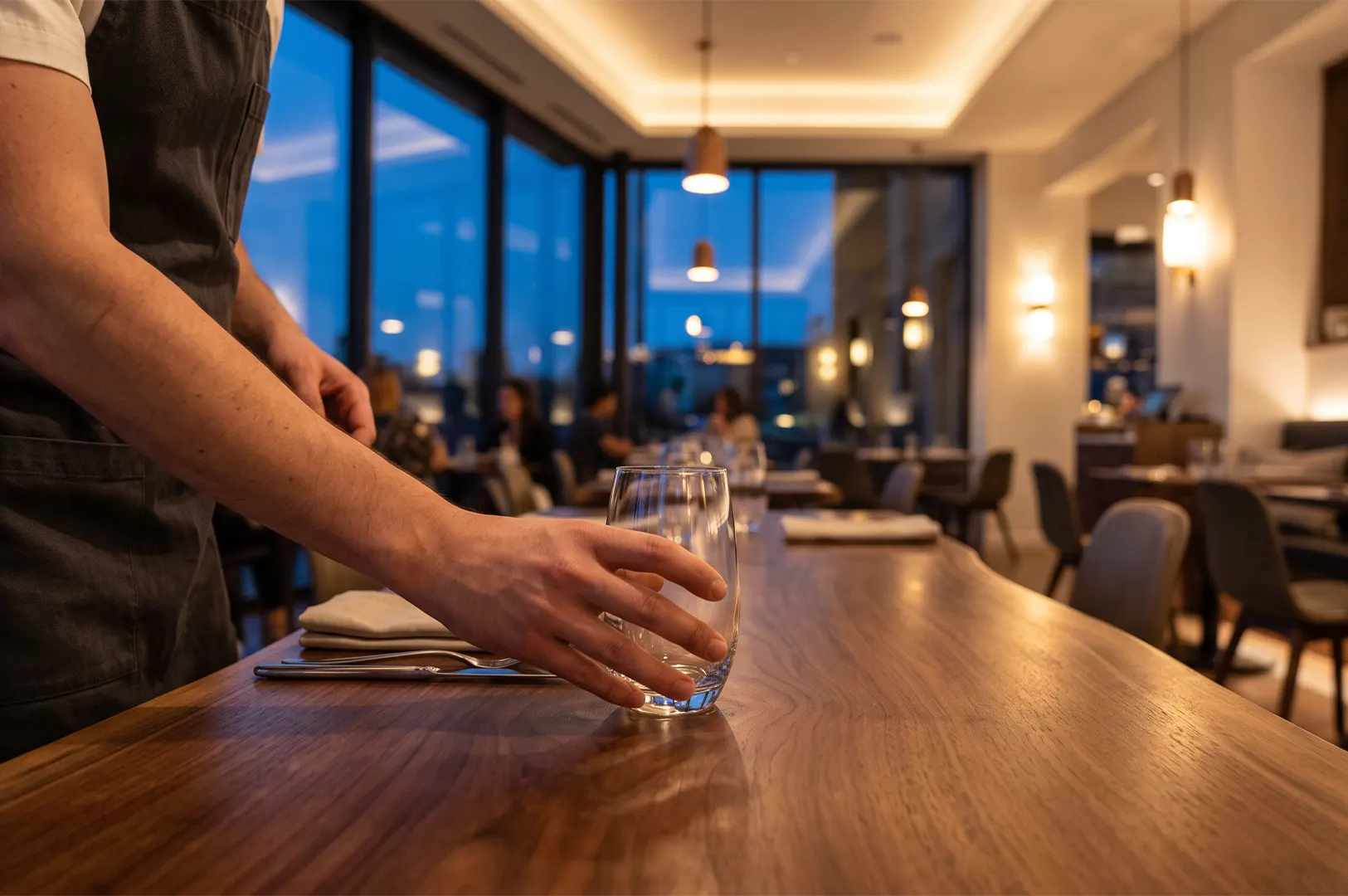

Why the First Weeks After Opening Matter
A restaurant can look finished before it is truly ready.
The walls are painted. The furniture is in place. The lights are working. The kitchen is finally free of construction dust.
Then the first real service begins.
And the restaurant starts revealing things that no drawing could predict.
A walkway that looked generous suddenly feels narrow when two servers pass with full trays.
A service station that seemed perfectly positioned becomes crowded during peak hours.
A table that looked comfortable in an empty room feels different when every surrounding seat is occupied.
These moments are not necessarily signs of a failed renovation.
They are part of the space finding its rhythm.
Construction creates the environment.
Service teaches the team how that environment actually works.
The first few weeks after reopening are therefore important. Staff begin noticing patterns that were impossible to see during construction.
Which areas feel natural?
Where does movement slow down?
Which tables are easiest to serve?
Where does equipment need to be closer?
Even small observations can lead to meaningful improvements.
A service counter may need to move slightly.
A table may need to shift.
A light may need adjusting.
Additional storage may become necessary.
These changes are often simple, but they can make the restaurant feel considerably more natural.
Guests experience the space differently too.
They notice whether the dining room feels comfortable. Whether conversations are easy. Whether staff move smoothly around them.
They may never know what changed behind the scenes.
They simply feel that the restaurant works.
This is why a renovation should not be judged only by the opening-day photographs.
A beautiful room is only the beginning.
The real test comes when every table is occupied, the kitchen is busy, and staff are moving at full speed.
That is when design becomes operational reality.
The best renovation teams understand that refinement can continue after construction ends.
A space becomes better through use.
It settles.
The team adapts.
Small adjustments become part of the restaurant's natural rhythm.
Eventually, the renovation stops feeling new.
It simply feels right.
For more on the pressure surrounding reopening, explore Before the First Guest Returns: The Quiet Pressure of Reopening Day.