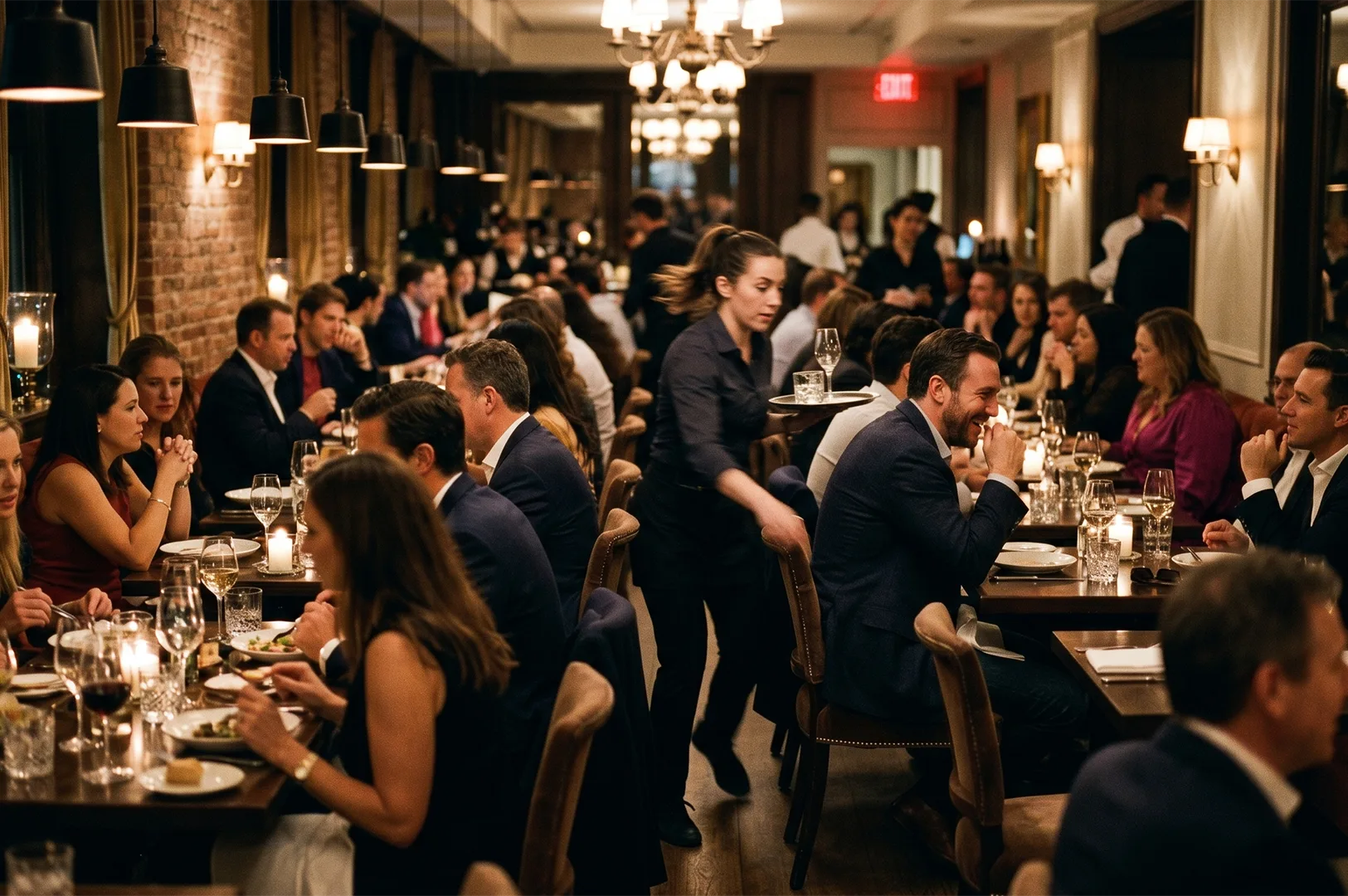

The Restaurant That Forgot How to Breathe
Some restaurants do not fail loudly.
They do not lose their magic in one dramatic moment. No wall collapses. No guest storms out. No team meeting ends with a grand confession that the space is no longer working.
Instead, the restaurant simply starts to feel tight.
The entrance feels crowded at dinner. Servers move sideways between tables. Guests wait awkwardly near the door because there is nowhere natural to stand. The kitchen pass becomes a traffic point. Chairs scrape too often. Conversations feel interrupted by movement.
At first, everyone adjusts.
The team learns to squeeze through. The host learns to smile through the queue. The owner tells themselves it is a good problem to have because a busy restaurant should feel full.
But there is a difference between full and breathless.
A restaurant needs rhythm. It needs places where people can arrive, pause, move, sit, eat, pay, and leave without feeling pushed along by invisible pressure. When the layout does not allow that rhythm, the whole restaurant begins to carry tension.
Guests may not describe it as a design issue. They may simply say the place feels stressful. They may love the food but hesitate to return during peak hours. They may remember the meal, but also remember the feeling of being too close to the next table or too exposed near the entrance.
This is where renovation becomes more than a visual refresh.
It becomes a way of giving the restaurant back its breath.
Sometimes the solution is not dramatic. A host counter shifts slightly. A waiting zone is created near the entrance. Tables are reduced by one or two. Service stations are repositioned so staff do not cross the same path every few seconds.
These changes can feel small on paper.
Inside the restaurant, they are enormous.
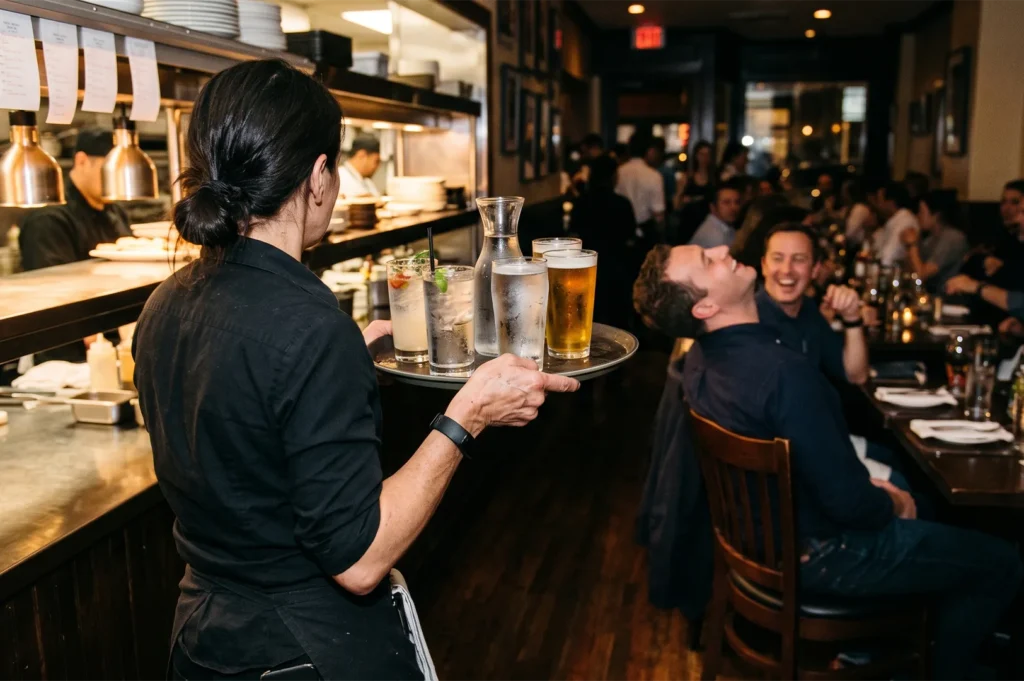
Flow is one of those design qualities people feel before they understand. A good entrance does not just look welcoming. It slows the guest down gently. It gives them a moment to arrive before they are seated. A good dining layout does not simply maximize seats. It allows people to settle into the room without feeling like part of a puzzle.
The same is true for staff.
A tired team often knows the space is wrong before anyone else does. They feel it in their feet, shoulders, timing, and patience. They know which corner causes collisions. They know which table is hardest to serve. They know when the layout makes them look less graceful than they really are.
Restaurant renovation should listen to those clues.
A beautiful space that does not move well will eventually reveal itself. The lighting may be perfect. The chairs may be stylish. The walls may photograph beautifully. But if the restaurant cannot breathe, the guest experience will always feel slightly strained.
The best renovations do not only ask, “How should this place look?”
They ask, “Where does the pressure gather?”
That question changes everything.
It reveals the entrance that needs softening, the walkway that needs widening, the table that should never have been placed there, and the service path that quietly slows the entire room.
A restaurant that breathes well feels calm even when it is busy.
That is the goal.
Not emptiness. Not silence. Not perfection.
Just enough space for the room to move like it knows what it is doing.
For a deeper look at arrival flow, read Restaurant Entrance Flow Design: Creating Seamless Transitions From Street to Seat.