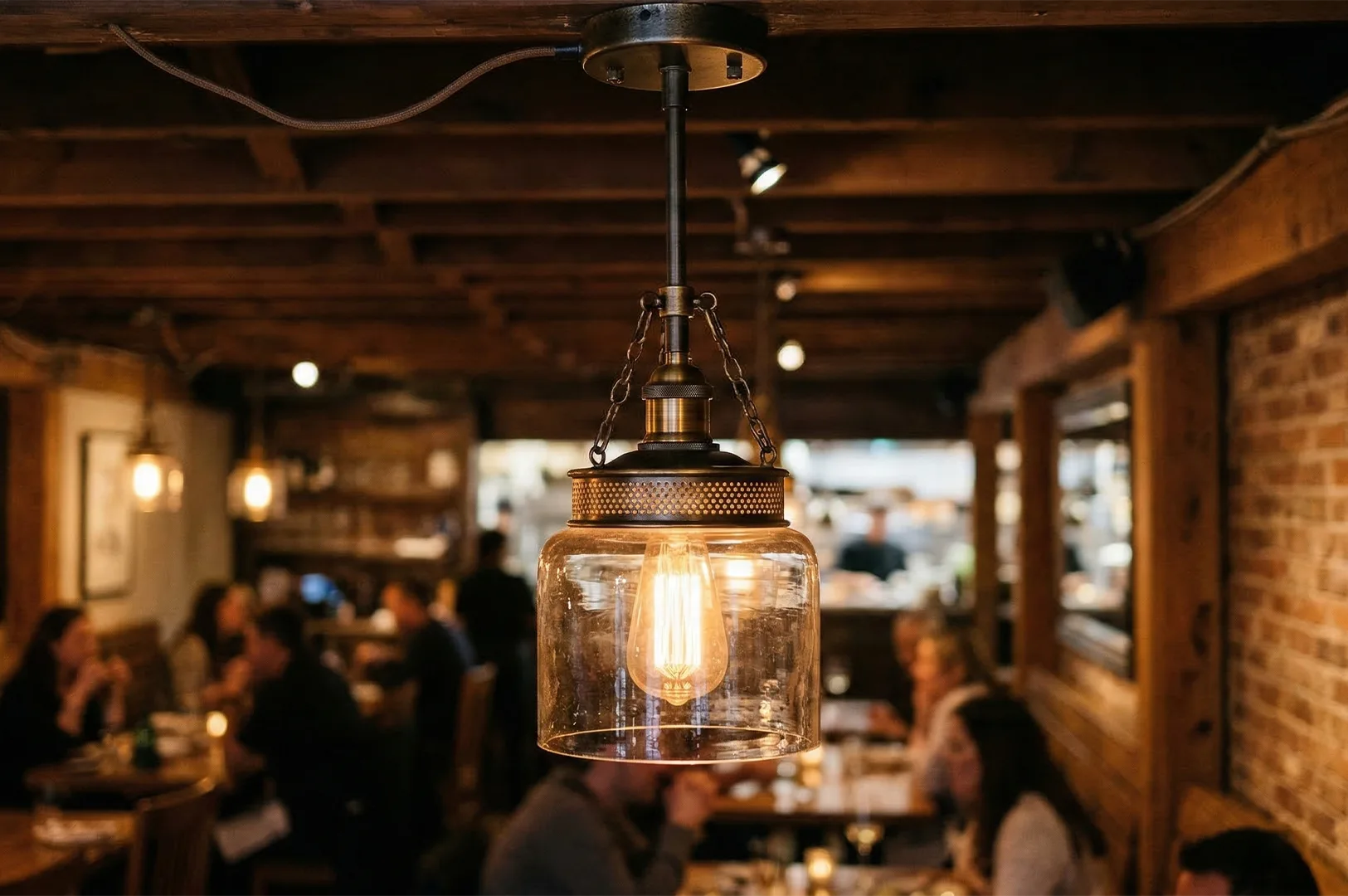

When I first got involved in restaurant renovations here in Singapore, I thought lighting was a straightforward choice, pick something bright enough, and you’re done. But I quickly learned dining lamps are much more than just light sources. They shape the entire dining experience; from the mood and brand identity to how the food looks and even how long customers stay. If you’re planning to renovate or start a restaurant in Singapore, understanding dining lamp Singapore options can save you time, money, and headaches.
How Lighting Shapes Experience in Singapore Restaurants
Ambience & Brand Identity: Lighting Tells Your Story
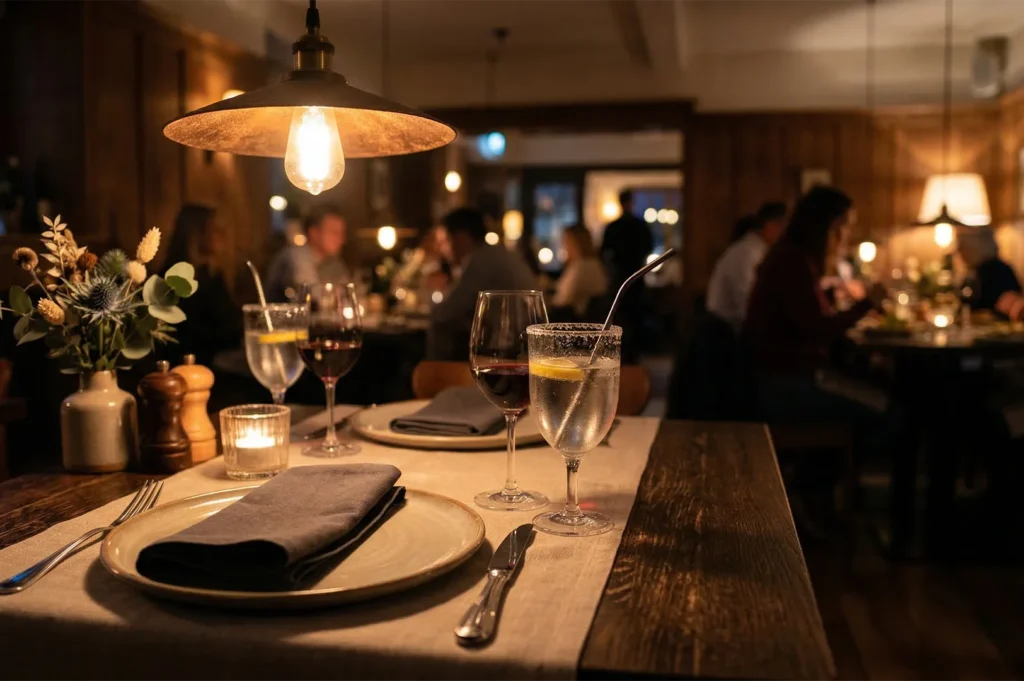
I once visited this cozy fine dining spot in Dempsey Hill, and the warm, soft glow (around 2700K) just made everything feel so intimate and special. It’s not just about seeing the food; it’s about the whole vibe. Perfect for date nights or fancy places.
Then there’s this casual café in Tiong Bahru with neutral lighting (3000K–3500K) that’s bright but chill—great for brunch or hanging out. And for fast-casual spots, brighter white lights (3500K–4000K) keep things lively and efficient.
Here’s a tip: think of your dining lamps and hanging lights as storytellers. Pick ones that match your restaurant’s vibe and the mood you want guests to feel. The right pendant lamps really lift the whole space with style and warmth.
Food Presentation: Lights That Enhance and Illuminate
I learned this the hard way during a food shoot—the lighting was too cool and harsh, and the dishes looked dull. Since then, I swear by warm lighting (2700K–3000K) because it brings out those golden tones—crispy chicken, buttery pastries, you name it. Cool lights can make food look off, which is a no-no in Singapore’s Instagram food culture.
Many restaurants tweak their dining lamps just to make their food pop on social media, and it really helps bring in the crowd.
Customer Comfort & Table Turnover: Finding the Sweet Spot with Pendant Lights
Lighting also affects how long people stick around. Dimmer, warmer lights make diners relax and stay longer—great for romantic or fine dining spots. Brighter, cooler lights speed things up during busy lunch hours.
Some places even use adjustable lighting systems to switch between bright lunch vibes and cozy dinner moods. Small investment, big payoff in flexibility and atmosphere.
Careful Considerations in Singapore Dining Room Lighting and Pendant Lights
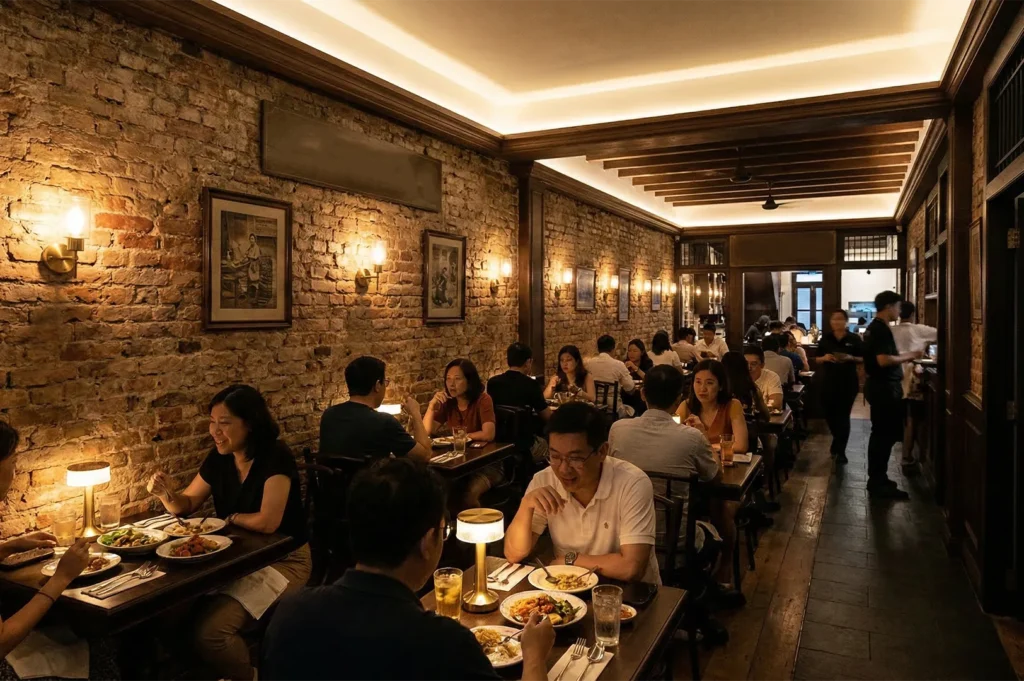
In Singapore, restaurateurs must consider regulatory standards and supply chain factors when choosing dining room fixtures. Electrical installations need Building and Construction Authority approval, and fixtures must suit local voltage. Import costs, delivery times, and contractor availability impact budgets. Oversized pendant lamps in small spaces can cause clearance problems and damage risks.
Exploring Dining Lamp Options for Singapore F&B Spaces
Pendant Lamps: The Workhorse of Dining Areas
Pendant lamps are everywhere in Singapore’s dining scene. I’ve seen them done right at PS.Cafe, where they spotlight individual tables or communal dining areas beautifully.
Popular styles include:
- Minimalist matte black pendants — sleek and modern
- Rattan and natural textures — perfect for tropical or casual vibes (think The Coastal Settlement)
- Industrial metal finishes — edgy and durable, great for hip cafés
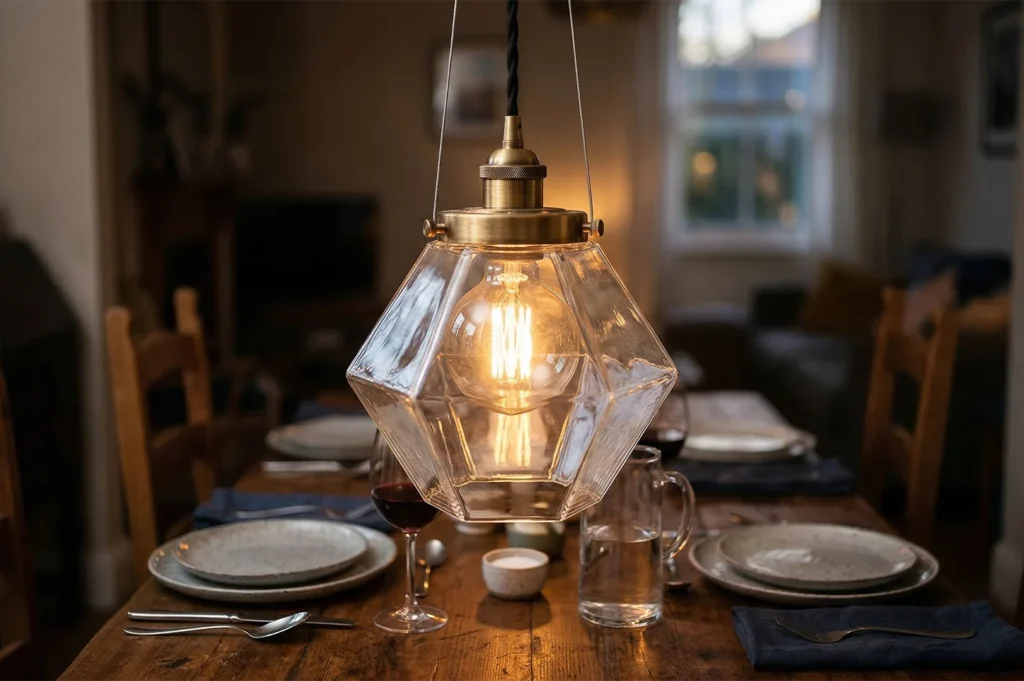
- Glass globe pendants — classic elegance, seen at The White Rabbit
- Japandi-inspired neutrals — soft, calming, and trendy
Pendant lights designed in a modern lantern form are making a comeback, blending local culture with contemporary design. Many pendant lamps are built with precision and quality in Singapore, ensuring durability and superior craftsmanship. Our dedicated team can help you choose and customize the perfect pendant lamp to fit your dining vision and room size.
Insider knowledge: Hang pendant lamps about 750mm–900mm above the dining table. Too low, and they block views; too high, and the light loses focus.
Chandeliers: Luxury and Drama as Statement Pieces
Chandeliers might seem intimidating or old-fashioned, but modern designs are changing the game. Linear chandeliers work well over long tables in hotel restaurants, while LED crystal designs blend tradition with innovation. These statement pieces transform dining areas into elegant spaces with depth and character.
Wall Sconces: The Subtle Layer to Complement Your Space
Wall sconces are underrated but essential for layering light. They soften harsh ceiling lights and create cozy corners, especially in private dining rooms inspired restaurants in Singapore.
If you’re working with a shophouse with low ceilings, sconces help reduce glare without taking up space, enhancing the ambiance without sacrificing functionality.
Track Lighting: Functional and Flexible for Dynamic Spaces
Track lighting is more about utility but still important. It’s common in modern cafés and open kitchens where layouts change often. You can reposition fixtures easily—a big plus for evolving concepts and events.
Table Lamps: Intimacy on Demand in Dining and Living Spaces
Table lamps are trending in upscale spots like Dempsey Hill’s dining rooms. They create intimate pockets of light and define personal dining spaces. Battery-operated or rechargeable models are popular here due to wiring challenges in heritage buildings.
Matching Lighting to Layout, Load & Compliance
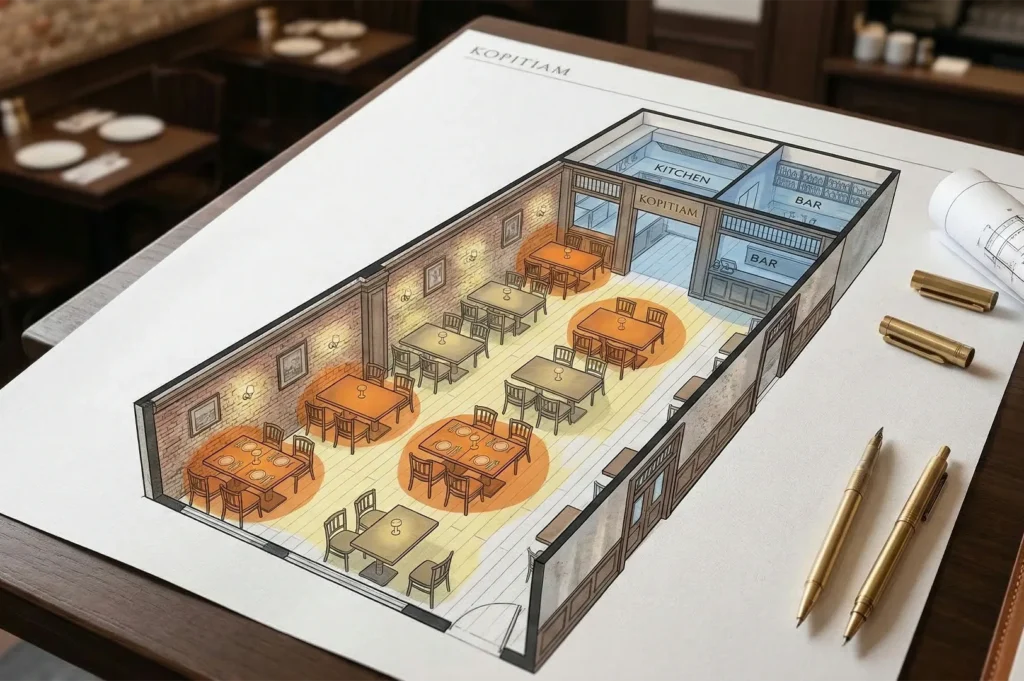
Lamp selection requires a systematic evaluation of operational requirements and compliance considerations. Begin by establishing functional specifications—determine whether the installation must provide task lighting for work areas, ambient lighting for general operations, or accent lighting for specific zones. Consider long-term durability and maintenance costs when evaluating materials and finishes.
Glass components present breakage risks and cleaning requirements, while metal fixtures require corrosion resistance verification in humid environments. Natural finishes may deteriorate without proper treatment, affecting replacement schedules and operational budgets. Colour temperature and lumen output must align with workspace requirements—inadequate illumination creates liability exposure, while excessive brightness increases energy costs without operational benefit.
Lighting Temperature & Technical Must-Knows for Dining Lamp Singapore
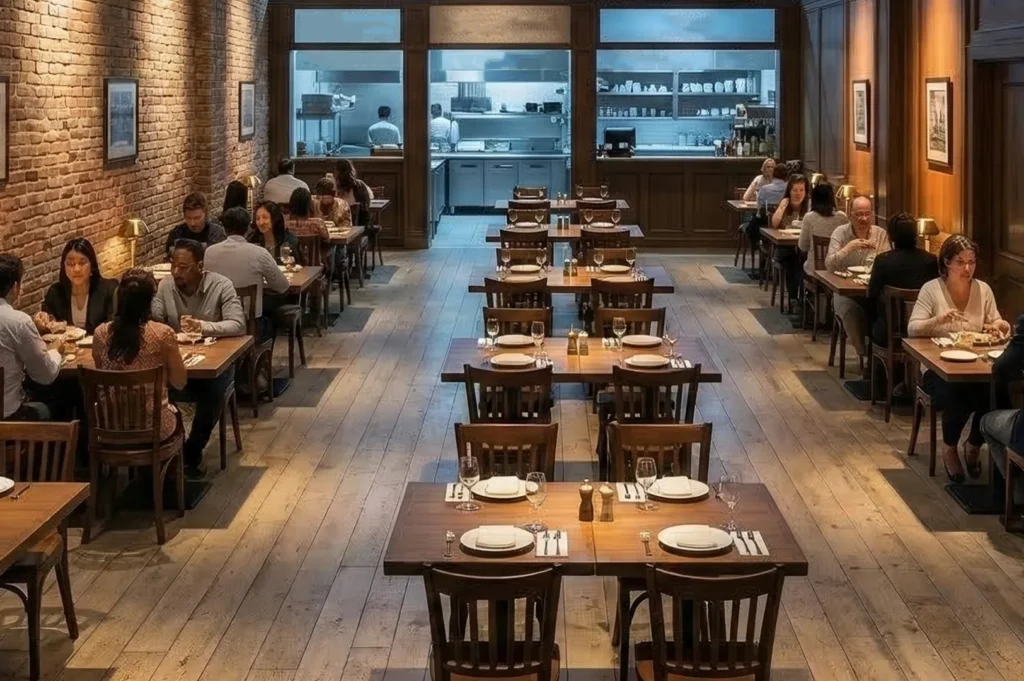
Color Temperature (Kelvin Scale)
Here’s a quick cheat sheet I use when advising clients:
| Restaurant Type | Recommended Kelvin (K) |
|---|---|
| Fine Dining | 2700K–3000K |
| Casual Dining | 3000K–3500K |
| Café | 3000K |
| Fast Casual | 3500K–4000K |
| Singapore’s warm climate means some places lean toward slightly cooler neutral tones to balance the tropical heat. |
Lux Levels
Dining tables usually need 150–300 lux for comfortable visibility. Accent lighting can be higher to showcase special dishes.
Glare Control
Glare is a common problem in Singapore’s low-ceiling shophouses. Avoid exposed bulbs at eye level and reflective metallic surfaces. I’ve seen many restaurants lose customers’ comfort due to harsh lighting.
Pro tip: Use frosted glass or diffusers to soften the light and reduce glare.
What’s Hot in Dining Lamp Trends for 2026? Explore Pendant Lamps and Hanging Lights
Japandi & Soft Minimalism
Neutral palettes, matte finishes, and soft diffused light dominate. Dining lamp trends in Singapore for 2026 blend artistic expression, smart technology, and cozy ambiance. Brushed gold, bronze, and copper replace cold chrome, adding warmth to dining areas. Ribbed or frosted glass globes soften light, creating a retro-inspired look that enhances both floor space and interiors.
Sculptural Statement Pieces
Oversized pendants and organic, art-inspired forms add drama. Pendant lights and chandeliers act as functional art, often featuring organic, asymmetrical, or geometric shapes. Sculptural, curved forms are replacing sharp angles, using arched and natural lines. Geometric shapes like asymmetrical rings and spheres are trending for smaller spaces, while a single, large, bold statement fixture is preferred over multiple small ones in minimalist dining rooms.
Layered Lighting
Combining ambient, task, accent, and decorative lighting adds depth and creates photo-ready spaces. Layered lighting with main pendants, accent lights, and cove lighting makes small dining areas feel larger and more dynamic. Cove lighting using indirect LED strips enhances spaciousness in compact Singapore homes. Linear pendants with integrated LEDs are popular for rectangular dining tables or kitchen islands, offering clean modern lines.
Sustainable Materials
Rattan, bamboo, recycled metals, and eco-certified LEDs are trending. Lampshades made from natural materials like rattan, bamboo, wood, linen, and woven fibers create calming environments. Combining contrasting materials such as matte black with brushed brass or glass with wood adds texture and warmth, enhancing various interiors.
Budgeting Your Dining Lamp Project in Singapore
Here’s what I’ve seen costs look like:
- Basic pendant lights: SGD $80–$250 each
- Mid-range designer fixtures: SGD $300–$800 each
- Custom or sculptural pieces: SGD $1,000+ each
- Full dining lighting renovation (depending on size): SGD $8,000–$40,000+
Installation complexity, wiring needs, and design customization can significantly affect your budget.
Lighting Errors That Cost Restaurants Money
- Prioritizing looks over function (I once bought beautiful pendants that were too dim for the space)
- Overlighting with too many fixtures, making the room feel harsh
- Ignoring glare control, causing discomfort
- Mixing inconsistent color temperatures that confuse the mood
- Forgetting to plan for dimming controls, losing flexibility
The Bottom Line on Restaurant Lighting Strategy
Lighting is often the last thing people think about in renovations, but it’s one of the most powerful tools you have. Done right, dining lamps don’t just illuminate—they tell your restaurant’s story, enhance your food’s appeal, and shape your customers’ experience.
We have received positive feedback from customers who appreciate how our dining lamps have enhanced their spaces. Many reviews highlight that the dining lamps are easy to install and look beautiful in various settings. The right lighting solution has turned ordinary dining areas into customized, aesthetically pleasing environments that elevate the overall ambiance.
Remember, the right dining lamp can turn a simple meal into an unforgettable memory—and that’s priceless.
Happy lighting! Feel free to ask if you want recommendations on specific fixtures or retailers in Singapore. I’m here to help. Visit Restaurant Renovations for expert guidance and tailored lighting solutions.
FAQs About Dining Lamp Singapore and Pendant Lights
Q: How high should pendant lights hang above dining tables?
A: Aim for 750mm–900mm (about 75–90 cm) above the table surface for optimal effect. Too low, and it’s obstructive; too high, and the light loses focus.
Q: What type of dining lamp suits my table shape?
A: For rectangular tables, use linear pendants to evenly distribute light. For round tables, central chandeliers or globes help maintain visual balance.
Q: Can I mix different types of dining lamps?
A: Absolutely. Layering pendant lights with wall sconces and table lamps creates a rich, inviting atmosphere.
Q: Are LED lights really worth the investment?
A: Yes. They save energy, reduce heat, last longer, and often come with dimming features.
Q: What if my restaurant has low ceilings?
A: Consider flush or semi-flush ceiling fixtures and wall sconces to avoid crowding the space.
Q: Where can I shop for dining lamps in Singapore?
A: You can browse a wide variety of dining lamps in Singapore, with convenient options and curated collections to suit different styles and needs.