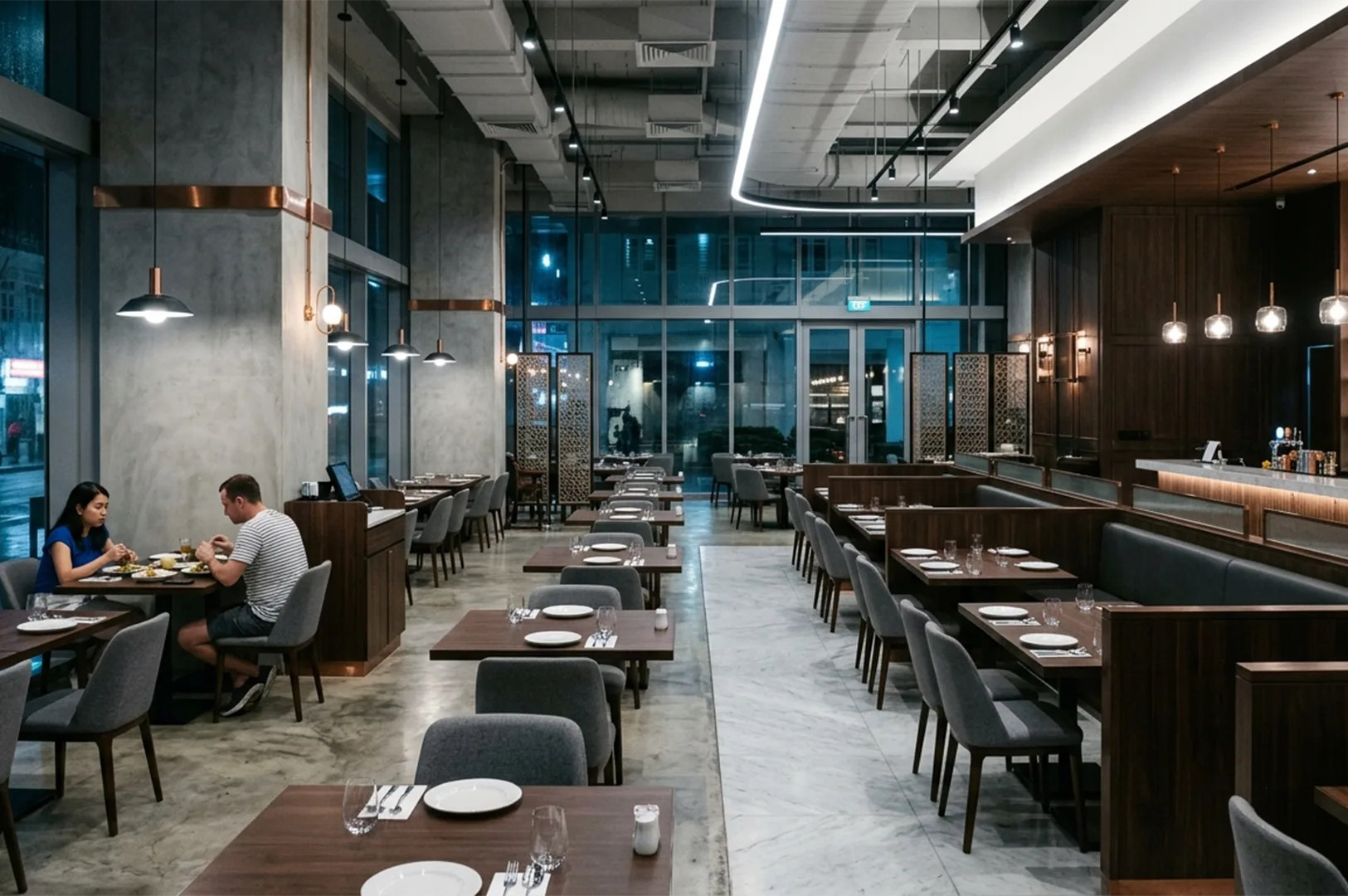

If you have ever sat in a restaurant with excellent food but felt strangely eager to leave, you are not imagining it. In Singapore, where dining options are endless and expectations are high, the feeling of a space often decides whether a guest stays for dessert, returns next week, or quietly disappears forever.
Many owners believe the menu is the hero. It is important, yes, but in a competitive market, your space is the first dish your customer consumes. Before the first bite, they have already judged the lighting, the seating comfort, the noise level, the table spacing, and whether the room feels alive or awkward. Design is not decoration. It is behaviour control.
In compact cities like Singapore, every square foot must work harder. A cramped layout can make guests feel rushed. A wide but empty layout can make the room feel cold. Harsh ceiling lights can flatten every dish and every face. If your acoustics bounce sound around the room, guests subconsciously shorten their stay because conversation becomes tiring. This is not just a vibe issue. It is a revenue issue.One common mistake is designing for social media photos only. A dramatic neon wall might look stunning online, but if the chairs are uncomfortable and the aisle is too tight for service flow, your operation suffers daily. Instagram gets attention. Ergonomics gets repeat business. The best spaces balance both.
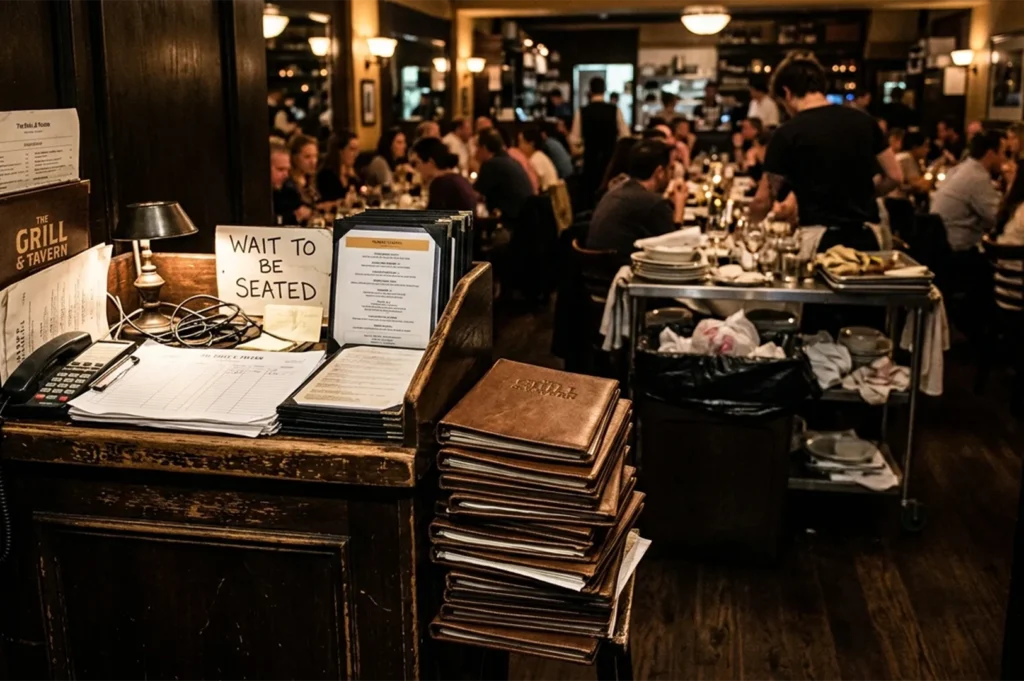
Another hidden issue is entrance psychology. In many local malls and shophouse units, the first five steps into a restaurant determine whether people commit. If the host stand blocks the path, if there is no clear visual anchor, or if the first thing guests see is a messy service station, they hesitate. Hesitation kills conversion. This is why smart renovations focus on sightlines, not just style boards.
Singapore diners are also highly sensitive to thermal comfort. If one side of your dining room is too warm because of kitchen heat leakage or poor air distribution, those tables become dead zones. You can discount all you want, but no one enjoys sweating over a bowl of ramen. The same goes for ventilation and odour control. Good food smells great at the table, but stale grease in the air makes a place feel old, no matter how new the furniture is.
There is a practical way to diagnose whether your design is helping or hurting. Observe your guests in 20-minute intervals. Where do they pause? Which tables get requested most? Which seats turn over fastest? Where do servers bottleneck? Your floor plan is talking to you every day. Most owners just do not know how to listen.
If you are planning a renovation, start with customer behaviour, not colour palettes. Ask:
- Where do we lose people at the entrance?
- Which seats underperform and why?
- Where does service slow down during peak hour?
- What makes guests leave before ordering drinks or dessert?
Then build the design around those answers. This is how high-performing restaurants in Singapore think. They do not chase trends. They engineer outcomes.
For a useful benchmark, look at how environmental comfort standards shape occupancy and satisfaction in commercial spaces. The National Environment Agency provides guidance on indoor environmental quality that affects comfort and air quality in food establishments.
The truth is simple. People return to places that make them feel good, not just places that feed them well. In a city where everyone can cook, deliver, and discount, your space is your advantage. If your restaurant feels empty despite good food, the problem may not be your kitchen. It may be your room.Learn more in: Why Some Renovated Restaurants Look Better Online Than in Person