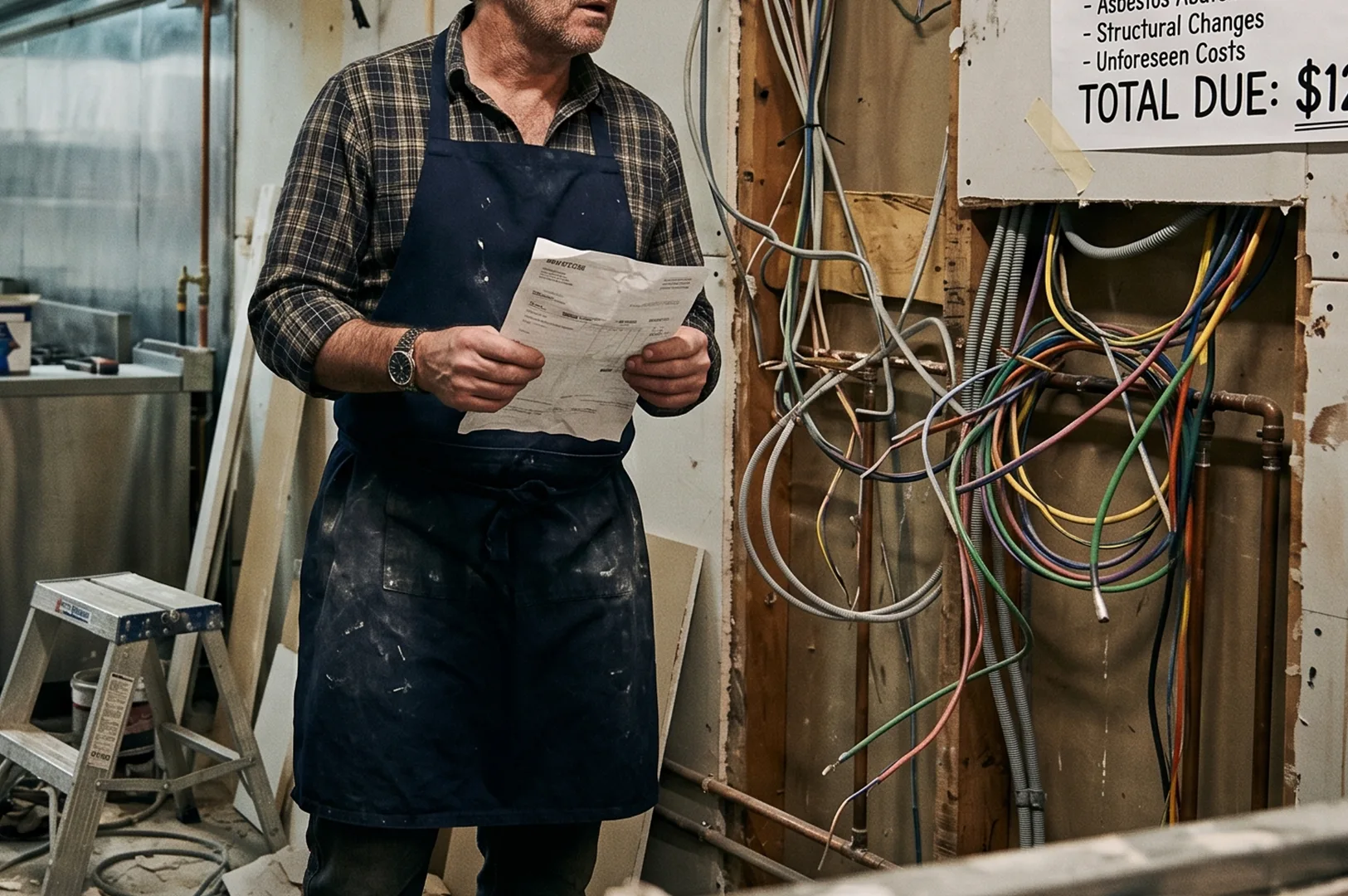

Every restaurant owner in Singapore has seen it. Three renovation quotes land in your inbox. One is shockingly low. One is mid-range. One is expensive enough to make you close the tab. Most people choose the cheapest or the middle and hope for the best.
That decision can cost you months of delay, surprise variation orders, and a launch that bleeds cash before your first weekend.
The biggest myth in F&B renovation is that a quote is a fixed number. It is not. A quote is a story. It tells you what is included, what is excluded, and what the contractor assumes you will discover too late. Cheap quotes are often not cheap. They are incomplete.
Here is what usually gets left out.
First, M&E coordination. In a restaurant, mechanical and electrical work is not a side detail. It is the backbone of your operation. If the quote does not clearly account for power load upgrades, dedicated circuits for equipment, grease trap requirements, and ventilation integration, you will pay later. Usually at the worst time, when walls are already closed.
Second, authority submissions and compliance. Singapore regulations are strict for good reason. Fire safety, exhaust systems, and food hygiene standards must be planned properly. Some contractors underquote by excluding submission work or pricing it vaguely. Then the “extra” appears when approvals take longer than expected. Delays are not neutral. Every delayed day is rent without revenue.

Third, material substitution. A low quote may list premium-looking finishes but hide the exact brand, thickness, or grade. Once work starts, you hear the familiar line: “This one no stock, we use equivalent.” Equivalent often means lower durability, worse maintenance performance, and a look that ages badly in six months.
Fourth, project management. Many low-cost contractors rely on fragmented subcontractors with weak coordination. You may think you are saving on overhead, but what you lose is accountability. If tiling is delayed, electrical cannot proceed. If carpentry dimensions are wrong, the kitchen line stalls. If no one owns the master schedule, everyone blames everyone.
This is where owners get trapped. They compare quotes line by line, but they do not compare execution quality. A proper comparison should include:
- Timeline realism with milestones
- Named materials and specifications
- Clear exclusions
- Defect liability terms
- Site supervision frequency
- Variation order process
If these are missing, your quote is not a quote. It is a teaser.
Another hidden cost is emotional fatigue. Renovation stress drains your focus from hiring, menu testing, supplier onboarding, and marketing. By the time you open, you are exhausted and reactive. The cheapest quote can become the most expensive because it steals your launch momentum.
In Singapore’s current environment, labour availability and lead times can shift quickly. This is why professional planning matters more than bargain hunting. You are not buying paint and tiles. You are buying certainty.
For practical guidance on fair contracting and dispute prevention, the Consumers Association of Singapore (CASE) provides useful advice on renovation agreements and complaint handling.
The smart move is not to pick the lowest quote. It is to pick the quote with the lowest risk-adjusted cost. Sometimes that is the mid-tier contractor with the strongest documentation. Sometimes it is the premium team that can finish on time and reduce your pre-opening burn.
A restaurant renovation is not a shopping trip. It is an operational investment. If your quote looks too good to be true, it usually means the bill has not arrived yet. Learn more in: The Hidden Dangers of Hiring a Blacklisted Renovation Company in Singapore