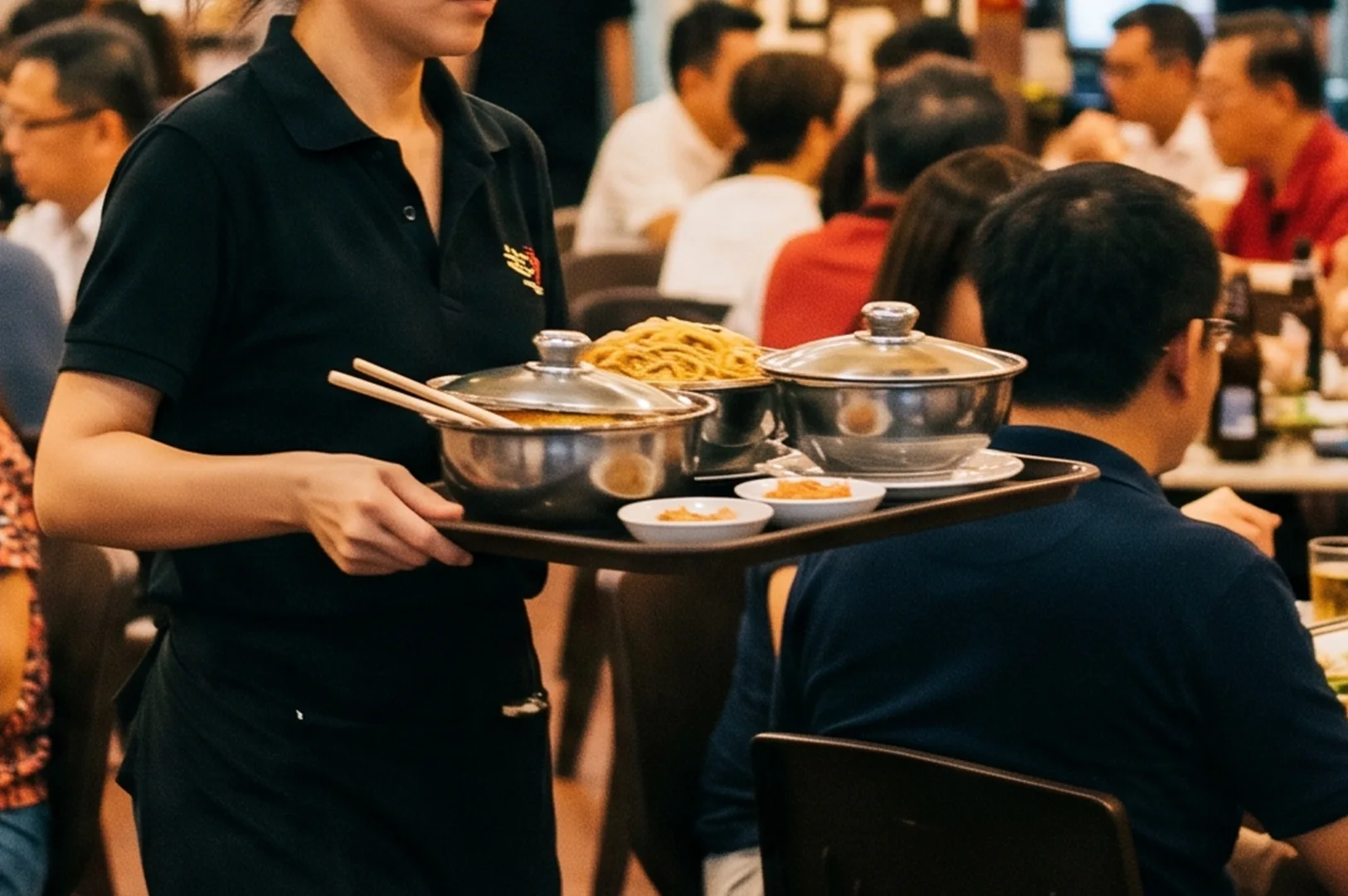

I often reflect on a conversation I had with an ambitious restaurateur opening her second venue along Keong Saik Road. She had just spent six months enrolled in a local interior design class Singapore, eager to draft her own floor plans. When the space finally opened, the velvet banquettes looked beautiful, but the waitstaff were constantly colliding near the kitchen pass, and the ambient lighting made the food look strangely muted.
She had learned the theory of aesthetics, but missed the rigorous operational realities of a commercial F&B space.
It begs a common question among operators: is enrolling in an interior design class Singapore actually worth your time, or does it merely offer a false sense of security? Before you invest your hours into a formal interior designing course in Singapore, it is crucial to understand what these programs teach, what they leave out, and how to decide whether you need a classroom or a professional consultant.
Taking an Interior Design Class Singapore: A Worthwhile Pursuit in Design Education?

For a restaurant owner, the motivation to learn design usually stems from a desire for control and a fear of escalating renovation costs. You want to understand the language of contractors and ensure your vision is not compromised.
However, many interior design schools in Singapore cater primarily to residential styling or conceptual design. A beautifully styled living room operates entirely differently from a high-volume dining room that must turn tables three times a night while adhering to strict fire safety and ventilation codes. Many interior design students choose their interior design program based on their career aspirations, ensuring the curriculum aligns with their long-term professional goals. The goal of an operator taking a course should never be to become the sole architect of the project. Instead, it should be to acquire enough fundamental knowledge to ask the right questions, understand spatial trade-offs, and communicate effectively with industry professionals.
Additionally, the selection process for interior design programs may include interviews, aptitude tests, or practical exercises to assess candidates’ suitability.
The Role of Design Education in the Built Environment and Interior Architecture
When you step into formal design education, you are introduced to the fundamental principles of spatial design, color theory, and building materials selection. Students learn critical thinking and develop design skills to tackle complex design challenges and create innovative design solutions that balance aesthetics, functionality, and user needs. This is incredibly valuable for articulating your brand’s identity.
Yet, translating those concepts into the built environment of a restaurant requires a different lens. You must view interior spaces not just as a canvas, but as an operational machine. Learning how to layer lighting or select a complementary neutral palette is helpful. But if the course does not address construction methods, construction technology, environmental sustainability, ethical impact, and the integration of technological innovation in the curriculum, or how a layout impacts table turnover efficiency, you will find yourself ill-equipped for the realities of the built environment sector.
Professional skills, project management, and technical documentation are also emphasized to prepare students for real world applications and successful careers in the interior design industry.
Successful interior designers must possess a blend of technical skills, including proficiency in software applications for 2D and 3D computer-aided design (CAD) and visualization, alongside creative problem solving skills. Being detail-oriented and capable of critical thinking is essential for addressing design challenges and creating user-centered spaces that are both functional and aesthetically pleasing.
From Short Courses to a Diploma in Interior Design in the Fine Arts

Singapore offers a spectrum of educational pathways, from short courses to comprehensive diploma, bachelor’s, and master’s degree programs in interior design, each with unique strengths and specializations. Admission to these programs often requires passing relevant subjects such as Art, Design & Technology, or Mathematics.
If your goal is simply to understand design basics and communicate better with your interior designer, short courses or weekend workshops are ideal. They focus on space planning and visual communication without demanding a complete lifestyle shift. For those seeking more structured education, institutions like Nanyang Academy of Fine Arts (NAFA), Singapore Polytechnic (SP), Temasek Polytechnic (TP), and Ngee Ann Polytechnic (NP) offer distinctive approaches: NAFA is known for its hands-on learning and strong industry partnerships, SP emphasizes practical, industry-oriented training, TP takes a business-oriented approach with its Diploma in Interior Architecture & Design, and NP focuses on technological innovation and sustainability in its Diploma in Interior Design.
Conversely, some operators consider pursuing a formal interior design diploma at institutions renowned for the fine arts. These programs delve deeply into technical documentation, construction technology, and creative problem solving over several years. An interior design diploma is significant for career progression, offering diploma graduates pathways to advanced standing and industry engagement. Such programs emphasize industry insights, collaborative design studio experiences, and professional practice modules to prepare students for real-world challenges. While excellent for those seeking to become full-time practitioners, a multi-year diploma is rarely the right strategic move for a busy restaurateur whose primary focus must remain on business operations and guest experience.
Exploring Certificate Programs for Restaurant Owners in the Built Environment Sector
During quiet moments between services, many restaurant owners notice a gap between their design vision and reality. Certificate programs in interior design offer a practical way to develop essential spatial skills without years of study. Institutions like the Singapore Institute of Technology and LASALLE College of the Arts tailor these programs to address hospitality challenges, focusing on spatial design, material selection, and visual communication that support service.
These programs fit busy schedules and tackle hospitality design pressures—guest movement, ambiance effects, and durable building materials. They emphasize sustainable design choices that balance aesthetics with long-term operational needs.
The real value lies in creating spaces that enhance daily operations. Owners completing these courses often see improvements in staff efficiency, guest comfort, and interiors that endure heavy use. This practical design education quietly boosts service quality and the overall guest experience.
Navigating the Application Process and Early Admissions Exercise as an Operator
If you do decide to pursue formal technical education, you will encounter a structured application process. While typical students might navigate an early admissions exercise to secure their spot, adult learners and business owners often have different entry pathways.
Rather than focusing on compiling a massive portfolio to impress an admissions board, focus your energy on vetting the course structure. Ask the institution if their curriculum emphasizes commercial spaces and technical skills based on real-world applications, rather than purely conceptual design projects.
Real-World Design Practice in the Built Environment Sector
The true value of any design practice lies in its application to your daily operations. A worthwhile course will shift your perspective on what constitutes good design practice.
You will learn that selecting an eco-friendly building material is not just an ethical choice, but an operational one—how does that material withstand daily industrial cleaning? You will begin to look at floor plans and immediately identify potential bottlenecks in the service flow. The most crucial skills you can extract from a classroom are an understanding of minimum walkway widths, the psychological impact of lighting, and the spatial requirements for functional back-of-house operations.
Weighing Career Options and Seeking Advanced Standing

For some, an introductory course sparks a deeper passion, leading to thoughts of diverse career paths within the industry. Graduates of interior design diploma and degree programs can pursue roles such as design managers, project managers, design researchers, service designers, and business strategists in the interior design and exhibition design industries, with exhibition design being a specialized path involving the creation of displays and exhibits for museums, trade shows, and retail environments. If you find yourself wanting to transition fully into spatial design, you might look into gaining advanced standing in a formal degree program based on your industry experience.
But for most restaurant owners, your career options remain firmly rooted in hospitality design. The goal is to use fundamental knowledge to elevate your current business. You learn enough to draft a coherent brief, and then you step back and hire technical experts to execute the vision safely and legally.
Entry-level interior design graduates in Singapore typically earn between S$2,500 and S$3,500 per month, while senior designers and design directors can earn salaries exceeding S$7,000 monthly, reflecting the potential for significant career growth in the field.
Career Prospects and Employment Opportunities in the Interior Design Industry

Successful interior designers build their careers through deliberate foundational steps. Institutions like the National University of Singapore and Singapore Polytechnic offer more than education—they provide professional networks and mentorships that extend beyond graduation, supporting critical career moves.
Events such as the Singapore Interior Design Awards serve as platforms where emerging designers gain valuable feedback and build reputations that influence employment and partnerships. Continuous professional development, including specialist and advanced diplomas, is essential to adapt to industry changes, especially with technological innovations like artificial intelligence reshaping design.
Longevity in Singapore’s built environment sector relies on cultivating industry relationships and staying updated. Thriving designers view career development as an ongoing strategic investment, applying the same care to their growth as they do to their design projects.
Improving Employment Opportunities and Career Prospects Through Smart Layouts

It is a subtle truth of the hospitality industry that thoughtful design directly impacts your staff’s quality of life. When an operator applies sound spatial planning, they create an environment where staff can work efficiently without constant physical friction. Leading interior design programs in Singapore place a strong emphasis on technological innovation and sustainability, preparing students learn for the evolving demands of the industry. Comprehensive design education often integrates related disciplines such as interior architecture, industrial design, and landscape architecture to provide a holistic understanding of spatial and environmental design.
A well-designed kitchen and service floor reduce stress, thereby improving staff retention and creating better employment opportunities within your establishment. When your team is not fighting the layout, they can focus entirely on the guest, elevating the overall dining experience and bolstering the long-term career prospects of everyone involved in the business.
Learning the fundamental principles of design is a powerful way to protect your investment and refine your vision. However, understanding the theory is only the first step. The true test lies in applying these principles in a live, high-pressure restaurant environment where layout, lighting, and materials must harmonize under strict operational constraints.
Conclusion and Next Steps for Restaurant Owners Considering Interior Design Class Singapore
Interior design education—whether pursued through a diploma in interior design, a specialist diploma, or targeted certificate programs—offers something beyond aesthetic knowledge. What’s often overlooked is the significance of course structure—whether the balance between hands-on practical skills and technical skills based education matches your current knowledge gaps.
Industry partners and opportunities for advanced standing deserve attention not for their prestige, but for how they might accelerate your understanding of real-world applications. Speaking with current students or attending industry talks offers unfiltered perspectives on how theoretical concepts translate to actual service environments.
Whether refining an existing space or developing a new concept, a solid foundation in interior design principles creates environments where guest satisfaction and operational efficiency naturally align. For restaurateurs interested in blending tradition with contemporary aesthetics, consider exploring specialized design approaches such as Tea Room Design That Stays Traditional: Modern Does Not Mean Fusion.