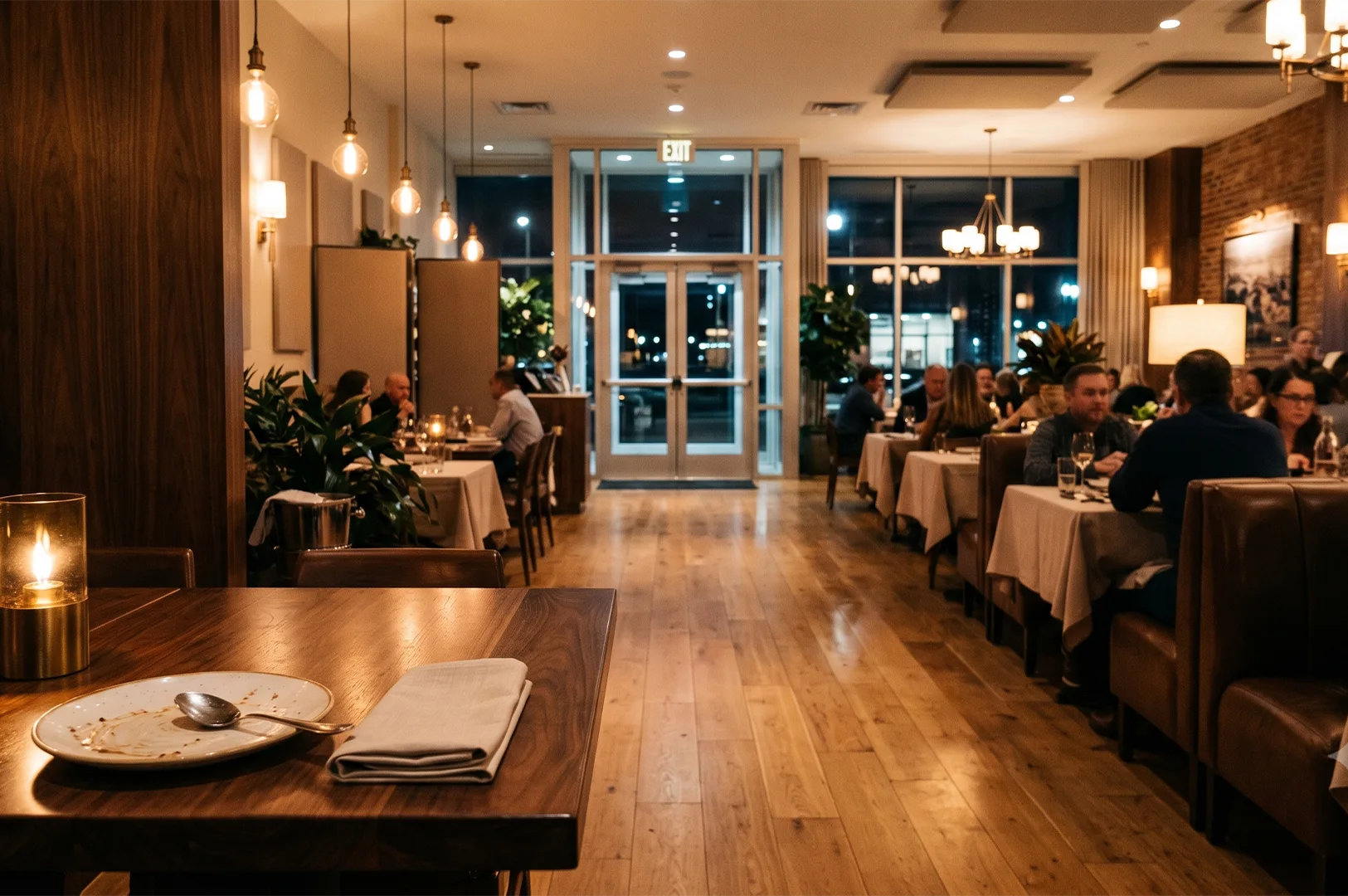

Most restaurant owners think about first impressions.
Far fewer think about last impressions.
Yet the final few minutes of a dining experience often determine what guests remember when they walk away.
The meal has ended.
Plates have been cleared.
The conversation is winding down.
The guest is preparing to leave.
This small stretch of time may seem insignificant compared to everything that came before it. The food has already been served. The service has already happened. The atmosphere has already been experienced.
But memory does not work quite that way.
People tend to remember endings.
A smooth departure leaves guests feeling satisfied. An awkward one lingers much longer than many restaurant owners realize.
Think about how often restaurant exits are treated as an afterthought.
A crowded cashier area.
A narrow pathway blocked by waiting customers.
Guests awkwardly searching for staff to process payment.
A queue forming beside diners who are still eating.
None of these moments seem catastrophic.
Yet they shape the emotional ending of the experience.
Restaurants are full of transitions.
The arrival.
The seating.
The ordering process.
The meal itself.
The departure.
Good design supports each transition instead of leaving guests to figure it out themselves.
This is especially important in busy restaurants where customer flow becomes more complicated.
When the exit pathway overlaps with waiting areas, congestion appears. When payment counters are poorly positioned, bottlenecks form. When guests are unsure where to go after asking for the bill, small frustrations begin to accumulate.
The irony is that owners often invest heavily in creating memorable dining rooms while overlooking the final interaction guests have with the space.
Yet the last few minutes carry enormous emotional weight.
A smooth departure reinforces everything that came before it.

The evening feels complete.
The restaurant feels organized.
The experience feels polished.
This does not require luxury.
It requires thoughtfulness.
Clear pathways.
Visible payment points.
Comfortable circulation.
A natural progression from dining to departure.
These details may sound operational rather than emotional, but guests experience them emotionally.
A confusing exit creates friction.
A seamless exit creates satisfaction.
This idea extends beyond physical design.
Staff interactions matter too.
The farewell at the door. The final thank you. The speed and ease of payment. These moments often become the closing chapter of the guest experience.
And like the ending of a story, the closing chapter influences how everything before it is remembered.
The best restaurant renovations understand this.
They do not design only for arrival.
They design for departure.
Because a restaurant visit is not complete when dessert arrives.
It is complete when the guest walks away carrying a feeling.
The question is simple.
What feeling are they taking with them?
The answer often lives in the last five minutes.
Interested in how first impressions influence success? Read The 30 Second Entrance Test That Predicts Restaurant Success.